Agriculture Minister Song Mi-ryung briefs reporters on farmland probe follow-up measures
Government weighing 2–3 year legalization window; non-applicants still exempt from disposal
Whether existing disposal-order recipients qualify remains subject to National Assembly debate
![Minister of Agriculture, Food and Rural Affairs Song Mi-ryung briefs reporters at the ministry's press room Thursday on the follow-up measures and institutional reform direction stemming from the nationwide farmland probe. [Ministry of Agriculture, Food and Rural Affairs]](https://wimg.heraldcorp.com/news/cms/2026/10/08/news-p.v1.20261008.0704d56dac3246c0a6601872c1490b2d_P1.jpg)
Farmland owners found to have violated the Farmland Act through routine lease arrangements or leaving land fallow will not face disposal proceedings as long as their violations were not speculative in nature. Even after a 2–3 year legalization grace period the government is considering, authorities will not use the current probe's findings as grounds to order disposal. Entrusting land to the Farmland Bank or applying for legalization is also not a mandatory condition for avoiding disposal.
Minister of Agriculture, Food and Rural Affairs Song Mi-ryung said Thursday at the ministry's press room, while outlining follow-up measures and institutional reform plans stemming from the farmland probe, that the use of the word "deferral" had caused confusion. "There was a misunderstanding that deferring disposal meant disposal would resume after a set period," she said. "What we intend to reflect in a special measures act is that no disposal will take place based on this probe."
However, whether the special exemption will also apply to owners who have already received disposal orders has not yet been decided. "There are people who have already been ordered to dispose of their land, so there is a fairness issue," Song said. "We will discuss this further at the National Assembly stage."
The following is a summary of the key issues raised during the briefing and question-and-answer session with Song and Yun Won-seup, the ministry's agricultural policy director.
How does this announcement differ from last month's measures? Song said the earlier use of the word "deferral" had led to the misunderstanding that disposal would resume after a period of time. What the government has now made clear is that farmland will not be subject to disposal based on this probe's findings for ordinary or routine violations — as opposed to speculative ones. Any legislative gap before the Farmland Act is revised will be bridged by a special measures act, after which the act itself will be amended to reflect current realities.
Does farmland have to be sold once the legalization grace period ends? No. Exemption from disposal for ordinary and routine violations is a separate measure from the legalization grace period. "Outside the three categories we have designated as speculation, there will be no disposal," Song said. "Compliance levies do not apply either." The legalization grace period is a procedure designed to allow owners who wish to do so to bring their existing violations into legal compliance.
How long will the legalization grace period run? The government is considering two to three years. "The rough outline we have in mind is two to three years," Song said, adding that the ministry would gather more input from the field. The specific duration will be determined through consultation with the National Assembly during the enactment of the special measures act. During this period, owners will be able to put routine lease agreements in writing, apply for retroactive permits for unauthorized facilities, and request changes to land-use classifications.
Must farmland be entrusted to the Farmland Bank to avoid disposal? No. "Entrusting land to the Farmland Bank is not a mandatory requirement for avoiding disposal," Song said. Even without doing so, the government will not initiate disposal proceedings for ordinary and routine violations. Owners who wish to sell their land or find a tenant may choose to use the Farmland Bank, but it is entirely optional.
Can illegal lease arrangements simply be left as they are? The government's position is that this probe's findings will not be used as grounds for disposal. However, a separate procedure is required to bring an unlawful arrangement into legal compliance. Under the special measures act, if an owner and the actual cultivator enter into a written lease agreement during the grace period, the arrangement will be recognized as a lawful lease for the duration of the contract even if it does not meet the current statutory requirements for permitted leasing.
Is inherited farmland left uncultivated also subject to disposal? Inherited farmland that is lying fallow or exceeds ownership limits will generally be excluded from disposal under this probe's findings. "With inheritance, you never falsely wrote a farming plan saying you would cultivate the land," Song said, drawing a distinction from cases where farmland was acquired with speculative intent.
What about land that is practically impossible to farm, such as landlocked plots or steep slopes? Such land will not be subject to disposal simply because it has not been cultivated. The government plans to review grounds for recognizing fallow status that take farming conditions into account as part of the Farmland Act revision process in the first half of next year.
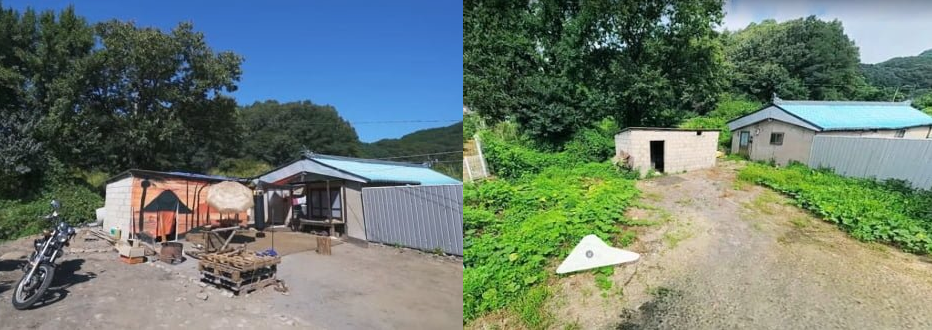
Are unauthorized agricultural shelters and rural stay facilities also covered? Yes. Song said both types of facility are included. However, they must be structures that could originally be installed under the relevant regulations. Rather than immediately ordering demolition or restoration based solely on the lack of required permits, the government will give owners of qualifying facilities the opportunity to apply for retroactive permits.
What happens to unauthorized agricultural facilities whose owners do not apply for legalization? Song said that for ordinary and routine violations, the probe's findings alone will not be used to order disposal or impose compliance levies even after the grace period ends. However, a facility that does not obtain a retroactive permit does not automatically become a lawful structure. Facilities prohibited in agricultural promotion zones or not permitted under other laws will also be excluded from legalization.
What types of farmland are classified as speculative? The government has identified three categories. The first covers cases where farmland was acquired in a land transaction permit zone by submitting a farming plan, then left uncultivated or leased without authorization — inherited farmland is excluded from this category. The second covers cases where farmland shares were acquired through auction or similar means using a false farming plan, with the land then left idle or leased for capital-gain purposes. The third covers cases where an agricultural corporation was established to acquire farmland, which was then subdivided for sale or leased for real estate income rather than farmed. Even where a case falls into one of these categories, the government said it will give owners sufficient opportunity to explain themselves before deciding whether to issue a disposal order under the current Farmland Act.
How much farmland lies within land transaction permit zones? Agricultural Policy Director Yun said the total area of farmland within land transaction permit zones nationwide is estimated at about 150,000 hectares. However, that does not mean all of it is in violation. The actual number of violations will only become clear once the investigation is complete.
Can people who have already received farmland disposal orders also be relieved? That has not yet been decided. "There are people who have already been ordered to dispose of their land, so there is a fairness issue," Song said, adding that whether the exemption will extend to existing disposal-order recipients will be debated in the National Assembly. She noted that fairness toward farmers who have diligently complied with the Farmland Act must also be considered.
How much will the Farmland Bank's acquisition budget increase? Song said the government has submitted a budget proposal for next year that increases Farmland Bank-related funding by more than 25 percent compared to this year. The farmland pension budget has also been expanded in the government's proposal. The additional funding needed to clear the backlog of pending farmland purchases has not yet been finalized, and the government said it will work with the National Assembly during the budget review process to secure sufficient funds.
Will the scope or method of the farmland survey change? The probe will proceed as planned. "The in-depth investigation will be carried out in full," Song said. She noted that farmland-related information is scattered across multiple agencies, and an accurate picture of the current situation is necessary before institutional improvements can be made. Information gathered during the investigation will be used in future revisions to the Farmland Act and in overhauling the farmland management system.
Where can people get advice related to the farmland probe? The Ministry of Agriculture, Food and Rural Affairs will operate a farmland probe consultation center starting Monday. The consultation hotline number is 1811-8852. The center will provide guidance on follow-up measures from the farmland probe and accept inquiries and field feedback from farmers.
adastra@heraldcorp.com