Yeo Jang-kwon becomes first internal lecturer in 'Future Seoul Morning Lecture' series, outlining what the city must prepare for in the age of autonomous driving
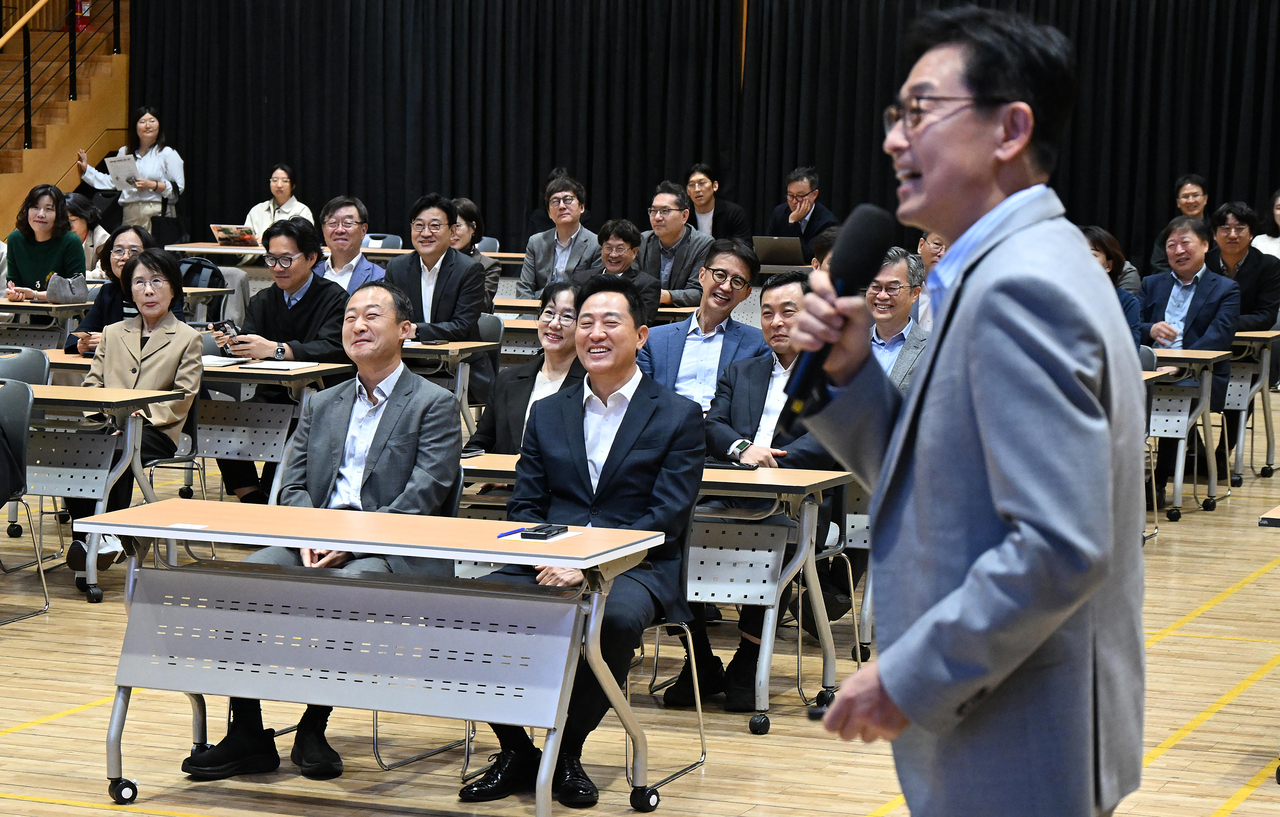
"Better than any outside speaker."
That was Seoul Mayor Oh Se-hoon's verdict on a veteran civil servant who delivered a special lecture before the city's senior officials. The lecturer was Yeo Jang-kwon, the Seoul Metropolitan Government's head of transportation.
Oh, Seoul's first five-term elected mayor and an administrator who has long thought deeply about the city's present and future, was in the audience alongside deputy mayors and directors from across the city's departments — a setting that would have placed considerable pressure on any speaker.
Yeo rose to the occasion, drawing on more than two decades of frontline experience in city administration to make a compelling case for what Seoul's transportation future should look like. Word that Oh had praised the lecture warmly afterward drew attention both inside and outside city hall.
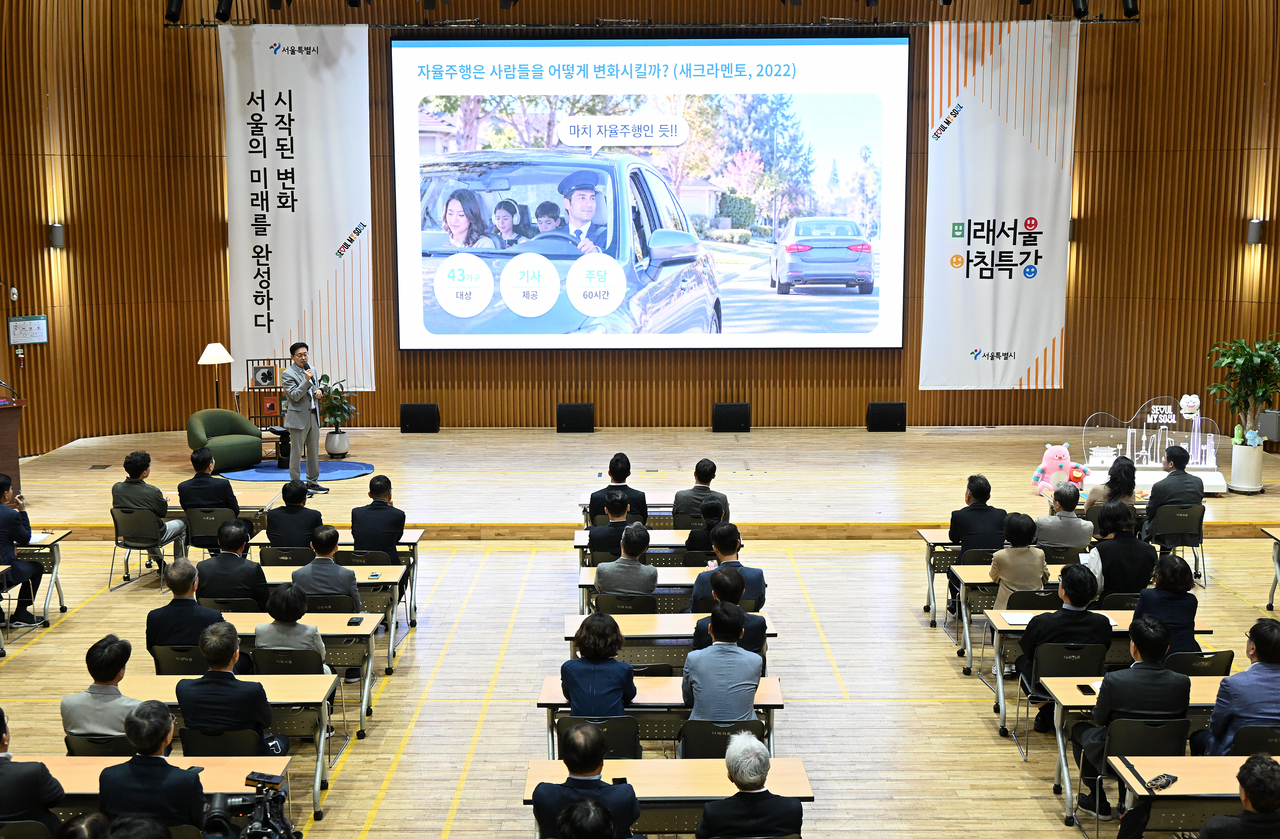
The lecture took place Wednesday morning at 7:30 a.m. in the multipurpose hall on the eighth floor of Seoul City Hall's main building, as part of the "Future Seoul Morning Lecture" series.
The session marked the first time the series — previously built around outside experts — had been expanded to feature internal city specialists presenting their own visions for future municipal strategy. Yeo, chosen as the inaugural internal lecturer, spoke on the theme "The Future of Autonomous Driving: What Must Seoul Prepare?"
The audience included Oh, members of the mayoral team, department and bureau heads, working-level civil servants, and heads of Seoul Metropolitan Government-affiliated agencies.
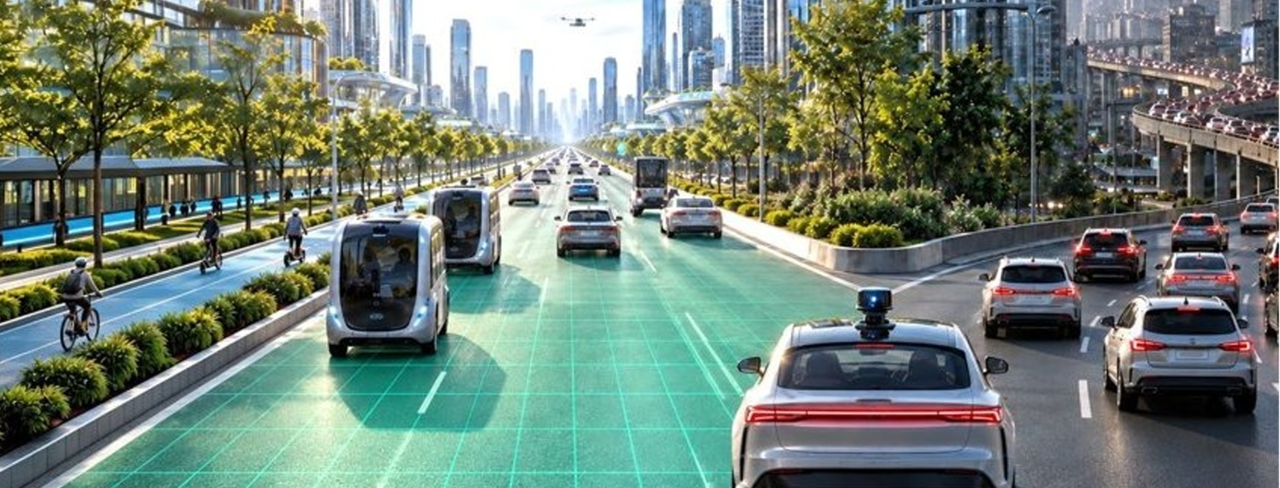
Yeo examined how advances in autonomous driving technology could reshape the way residents move around the city and alter its physical fabric — roads, parking and urban space. He said in particular that the arrival of the autonomous driving era would not automatically solve Seoul's traffic problems.
More roads and parking spaces in the age of autonomous driving?
Seoul currently sees about 35 million trips a day. By mode of transport, subway accounts for 44.7 percent, buses 20.7 percent, private cars 29.2 percent and taxis 3.3 percent — meaning public transit handles roughly 65 percent of all trips.
Yeo drew attention to the likelihood that, as autonomous driving spreads, greater convenience of movement could paradoxically drive up the total number of vehicle trips.
A 2022 study on Sacramento that he cited in the lecture projected that the proliferation of autonomous vehicles could increase vehicle miles traveled by 60 percent and the number of trips by 25 percent, with a significant share of that increase made up of empty-vehicle runs.
The concern is that autonomous vehicles, after dropping off one passenger, could cruise the streets empty while waiting for the next fare or searching for a parking space — adding to overall traffic volume.
Yeo argued that a city like Seoul — already short on road capacity and parking, and heavily reliant on public transit — would need to respond with particular care.
Rather than simply waiting for the technology to mature, he said, the city must think ahead about how autonomous driving will affect overall traffic flow and residents' daily lives, and design policy accordingly.
Yeo was clear about the direction Seoul should take: public transit must remain the backbone of the city's transportation system even in the age of autonomous driving.
To that end, he called for promoting high-occupancy shared vehicles, minimizing empty-vehicle runs, building an integrated control system to manage the movement and operation of autonomous vehicles, and systematizing on-street parking management.
If privately owned autonomous vehicles proliferate without restraint, he warned, traffic congestion and parking shortages could actually worsen. Building an efficient mobility system linked to public transit, rather than one centered on private vehicles, would be essential.
The overarching message was that technological progress should translate into better mobility for residents — but the city must have an urban-level management strategy in place to prevent that progress from simply consuming more road and parking space.
Yeo built the presentation himself — and lost sleep over it
Yeo spent several days preparing the presentation materials himself. He was so nervous the night before the lecture, on Thursday, that he could barely sleep.
He broke the ice at the start of the lecture with a self-deprecating quip: "My wife never makes eye contact when I talk to her, so I'm delighted that the mayor is looking me in the eye as I speak." The remark drew laughter from the audience.
The nerves gave way to acclaim. At a private lunch held after the lecture, Oh told Yeo he had done better than any outside speaker, according to those familiar with the exchange.
The lecture was also significant because city officials drew directly on years of frontline experience and expertise to chart the future direction of municipal governance — a step beyond simply absorbing knowledge from outside experts, and toward a model in which the people who understand city administration most deeply think through its future together.
The "Future Seoul Morning Lecture" series launched in May 2021 to build a shared understanding of the city's core values and future vision and to exchange new policy insights. Held every other Friday at 7:30 a.m., the series reached its 120th session with Wednesday's lecture.
Going forward, Seoul plans to have each department and bureau head present their outlook on future changes in their area of responsibility and lay out the challenges and policy directions Seoul should prepare for over the next five or ten years — moving beyond departmental updates toward greater cross-departmental vision-sharing and collaboration.
"The 'Future Seoul Morning Lecture' has been filled for the past five years with the wisdom and insights of outside experts," Oh said. "Now is the time to develop it into a forum where Seoul's own civil servants think through and design the city's future themselves."
He added that sharing visions across departments and working collaboratively would be central to governance going forward. "We will share the futures that each department head envisions for Seoul and turn that into the driving force that propels Seoul into the ranks of the world's top three cities," he said.
seouldream01@heraldcorp.com