AI-generated drug safety research notes trigger risk-based follow-up by pharmacists and visiting nurses; mobile consultation booths at senior centers uncover 98 residents in need of integrated care
Gwanak-gu is supporting the safe use of medications among residents enrolled in its integrated care program through a Smart Medication Care project that combines AI technology with the expertise of local pharmacists.
The project works by entering the medication information of integrated care recipients who take five or more drugs into Pilltalk, an AI-based medication management app, to generate a drug safety research note. Based on the analysis, residents receive tailored medication management according to their assessed risk level.
In April, the district signed an MOU with the Gwanak-gu Pharmacists Association, the nonprofit Neulpeum Gachi and ICT healthcare firm Pimatch Co. to build a public-private-industry collaboration framework. The initiative has focused particularly on reaching residents left out of existing medication management services, including elderly people living alone and medical aid recipients.
This year, the district expanded the program by issuing drug safety research notes to 170 residents and conducting one-on-one home visits for 75. Those assessed as high-risk receive joint home visits from a pharmacist and a public health center nurse, who check the medications being taken and review for duplicate or inappropriate prescriptions. Where needed, the visits extend to collecting unused or expired drugs and providing follow-up monitoring.
One elderly resident in Nangok-dong had been receiving prescriptions for painkillers from multiple medical institutions to manage pain following spinal stenosis surgery, and had been experiencing nausea and dizziness.
A home medication visit confirmed the resident was taking duplicate painkillers. The district coordinated with the medical institutions involved to discontinue the overlapping prescriptions, and follow-up monitoring confirmed that the nausea and dizziness had improved.
"The pharmacist came to my home and told me things about my medications I hadn't known," the resident said. "It made me more careful about taking them, and it has been a great help in managing my health."
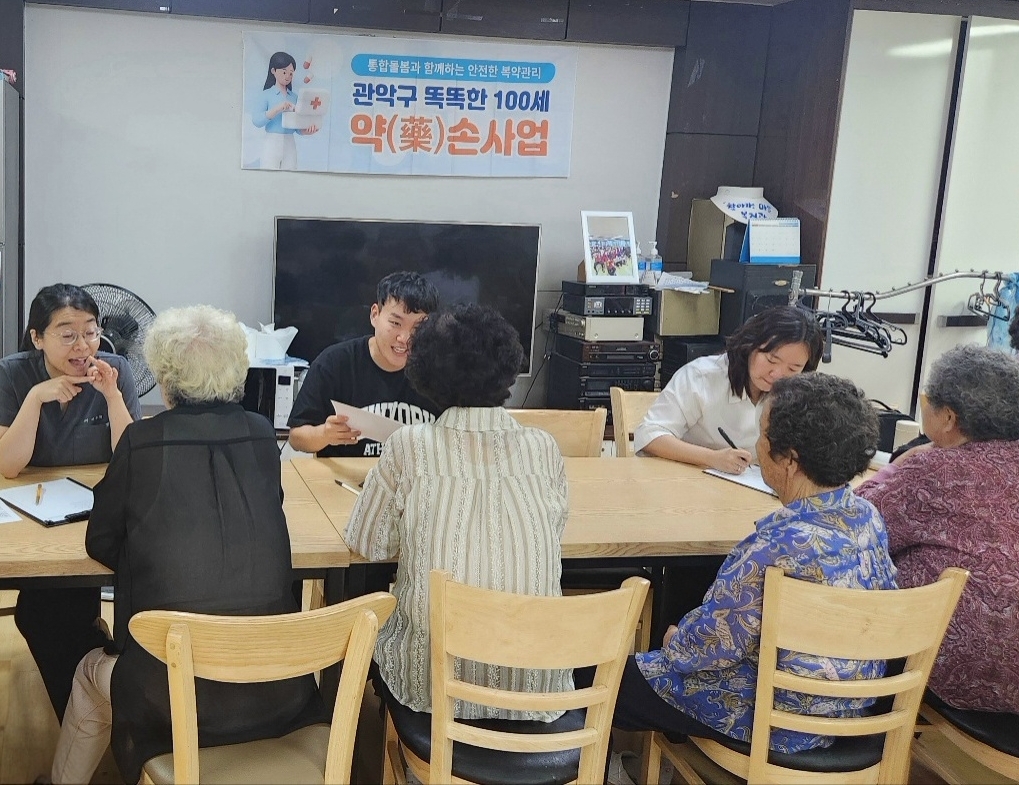
In addition, the district runs its Gwanak-gu Smart 100-Year Medication Care project at senior centers and welfare facilities frequented by residents. In partnership with Neulpeum Gachi, the district operates mobile medication consultation booths that not only provide drug management services but also identify residents who need integrated care.
This year, the district reached 699 people across 29 locations — including senior centers and day care centers — through pharmacy managers who introduced the integrated care program and provided easy-to-understand medication management education. Of those, 98 were referred to the integrated care program.
The district also issued AI drug safety research notes to 71 residents and provided pharmacist consultations to 34, directly reaching those in need of support in their daily lives.
"It is important for elderly residents taking multiple medications to know exactly what they are taking and to take them safely," Gwanak-gu District Mayor Park Jun-hee said. "We will continue to draw on AI and pharmacists' expertise to reduce blind spots in medication management and help residents maintain a healthy daily life where they already live."
seouldream01@heraldcorp.com