Seoul National University professor Jo Young-nam's new book "The Return of the Leviathan" analyzes 14 years of Xi's rule, pushing back against claims of peak power or imminent collapse
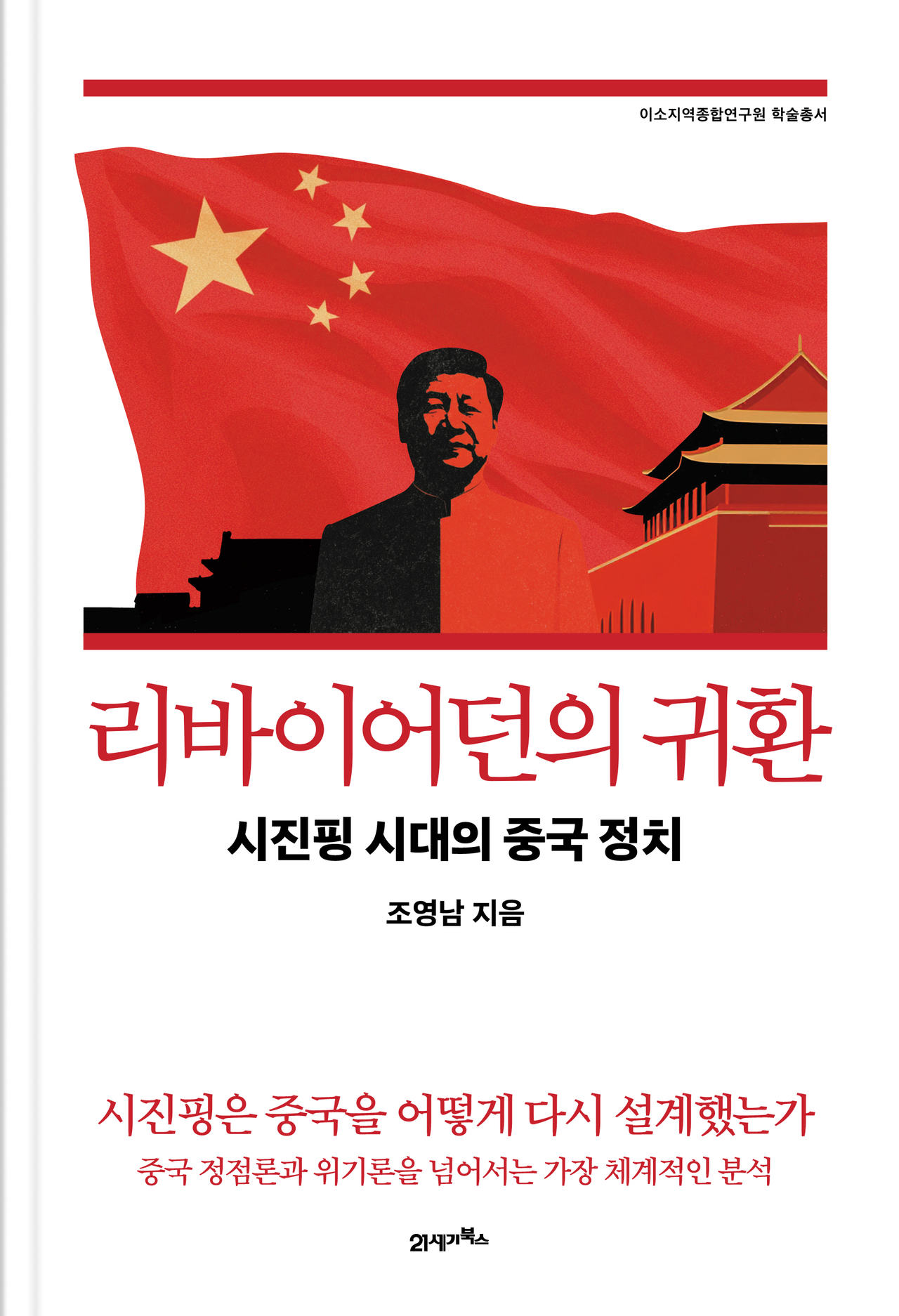
The era of "nine dragons taming the flood" has passed — and the Leviathan has returned.
Jo Young-nam, a professor at Seoul National University's Graduate School of International Studies and the country's foremost authority on Chinese politics after more than three decades of study, has published a new book: "The Return of the Leviathan: Chinese Politics in the Xi Jinping Era" (21st Century Books).
Drawing on his extensive academic output — including the three-volume series "China's Governance System" — the work offers a comprehensive account of Xi's 14-year trajectory of power and governing structure, from his first term beginning in 2012 through his current third term.
Jo borrows the figure of the "Leviathan" — Thomas Hobbes's embodiment of strong state power — to diagnose the reality of China today.
The "return of the Leviathan," he argues, describes the process by which Xi dismantled the Hu Jintao-era arrangement in which nine Politburo Standing Committee members shared power, a diffusion that bred laxity and corruption, and restored strong party-state control centered on the party's central apparatus and its general secretary.
The book firmly rejects the widespread characterization of the Xi system as a "one-man dictatorship," as well as theories that China has peaked or is heading toward crisis. While authoritarian rule has undeniably tightened, Jo argues it is fundamentally different from the unlimited personal charisma-based dictatorship of the Mao Zedong era.
Xi's power, he contends, rests on what Jo calls "institutional authority" — operating within codified procedures, intra-party institutional norms, and the framework of collective leadership.
This analysis aligns with remarks Jo made in a recent appearance on the YouTube channel "Ildangbaek." Xi's official title remains "general secretary" — a working administrative role — rather than "party chairman," Jo said, marking a clear departure from Mao-style one-man rule in which decisions made in meetings could be unilaterally overturned. Moves to revive the party chairmanship or elevate Xi's title have not materialized, blocked by consensus among party elders and internal resistance, he said.
The book also offers concrete examples of the system's institutional constraints and resilience. One is the deletion, within three days of publication, of a Xinhua commentary praising Xi as a "reformer" in July 2024, after it drew internal party pushback. Another is the fact that Xi's ideological doctrine has never been shortened to "Xi Jinping Thought" alone, retaining instead the full official name "Xi Jinping Thought on Socialism with Chinese Characteristics for a New Era."
Jo also points to signs of policy flexibility within the system: the leadership's pivot away from prioritizing national security over economic growth toward stimulus measures, its retreat from the aggressive "wolf warrior diplomacy" that had provoked widespread backlash, and its proactive move to extend visa-free entry to South Korea and other countries.
Rather than succumbing to emotional hostility or simplistic collapse theories, Jo urges readers to take a clear-eyed look at the continent's internally differentiated industrial competitiveness and its model of state-building.
The YouTube channel where Jo appeared — "Ildangbaek: One Hundred Books to Read in a Lifetime" — has drawn praise from viewers who share his measured perspective.
Comments included: "Hating blindly without a plan does no good. We can only survive if we truly understand America, China and Japan alike," and "I've followed every video by Professor Jo since his days on Sampro TV. In a world where accurate information about China is so hard to come by, he's the expert I trust most." The responses reflected widespread appreciation for a pragmatic, fact-based approach that goes beyond reflexive anti-China sentiment.
Jo also revealed his future writing plans during the broadcast. He said he is working on a follow-up book, targeting a November 2027 release, based on three years of ongoing research. That next work will offer an in-depth examination of Mao Zedong's ideological framework, to be followed by a broader study of Chinese politics during the Mao era.
silverpaper@heraldcorp.com