
First national audit since ministry's Busan relocation; seafood exports up 12%, cruise tourists up 52%
Public ferry service set for next year; fisheries regulations to be overhauled
The government plans to conduct another Arctic shipping route trial next year after the Panstar Acro completed its maiden voyage and returned to Busan. Authorities said they will analyze the experience and data gathered this year and accelerate efforts to build the infrastructure and train the specialized personnel needed to develop the route commercially.
The Ministry of Oceans and Fisheries laid out its key policy priorities at a national audit held Monday in Busan by the National Assembly's Agriculture, Food, Rural Affairs, Oceans and Fisheries Committee. It was the first national audit held on-site since the ministry relocated to Busan late last year.
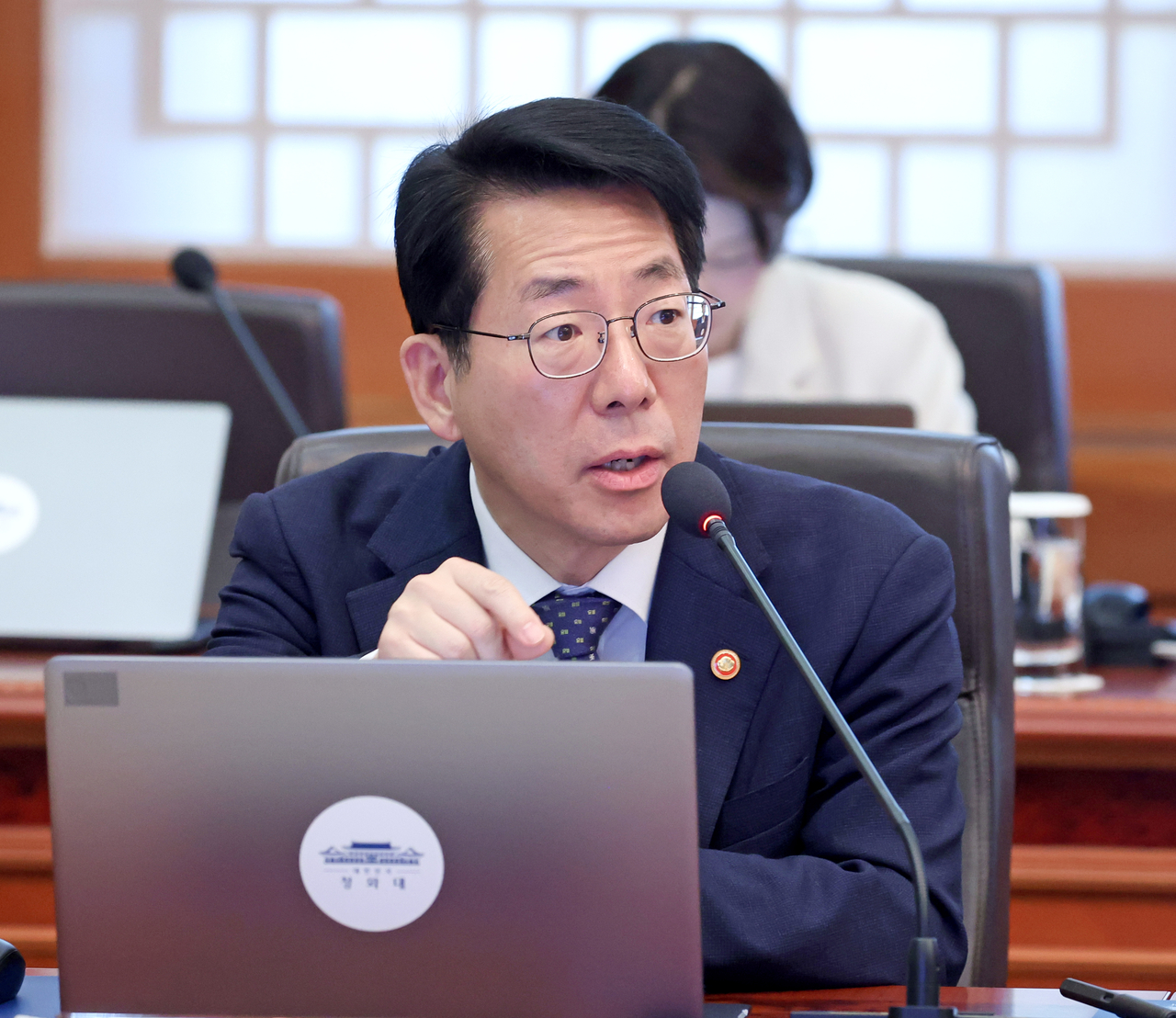
In his opening remarks, Minister of Oceans and Fisheries Hwang Jong-woo said the Panstar Acro departed Busan Port on Aug. 22 and completed a historic 50-day Arctic route trial, returning to its home port of Busan on Sunday. "We will closely analyze the results of the trial voyage, accumulate the relevant experience and data, and prepare next year's trial plan with even greater substance," Hwang said.
The ministry said it will pursue timely development of port infrastructure, training of polar specialists, and research into core technologies for icebreakers and ice-capable vessels. It also plans to develop the maritime metropolitan area as a key economic hub for the Arctic era and lay the groundwork for related industries.
The ministry also highlighted achievements since its relocation to Busan. It supported the headquarters relocation of four shipping companies to the city, and seafood exports reached $2.74 billion through September this year, a 12 percent increase. Cruise tourist arrivals rose 52 percent to about 1.3 million.
On livelihood issues, the ministry is preparing to launch a public operating system for coastal passenger ferries. A related amendment to the Marine Transportation Act passed the National Assembly plenary session in May, and the system is set to take effect next year. The ministry also plans to work with local governments to establish regional strategies for revitalizing coastal economies.
The ministry will support the transition to eco-friendly vessels and the demonstration of autonomous navigation technology, while also accelerating the development of advanced smart ports incorporating physical AI.
Fisheries regulations will shift from gear-based controls to catch-based management. The ministry is preparing to implement the Sustainable Coastal and Offshore Fisheries Development Act, which passed the National Assembly in June, and will build a data- and science-based fisheries resource management system. In aquaculture, it plans to establish leading aquaculture districts and bring smart aquaculture clusters into operation on a rolling basis.
The ministry will also push measures to strengthen the competitiveness of the seaweed industry. Plans include introducing an AI-based grading system for dried seaweed and establishing a dried-seaweed exchange to boost the competitiveness of Korean seafood exports. The ministry will also expand efforts to identify new export products, broaden the scope of fisheries direct payment programs, expand the fishermen's welfare bus service, and develop an offshore wind power model that shares profits with fishing communities.
Marine environmental protection and safety management will also be strengthened. In July, the ministry designated a 1,000-square-kilometer uninhabited island zone in the central Yellow Sea as a marine protected area. It plans to expand protected areas further and establish a full life-cycle management system for marine waste, from generation through recycling. The ministry will also work to embed the mandatory life jacket requirement for fishing vessel crew members, which took effect July 1, as standard practice on the water.
On illegal fishing, the ministry is shifting its response from expulsion to seizure. In May, it raised the ceiling on fines and bonds for foreign vessels engaged in illegal fishing and changed its operational principle from expulsion to arrest. It plans to step up the removal of illegal fishing gear near the Northern Limit Line and strengthen enforcement cooperation with China.
Preparations are also under way for the Fourth UN Ocean Conference, to be held in Busan in 2028. The ministry plans to finalize a master plan by the end of this year and prepare for preliminary events next year.
Hwang called on committee members to offer candid advice, saying the ministry would reflect the issues raised during the audit in its ocean and fisheries policies. "Please do not hesitate to share your frank counsel so that policies that are working well can be further developed, and shortcomings can be addressed and corrected," he said.
adastra@heraldcorp.com





