
Squeezing pain in the upper abdomen after fatty meals may signal gallstones, not indigestion
Laparoscopic cholecystectomy offers faster recovery with less pain and scarring
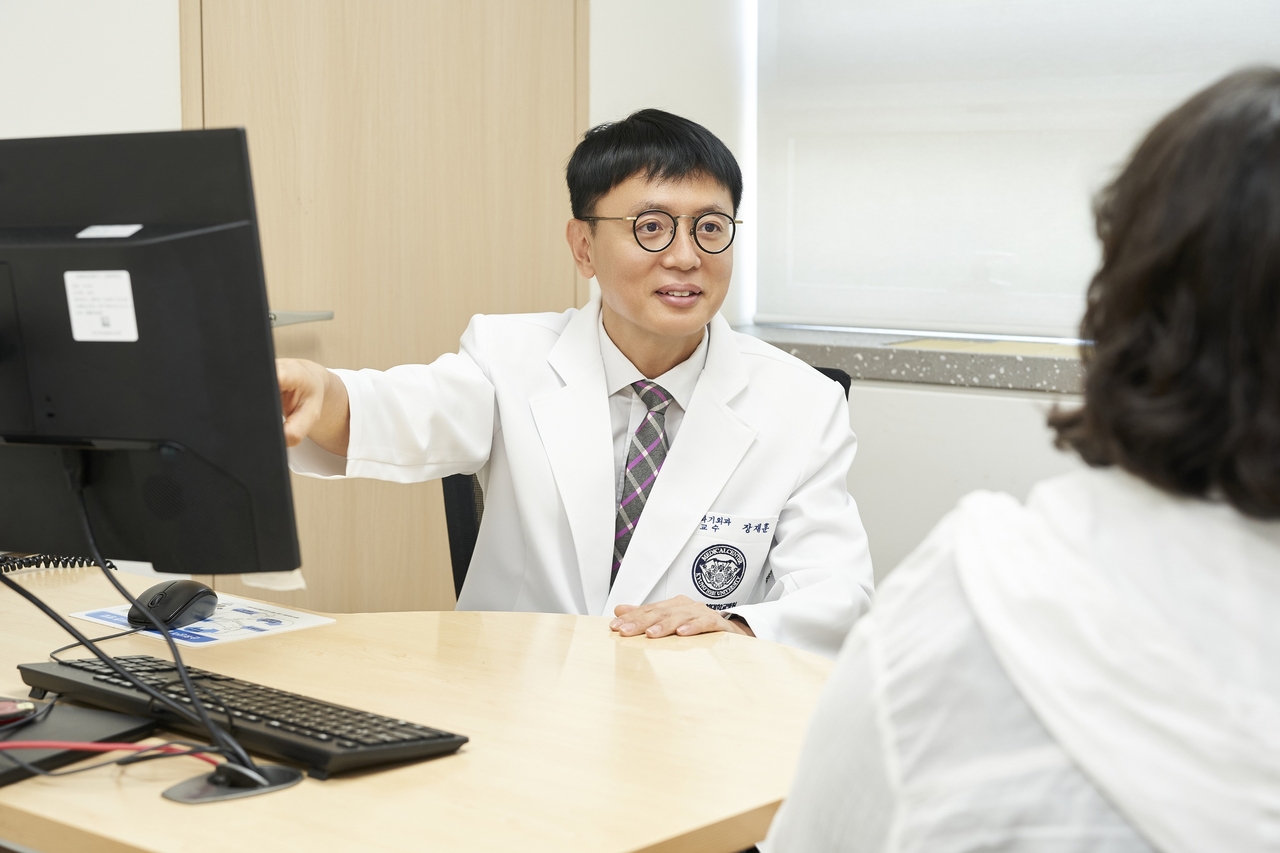
When pain strikes in the upper abdomen or around the solar plexus, most people reach for a digestive aid, assuming they have simply eaten too much. But if the pain recurs after fatty meals or at night, the gallbladder — not the stomach — may be to blame. The pattern can be an early sign of cholelithiasis, the medical term for gallstones forming in the gallbladder or bile ducts. Dismissing the discomfort as a passing ache can be dangerous: left untreated, gallstones can lead to complications including cholecystitis, cholangitis and pancreatitis. Jang Jae-hoon, a professor in the gastrointestinal surgery department at Gangdong Kyung Hee University Hospital, walks through the symptoms, treatment options and prevention strategies for a condition frequently mistaken for indigestion.
Bile produced by the liver collects in the gallbladder before being released into the duodenum to aid fat digestion. When the balance among cholesterol, bile acids and bile pigments breaks down, sediment forms and gradually hardens into gallstones. According to data from the Health Insurance Review and Assessment Service, the number of gallstone patients in South Korea reached 286,703 in 2025, a 19.4 percent increase from 2021. Experts attribute the rise to an aging population, the growing prevalence of metabolic conditions such as obesity and diabetes, and diets increasingly high in calories and fat.
Nine in 10 gallstone patients are 40 or older, and the risk rises steadily with age — in 2025, people in their 40s and above accounted for 89.4 percent of all cases. Women are also more susceptible than men, as female hormones raise cholesterol concentrations in bile. Additional risk factors include high-calorie, high-fat diets, obesity, diabetes and other metabolic diseases, rapid weight loss and a family history of the condition.
Gallstone pain is easily confused with indigestion or gastritis. Not everyone with gallstones experiences symptoms — many cases are discovered incidentally during ultrasound or abdominal CT scans. Even when symptoms do appear, the bloating or discomfort around the solar plexus can fade on its own, making it easy to attribute to simple indigestion or gastritis. However, if similar pain recurs and follows the patterns described below, gallstones should be considered.
The hallmark symptom of gallstones is "biliary colic," which occurs when a stone blocks the outlet of the gallbladder. The resulting pressure buildup causes severe pain or a sense of compression in the upper right abdomen or solar plexus that can radiate to the area below the shoulder blade or into the shoulder. The pain typically begins after a fatty meal or at night, lasts 30 minutes or longer — sometimes several hours — and is often accompanied by nausea or vomiting.
Biliary colic usually subsides with time, but if a stone remains lodged at the gallbladder outlet, the condition can worsen into cholecystitis. Cholecystitis is the most common complication of gallstones, with more than 90 percent of acute cases caused by them. Pain lasting several hours or more, combined with fever and chills, is a strong indicator of cholecystitis.
Depending on where a stone travels, more serious complications can develop. If a stone passes out of the gallbladder and blocks the bile duct, bile accumulates and bacteria multiply, potentially causing acute cholangitis — marked by abdominal pain, jaundice and high fever. A stone lodged at the ampulla of Vater, where the bile duct meets the pancreatic duct, can also obstruct the flow of pancreatic fluid and trigger acute pancreatitis. When cholecystitis or cholangitis deteriorates into sepsis, the condition becomes life-threatening and requires immediate treatment.
When pain recurs, cholecystectomy — surgical removal of the gallbladder itself, not just the stones — is the definitive treatment. Patients with gallstones but no symptoms are generally monitored with regular checkups. However, once biliary colic becomes recurrent or cholecystitis develops, removing the entire gallbladder is the standard approach. Surgery may also be recommended for asymptomatic patients if calcium deposits form in the gallbladder wall or if stones exceed 3 centimeters in diameter, given the associated risk of gallbladder cancer. When stones have migrated into the bile duct, they are removed via endoscopic retrograde cholangiopancreatography (ERCP).
Laparoscopic surgery is now the standard for cholecystectomy. The procedure involves making several small incisions of 0.5 to 1 centimeter in the abdomen, through which a camera and surgical instruments are inserted to remove the gallbladder — resulting in less pain, minimal scarring and a faster recovery. Robot-assisted cholecystectomy has also become available in recent years, expanding the range of surgical options. According to the Korea Disease Control and Prevention Agency (KDCA), the complication rate for cholecystectomy is 2 to 4 percent and the mortality rate is below 0.1 percent, making it a relatively safe procedure. Most patients are discharged within two to three days after surgery and can return to normal daily activities within two to four weeks.
Many patients worry about digestion after gallbladder removal, but the impact on daily life is generally minimal. The gallbladder stores bile, but the liver continues to produce it after the organ is removed. In the early recovery period, however, some patients experience diarrhea or bloating as the body adjusts to digesting fat, so it is advisable to reduce fatty foods and gradually increase meal portions.
Preventing gallstones comes down to diet, weight management and controlling metabolic conditions. Eating regular meals without skipping, cutting back on high-calorie and high-fat foods, and consuming plenty of vegetables and dietary fiber are all recommended. Reducing intake of cholesterol-rich foods — such as shrimp, organ meats and eel — also helps. Maintaining a healthy weight is important, but crash diets and rapid weight loss should be avoided; conditions such as diabetes and hyperlipidemia should also be consistently managed.
"Gallstone pain often subsides on its own, making it easy to miss the right window for treatment," Jang said. "Because early detection allows for appropriate treatment, it is important not to dismiss recurring upper abdominal pain after meals as simple indigestion — get a proper diagnosis."
kty@heraldcorp.com





