
On SBS Radio's 'Kim Tae-hyun's Politics Show'
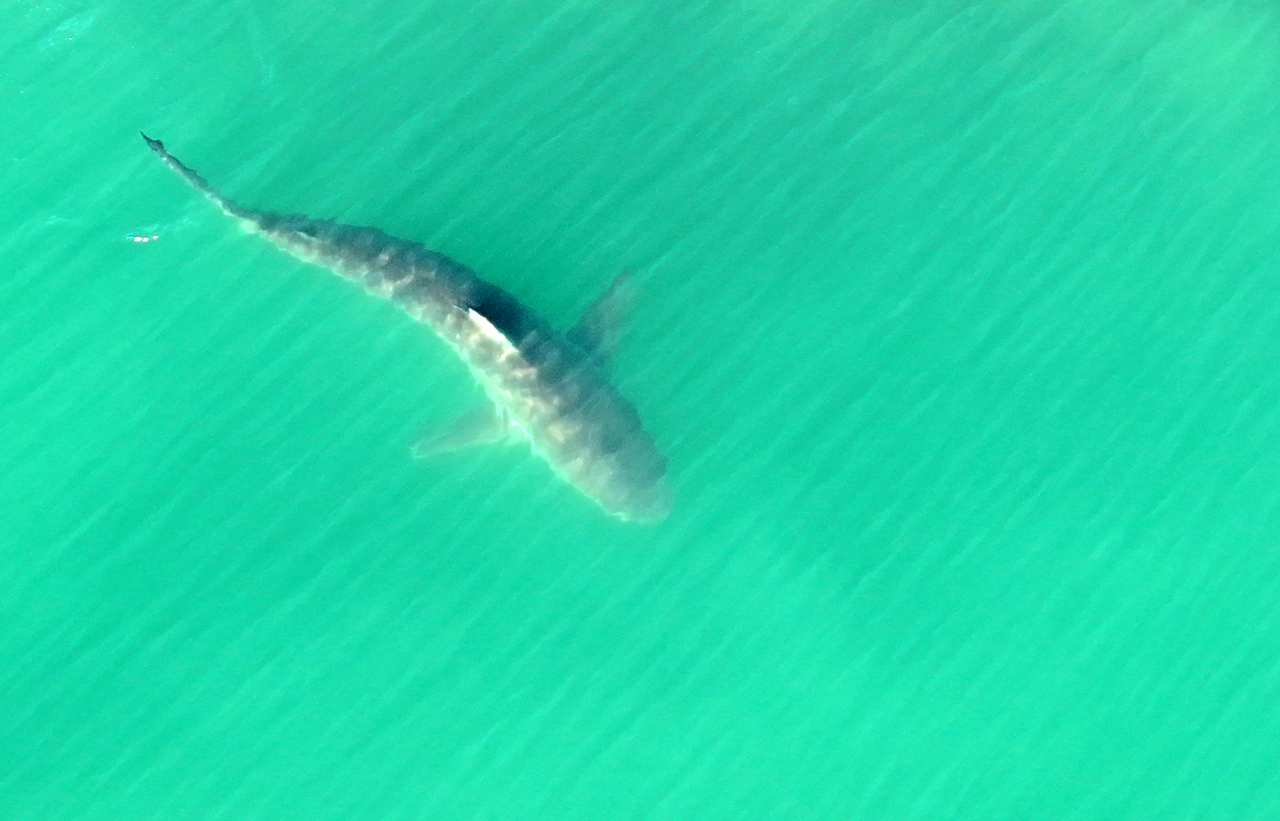
Busan Mayor Jeon Jae-soo has offered his interpretation of the nationwide fascination with Bukkangi — a blacktip shark that appeared in an artificial waterway at Bukhang Waterfront Park in Dong-gu — describing the phenomenon as "the objectification of an inexpressible desire for complete freedom."
Jeon appeared Tuesday on SBS Radio's "Kim Tae-hyun's Politics Show" to give an update on Bukkangi, which has been living in the park's artificial waterway for 26 days.
He said no feeding activity has been observed since the shark was first spotted on Sept. 18.
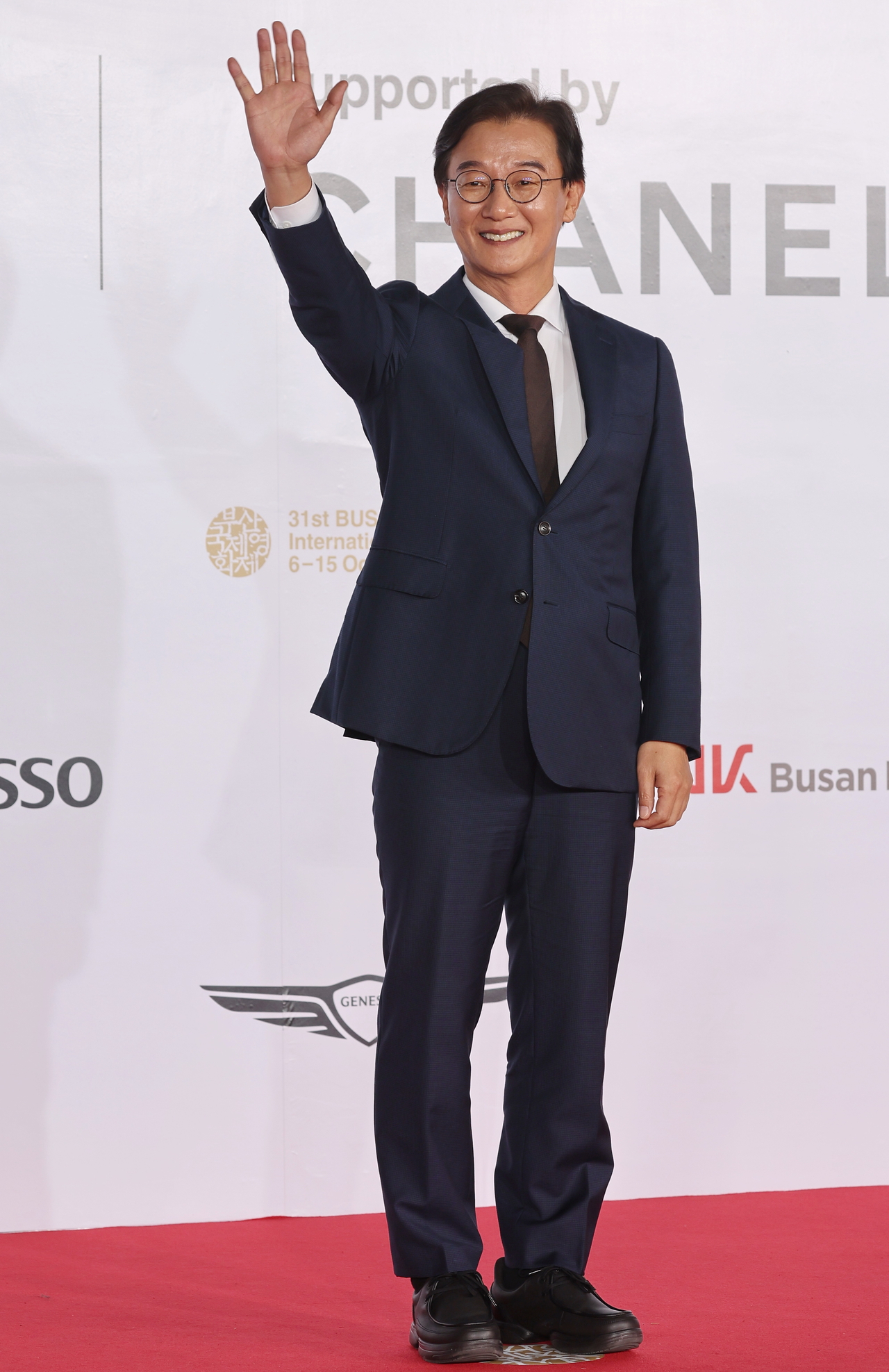
"Within the range we can monitor, there has been no feeding activity," Jeon said. "The waterway is long, and while Bukkangi initially used the entire channel as its territory, we have recently begun to notice it repeatedly moving back and forth within a specific section. I am starting to worry that there may be a health issue."
He added that 105 personnel from the Busan Facilities Corporation, Dong-gu district office, police, coast guard, fire department, the National Institute of Fisheries Science and the Busan Port Authority are deployed daily to monitor the shark's safety and condition. "We have made full preparations so that in the event of an emergency, personnel can arrive and take action within three minutes," he said.
Jeon said blacktip sharks can go without food for up to about a month. "Psychologically, it is in a very stable state, and physically it is in excellent health," he said.
However, he expressed concern that ocean water temperatures are dropping significantly. "We are seeing stereotypic behavior — the shark pacing back and forth in a specific section — so we are fully prepared to deploy within three minutes and take emergency measures if needed," he added.
Jeon said about 1.4 million people had visited Bukhang and other parts of Busan's original city center in less than a month since Sept. 18. "Bukkangi is truly living up to its role as Busan's lucky charm," he said.
Asked why he thought the public had become so captivated by Bukkangi, Jeon said the sheer unexpectedness of the situation was part of the appeal. "It is hard to imagine a large shark appearing in an urban park," he said. "People are startled, they find it fascinating, and then they are amazed to see something over three meters long swimming right there."
He then offered a more philosophical take. "From a humanistic perspective, we are all bound — by our jobs, our families, social systems," he said. "Bukkangi and wild animals, by contrast, are beings that enjoy complete freedom. I think what we are seeing is an inexpressible desire for that kind of freedom, projected onto Bukkangi by people who feel tied down."
Jeon also recalled Oncheoni, a wild otter discovered in Busan's Oncheon Stream in 2009, and drew a connection to the city's character. "Busan has a uniquely warm spirit," he said. "Even during the Korean War, when everything was pushed back to the Nakdong River, Busan took in refugees from Hamgyong Province and Pyongyang without distinction. Busan is an inclusive, open city — and it has embraced both Bukkangi and Oncheoni."
jshan@heraldcorp.com





