
Incheon Airport handles 1.09 million tons of international cargo in Q3
Freight rates up 30% but shipments keep climbing; semiconductors make up 70% of exports
Passenger traffic tops 7 million in August, boosting Korean Air outlook
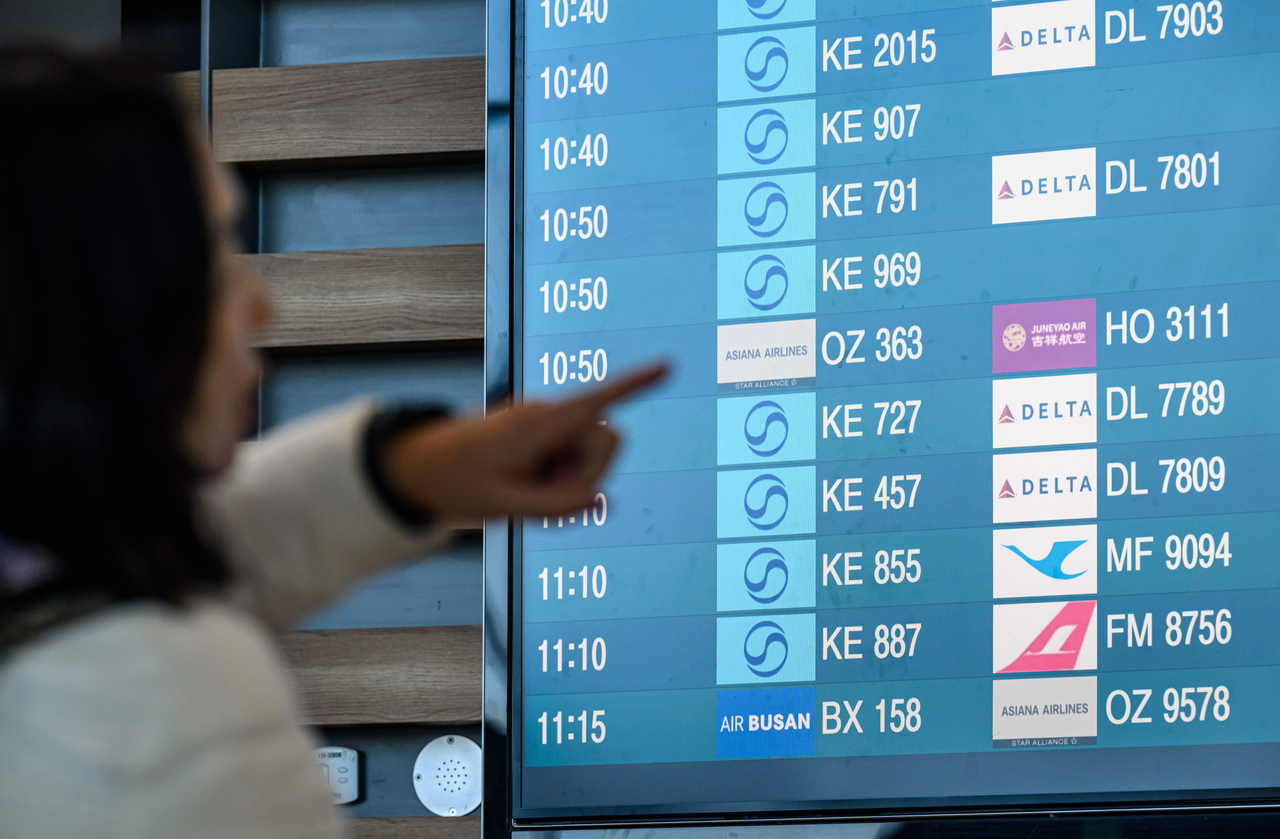
Air freight rates have surged in the wake of the Middle East war, yet both cargo volumes and passenger traffic at Incheon International Airport hit all-time highs in the third quarter. Demand for AI-related goods and semiconductors drove the cargo record, while travel to Japan and China and a boom in transit passengers pushed passenger numbers to new peaks. With both freight and travel demand on the rise, expectations are growing that Korean Air, South Korea's largest carrier, will post stronger earnings.
Semiconductors — the 'premium cargo' — post biggest year-on-year gain in 27 months in September
According to the Ministry of Land, Infrastructure and Transport's aviation information portal, Incheon Airport handled 1,086,954 tons of international cargo in the third quarter, up 7.9 percent from a year earlier — a quarterly all-time high. That surpassed the previous record of 1,055,285 tons set just one quarter earlier, and was 25 percent more than the 870,336 tons recorded in the third quarter of 2021, when COVID-19 drove an exceptional surge in air freight.
On a monthly basis, July set a single-month record at 363,638 tons. August and September each exceeded 360,000 tons as well, making the third quarter home to the top three monthly figures on record. September's year-on-year growth rate of 9.4 percent was the highest since June 2024 — a span of 27 months.
Freight rates climbed steeply, but AI and semiconductor demand appears to have outpaced the increase. Rates have remained elevated as the Middle East conflict pushed fuel prices higher and global supply chain bottlenecks added further pressure.
Industry estimates put Korean Air's third-quarter cargo yield at 664 to 700 won per ton-kilometer, roughly 35 to 42 percent above the same period a year ago. The Baltic Air Freight Index, a key benchmark for air cargo rates, showed that Hong Kong-to-North America freight stood at $7.02 per kilogram in September, up 31 percent from a year earlier.
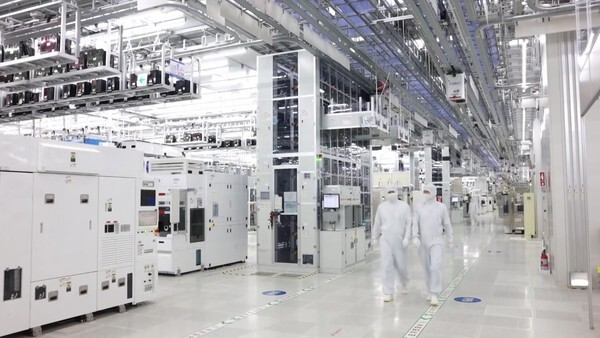
AI and semiconductor cargo played a significant role in sustaining freight volumes despite rising rates. Surging demand for data center servers and networking equipment kept air transport demand firm even as costs climbed. According to air cargo analytics firm Aviaan, global high-tech air freight totaled about 3 million tons in the first seven months of this year, up 22 percent from a year earlier — surpassing, for the first time, the 2.8 million tons of e-commerce cargo originating from China.
Semiconductors now account for more than 70 percent of the export value shipped through Incheon Airport. According to the Korea International Trade Association, exports through Incheon Airport totaled $383.1 billion in the first eight months of this year, up 130.8 percent from a year earlier. Semiconductors accounted for $278.4 billion of that, or 72.7 percent — a share that had hovered in the 50 percent range from 2020 to 2023 before jumping more than 10 percentage points in a single year.
Semiconductors are prized in the industry as high-value "premium cargo" because of their exceptional worth relative to weight. The more semiconductor exports grow, the more airlines stand to benefit.
Airfares up 19% but travelers keep flying; transit passengers surge 42%
Passenger demand has also held firm despite elevated ticket prices. Incheon Airport handled 7,020,441 passengers in August, exceeding 7 million in a single month for the first time since the airport opened, according to the aviation information portal. That was up 7.2 percent from a year earlier and 10.7 percent above August 2019, before the COVID-19 pandemic — even as international airfares rose 19 percent in the third quarter.
Transit passenger numbers also rose sharply. Incheon Airport recorded 2,451,996 transit passengers in the third quarter, up 28.9 percent from a year earlier. Continued disruptions to Middle Eastern carriers, combined with direct flight capacity between the United States and China remaining at roughly one-third of pre-pandemic levels, have channeled more travelers through Incheon. The share of foreign nationals among Incheon Airport users hit a record 44.4 percent in the second quarter.
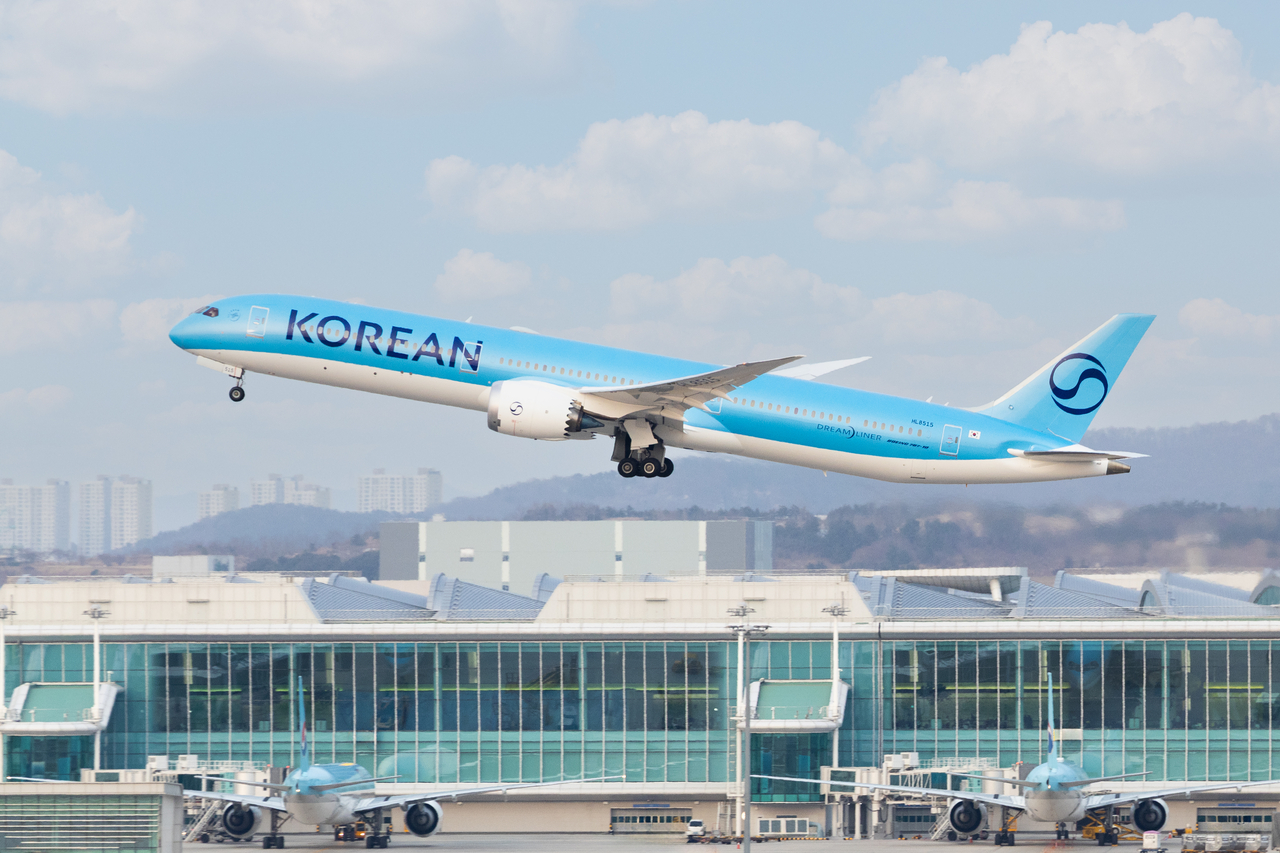
With both cargo and passenger demand expanding, Korean Air is expected to reap the benefits. According to financial data provider FnGuide, the consensus forecast for Korean Air's third-quarter standalone revenue stands at 5.09 trillion won ($3.81 billion), with operating profit projected at 486.5 billion won — up 26.9 percent and 29.3 percent, respectively, from a year earlier.
The key variable, however, is fuel costs. International jet fuel prices climbed back above $170 per barrel in October. International fuel surcharges are expected to rise from level 23 in October to level 27 in November.
"Fares this year have risen even more sharply than during the early reopening phase, when pent-up pandemic demand exploded, partly due to fuel surcharges — yet passengers seem largely unfazed," said Choi Go-un, an analyst at Korea Investment & Securities. "The cargo market faces more limited capacity growth than the passenger segment, and the strong freight market is expected to strengthen further into 2027."
eyre@heraldcorp.com





