Track and road test at Yongin Speedway on Thursday
0–100 kph in 3 seconds, then a near-instant stop
Launch control endured 36 times without fading
Porsche Korea CEO: 'EVs must still be Porsche'
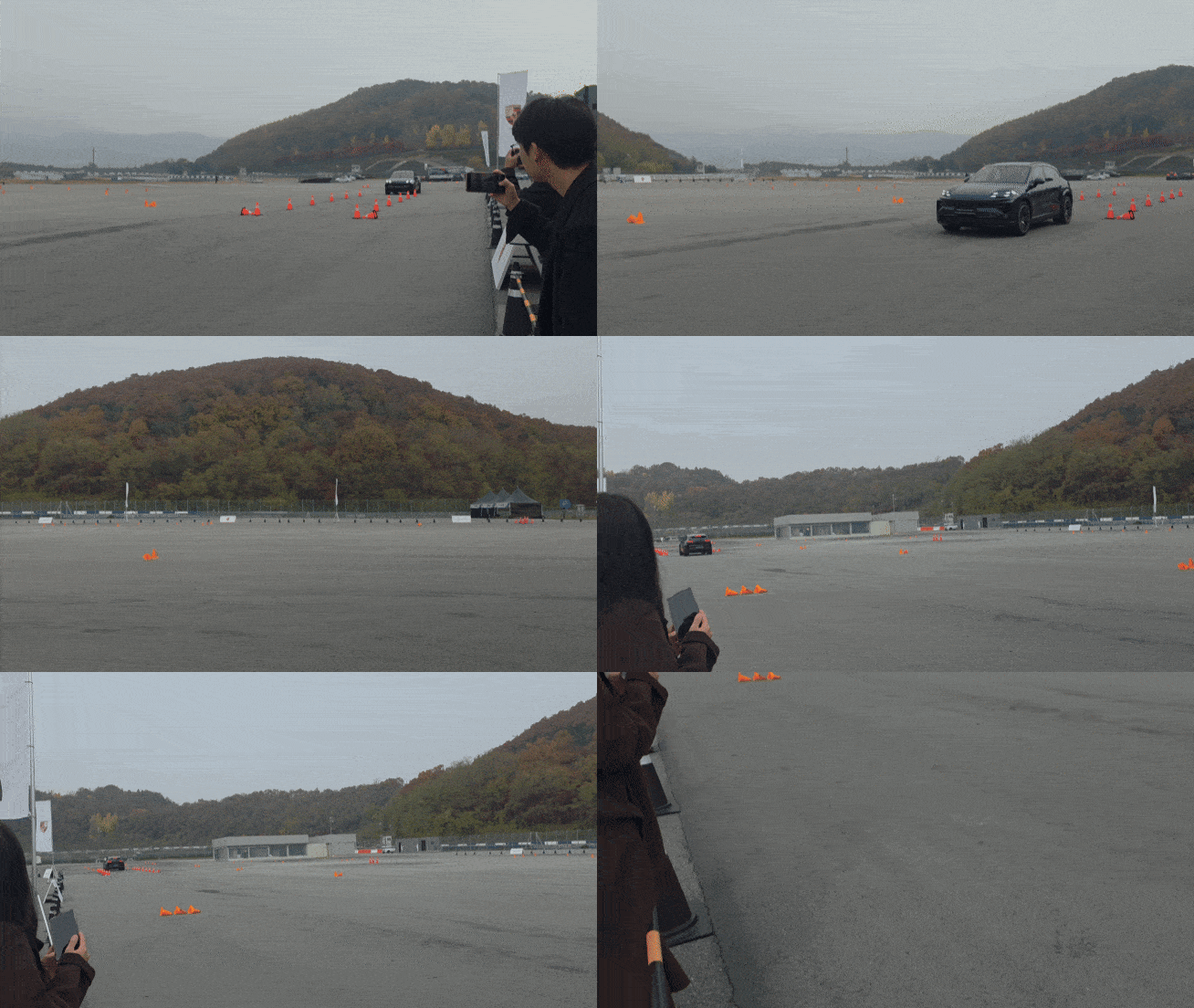
Left foot on the brake, right foot flooring the accelerator. When the launch control ready signal appeared on the instrument cluster, the left foot came off. The seat swallowed the body whole. Across a 63-meter acceleration zone, the speedometer soared to 100 kilometers per hour in an instant — then a hard press of the brake brought more than 2.6 metric tons of SUV to a dead stop almost immediately.
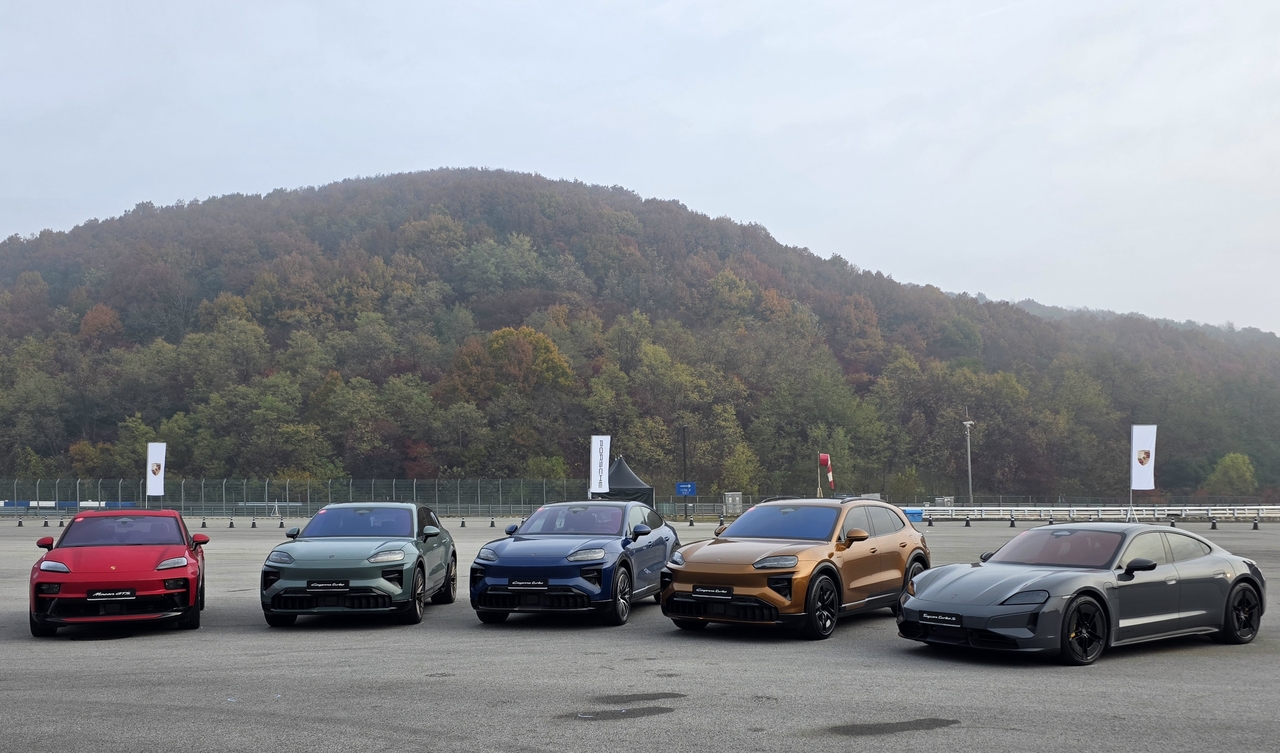
On Nov. 13, Porsche Korea held its "Porsche e-Performance Track Experience" at Yongin Speedway in Gyeonggi Province, offering back-to-back drives of the brand's full battery-electric lineup sold in South Korea: the Taycan, Macan Electric, Cayenne Electric and Cayenne Coupe Electric, tested on both the circuit and nearby public roads.
After cycling through each car, the single strongest impression was not the combined 1,156 horsepower on tap but the confidence that all of it could be reined in safely. Repeated laps built a deep trust in Porsche's brakes — and that trust made it possible to attack the launch control without hesitation.
Cooling technology from Formula E keeps power on tap; Comfort mode tames body roll
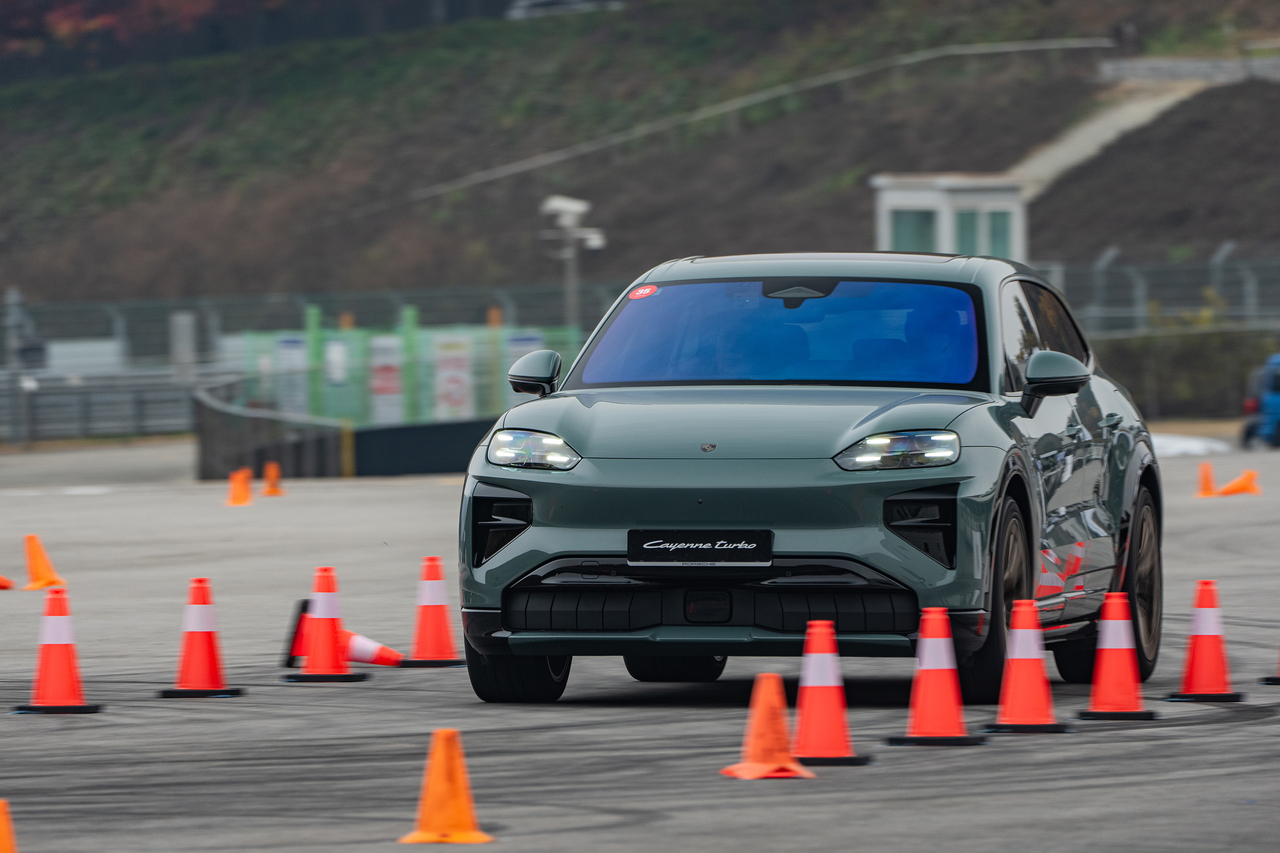
In launch control mode, the Cayenne Turbo Electric delivers a peak output of 1,156 horsepower and maximum torque of 153.0 kgf·m, reaching 100 kph from a standstill in 2.5 seconds. Behind the wheel, the sensation was closer to a theme-park ride than a road car — a physically overwhelming experience of a massive SUV being catapulted forward.
Particularly striking was the car's ability to sustain that performance without fading. Sustained high-output driving heats the battery and motors, which can trigger power limiting to protect the drivetrain. On Thursday, 12 journalists each completed three launch control runs — 36 in total — and the car's output never wavered.
The secret is cooling. The Cayenne S and Turbo models use direct oil-cooled electric motors on the rear axle, a technology derived from Formula E and designed to maintain peak performance under repeated high-load driving. The 113 kWh battery employs dual-sided cooling technology.
In everyday driving, the electric motor handles the bulk of deceleration rather than the brake pads. The Cayenne Electric's regenerative braking system delivers up to 600 kW and manages roughly 97 percent of normal driving deceleration on its own, with the hydraulic brakes stepping in only when stronger stopping force is needed. An instructor noted that both the Taycan and Cayenne can decelerate at up to 0.5g using regenerative braking alone — equivalent to shedding about 18 kph every second.
Multiple braking tests on the public road section produced consistently smooth deceleration. A Porsche representative said the transition between regenerative and physical braking is seamless enough that drivers cannot tell the difference. Each time the brake pedal was pressed, a green gauge on the left side of the instrument cluster filled to show regenerative braking at work.
Comfort mode — introduced for the first time on a Porsche vehicle — improved the ride further. Activated on cars equipped with Active Ride suspension, the mode keeps the body as level as possible. Even through a long right-hand bend on the public road, there was almost no lateral body movement.
Where a conventional car pitches its nose up under hard acceleration and dips it under hard braking, the Cayenne Turbo Electric uses "over-compensation" to do the opposite — raising the rear slightly during acceleration and the front slightly during braking. The result is a composed, unruffled driving experience with virtually no occupant lean. Porsche said the thinking behind the system extends beyond sports-car buyers to families carrying children.
Taycan channels the 911; Macan stays nimble — same track, very different characters
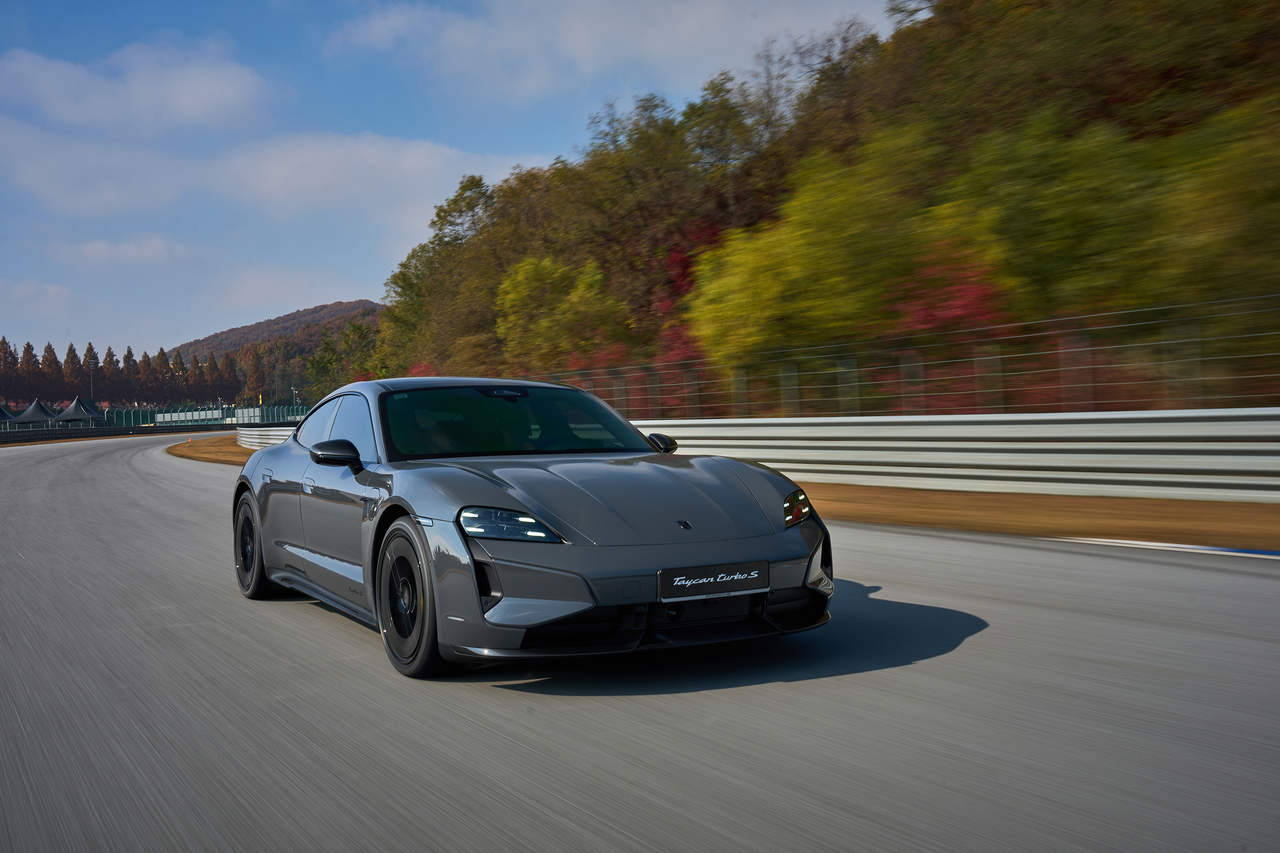
Porsche Korea defines each model's character distinctly: the Taycan as a pure sports car in the spirit of the 911; the Macan as an approachable everyday companion; and the Cayenne as a versatile all-rounder that pairs overwhelming performance with the practicality of a large SUV.
Driving them back to back made those differences visceral. Stepping out of the Cayenne and into the Taycan GTS, the body was thrown noticeably side to side through corners — but the sense of direct engagement with the car sharpened considerably. The virtual engine sound grew louder, and the low-slung body transmitted every surface texture through the seat. The E-Shift system newly introduced on the 2027 Taycan uses software to simulate an eight-speed gearbox; pulling the paddle shifters delivers both a simulated gear-change jolt and a corresponding surge in the virtual engine note.
The Macan GTS Electric was the most agile of the three. Its smaller body — a class below the Cayenne — carved through corners with an effortless lightness. Sharing the same rear-axle electric motor as the Macan Turbo Electric, it produces 516 horsepower and maximum torque of 97.4 kgf·m in standard driving. With launch control engaged, output climbs to 571 horsepower and the car reaches 100 kph from rest in 3.8 seconds.
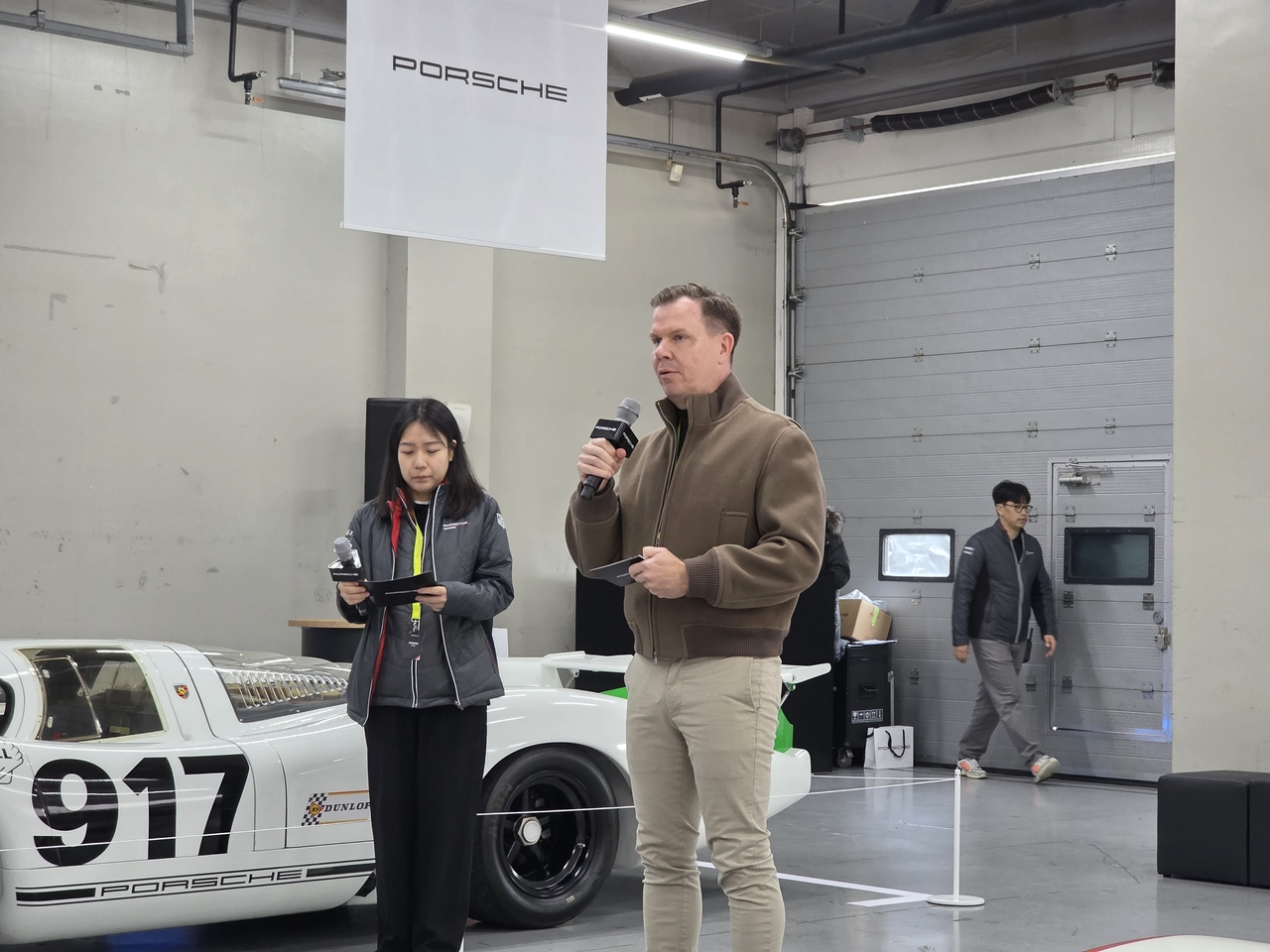
"Electric vehicles must still be Porsche," said Matthias Buse, CEO of Porsche Korea. "That is the direction of our new strategy, Sportwagenschmiede 35 — Porsche is building the most sporty and desirable cars in every segment."
Sportwagenschmiede 35 is a medium-to-long-term strategy through 2035 that Porsche's headquarters announced last month, centered on "value-driven growth" — prioritizing the value generated per vehicle over total sales volume. In line with the strategy, Porsche has trimmed the number of derivative models, sharpened its focus on higher-margin premium segments, and restructured its product lineup to carry internal combustion, plug-in hybrid and fully electric vehicles in parallel.
eyre@heraldcorp.com