
Chung took office as chairman on Oct. 17 last year
Earnings have surged throughout his first year, with a new all-time record forecast for 2026
Business restructuring he led has contributed positively to results
Chung has traveled between Korea and Vietnam to stay close to employees
China's rapid rise poses a key risk
HD Hyundai is expanding into Southeast Asia to sharpen price competitiveness
Trillion-won investments committed to SMR and engine businesses
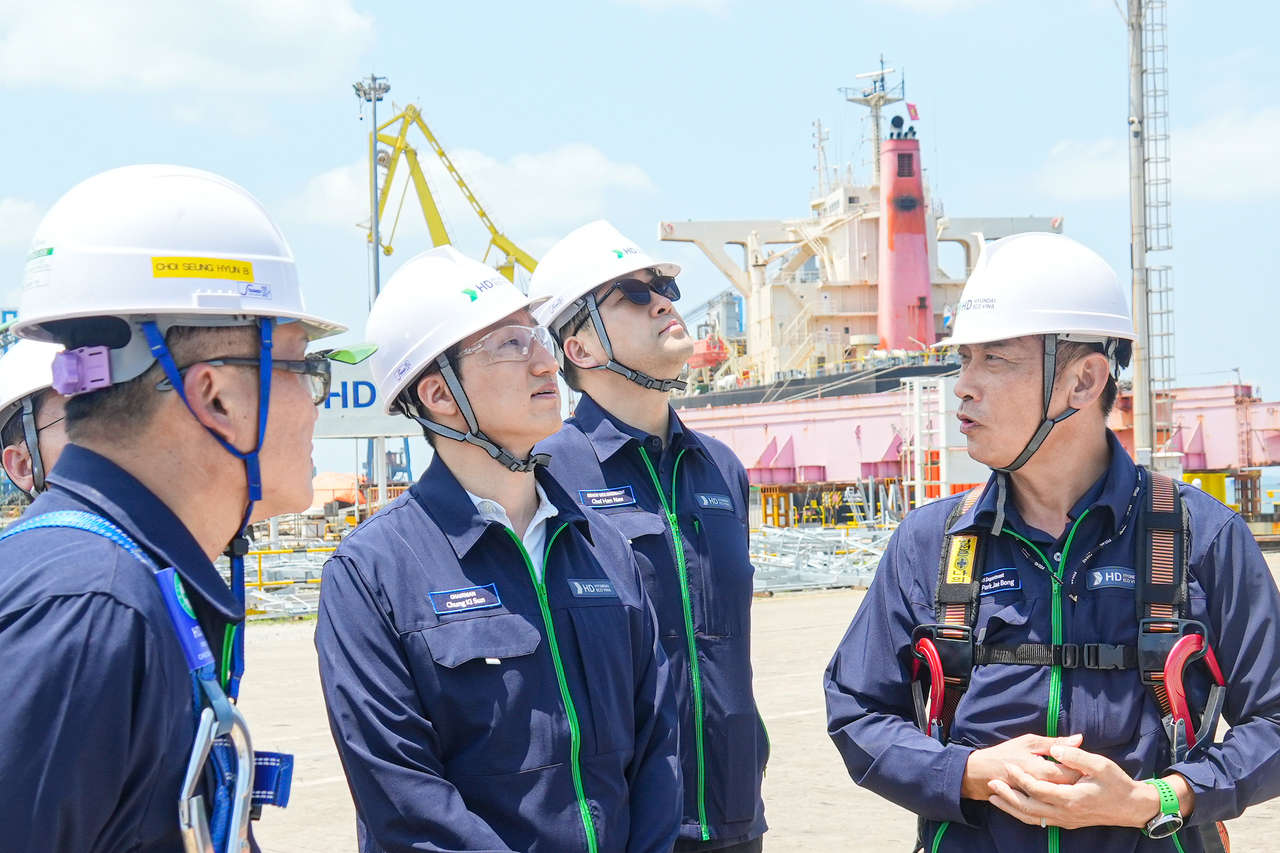
HD Hyundai Chairman Chung Ki-sun marks his first anniversary in office on Saturday. Over the past year, Chung led a sweeping restructuring of the group's core businesses — including shipbuilding and construction equipment — driving the company to record earnings while strengthening ties with employees through hands-on management at sites across Korea and abroad. Despite risks such as intensifying competition from China in the shipbuilding sector, Chung is pushing ahead with plans to expand overseas shipbuilding infrastructure and identify new growth engines to navigate the challenges ahead.
Business restructuring and active field management draw attention
HD Hyundai's earnings have climbed sharply since Chung took the helm, according to industry sources. The company's sales and operating profit for this year are forecast at 85.01 trillion won ($63.4 billion) and 13.25 trillion won, respectively — surpassing within a single year the previous all-time records of 71.26 trillion won in sales and 6.1 trillion won in operating profit set last year.
Industry analysts say the record performance reflects a booming market for shipbuilding and power equipment, but also credit the business restructuring Chung personally directed. Late last year, HD Hyundai completed the merger of HD Hyundai Heavy Industries with HD Hyundai Mipo, and the merger of HD Construction Equipment with HD Hyundai Infracore. The reorganization was designed to improve operational efficiency in shipbuilding and construction equipment while accelerating the development of differentiated technologies. As a result, the shipbuilding unit strengthened its order competitiveness through expanded dock capacity, and the construction equipment business has continued to win orders in both advanced and emerging markets.
Chung has also kept up an active schedule of field visits. Within about a month of taking office, he toured HD Hyundai Electric's distribution campus in Cheongju and facilities operated by HD Hyundai Energy Solutions and HD Construction Equipment in Eumseong. In March, he visited HD Hyundai Vietnam Shipbuilding and HD Hyundai EcoBina in Vietnam. During those visits, he said: "The foundation of management is the field, and the answers to all problems lie there."
In August, Chung attended the naming ceremony for the ammonia-fueled midsize gas carriers Adinkerke and Aalter at HD Hyundai Heavy Industries' shipyard in Ulsan — a visit seen as a show of support for the company's eco-friendly vessel business.
HD Hyundai expands into India and beyond to gain edge over China
Despite a notable first year, Chung faces formidable challenges ahead. The most pressing is competition with China, which has seized the top position in the global shipbuilding market by leveraging strong price competitiveness and broad government support. Chinese shipbuilders are also closing in fast on the high-value vessel segment — including LNG carriers — where Korean yards had long held a clear advantage.
To gain the upper hand against China, Chung is pushing to expand HD Hyundai's overseas presence. The strategy centers on building new shipbuilding infrastructure in Southeast Asia, where labor costs are lower than in Korea, to sharpen the group's price competitiveness.
India is the country HD Hyundai has its eye on. India is actively pursuing the development of its shipbuilding industry and sees HD Hyundai as an ideal partner. Indian Prime Minister Narendra Modi invited Chung to his official residence in January to discuss expanding bilateral cooperation in shipbuilding. Since then, HD Hyundai has been exploring the construction of a shipyard in the southern Indian state of Tamil Nadu.
The company is also accelerating the development of differentiated vessel technologies. A three-tank LNG cargo hold system is a prime example — a world-first technology HD Hyundai is developing that maintains the ship's overall size while reducing the space between cargo tanks to increase LNG carrying capacity.
HD Hyundai is also moving into new businesses for future growth. The company has identified small modular reactors and engines as its key new ventures. With power demand surging on the back of expanding AI infrastructure, SMRs and engines are drawing attention as AI energy sources and power generation devices, respectively.
To position itself for growth in the SMR and engine markets, HD Hyundai announced last month an investment of 1.07 trillion won — the first trillion-won-scale investment since Chung took office. Of the total, 833.6 billion won will go toward building a new engine production base, while the remaining 238.6 billion won will fund construction of a dedicated manufacturing facility for SMR primary components.
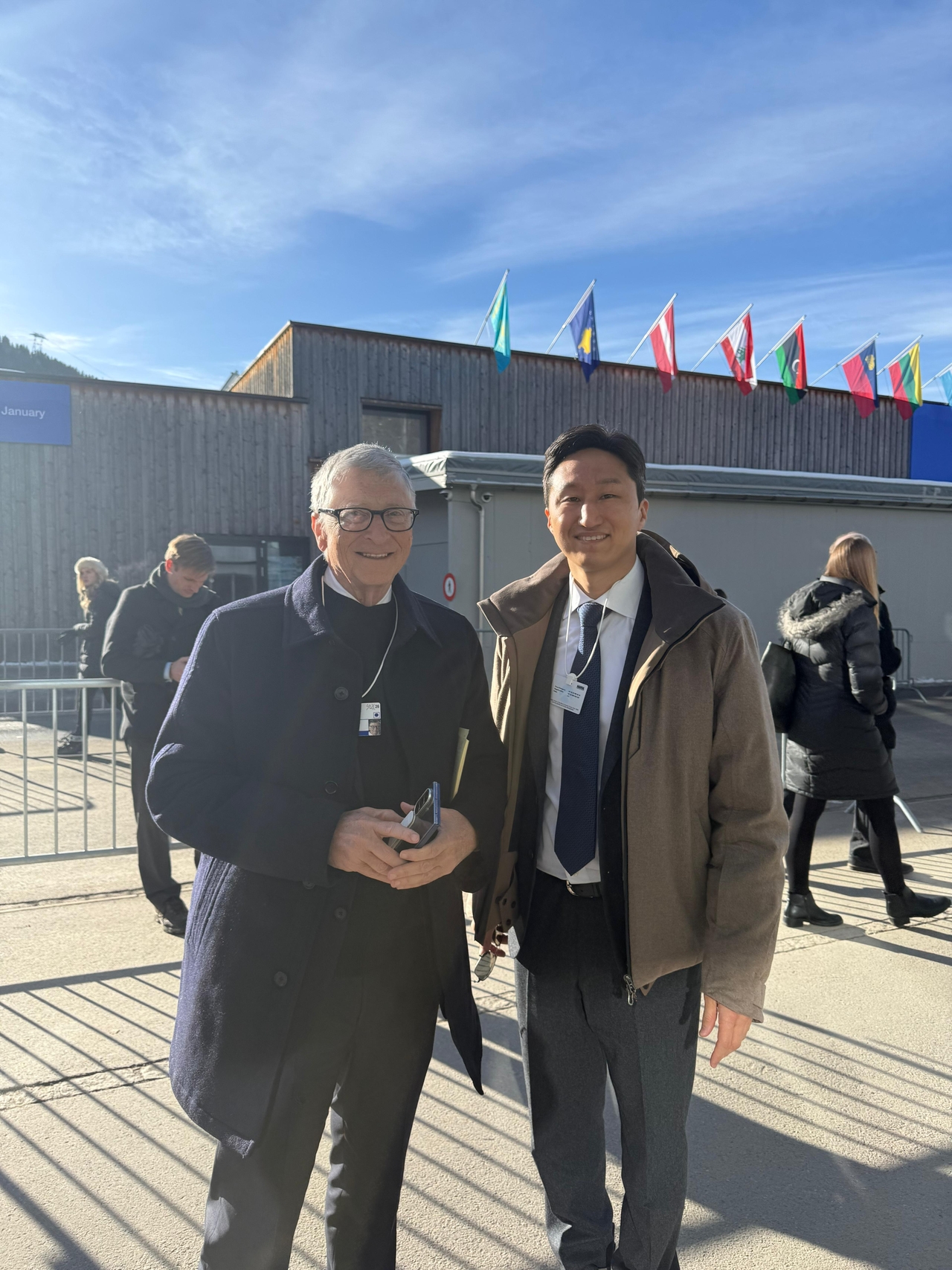
HD Hyundai is also deepening collaboration with global partners, including TerraPower, a US-based SMR company. Chung met with TerraPower founder and chairman Bill Gates in August to discuss cooperation on the SMR business — their second meeting in three months, following an earlier encounter in May.

yeongdai@heraldcorp.com





