
President Lee Jae Myung chairs inaugural Population Strategy Committee meeting; plan targets youth support, dignified aging and open society across four pillars
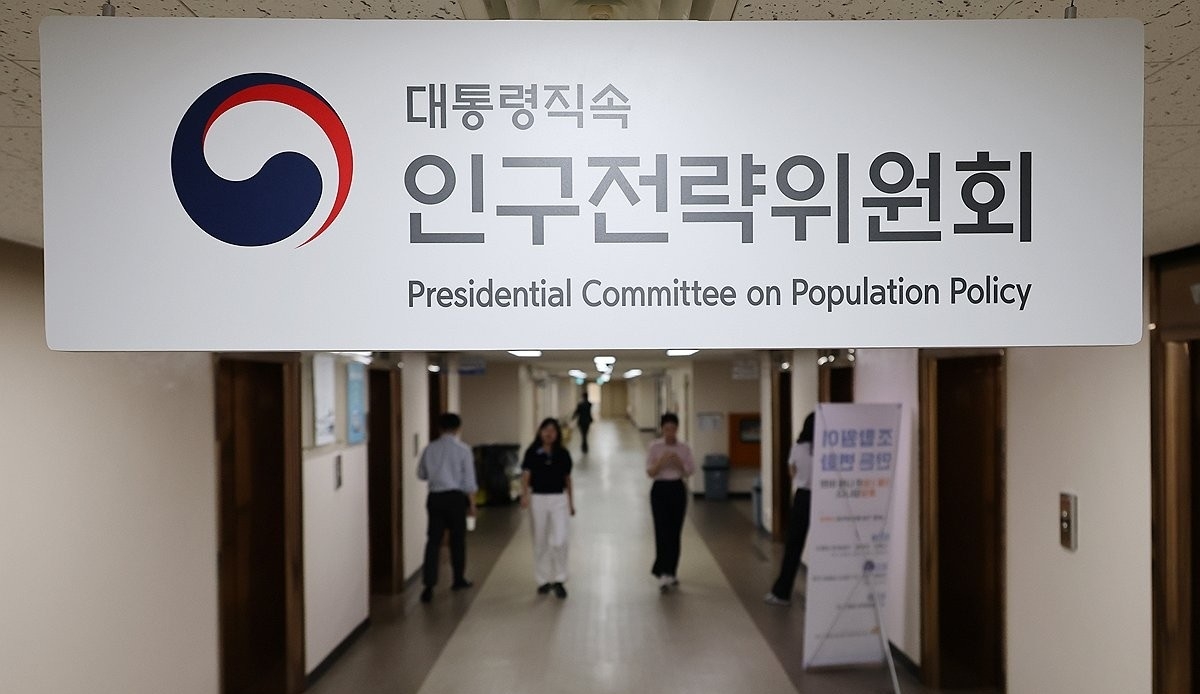
The government has unveiled the strategic direction and key tasks for its population policy over the next five years — a period it describes as a critical window for responding to demographic change. The First National Population Strategy Master Plan, released by the Population Strategy Committee that launched last month, addresses sweeping social shifts including regional depopulation, the technology-driven transformation of the economy, and the growing diversity of migrants and family structures. The plan shifts from a ministry-by-ministry approach to a pan-government framework, and aims to maximize policy effectiveness through a pre-budget consultation system and in-depth evaluations of population policy.
The Population Strategy Committee held its inaugural plenary session and population vision proclamation ceremony Wednesday, chaired by President Lee Jae Myung. The committee announced the First National Population Strategy Master Plan, which sets "improving individual quality of life" and "securing social sustainability" as its twin goals.
The government will pursue the plan across four pillars: supporting youth through each stage of life, guaranteeing a dignified old age, building a capability-driven society grounded in technological innovation, and establishing a cooperative system for an open society.
Tailored support for youth at each life stage, work-life balance measures
Among the specific initiatives, the government will expand housing and financial support for young people and multi-child households, supplying 571,000 public housing units for youth, newlyweds and child-rearing families in preferred locations such as transit-oriented areas. It will also strengthen support for young people buying their first home by creating a new Youth Future Home Loan program.
The plan also eases income requirements for newlywed policy loans and allows unmarried young people in public rental housing to renew their leases even if marriage pushes them above income and asset thresholds — removing what the government calls a "marriage penalty." Additional measures include expanding public-sector apartment subscription opportunities for multi-child households and offering preferential loan rates for families with three or more children.
To build a child-friendly environment and make work-family balance more tangible, the government will create a new child-welcoming support grant and restructure the basic child allowance to broaden financial support for childbirth and child-rearing.
A new childcare allowance will be extended to artists, special-employment workers, freelancers and sole proprietors to close gaps in childcare support. The government also plans to introduce a "flexible work choice system" allowing individuals to select and use parental leave and flexible working arrangements according to their own circumstances.
![[Yonhap]](https://wimg.heraldcorp.com/news/cms/2026/10/14/news-p.v1.20261014.869bd9a2621e4126a7a1fb5d43363e2b_P1.jpg)
Policies to guarantee a 'dignified old age' in an era of demographic transformation
To support the stable daily lives of elderly dementia patients, the government will strengthen the guardianship system by training reliable public guardians and overhauling supervision and oversight mechanisms at family courts and regional dementia centers, while expanding related infrastructure across the board.
The trust system will also be upgraded: financial institutions will be permitted to accept a broader range of assets in trust, and hospitals, law firms and other specialized institutions — not just licensed trust operators — will be allowed to handle trust asset management, strengthening links to specialized services in areas such as healthcare and taxation.
For dementia prevention, the government will develop and distribute diagnostic tools for dementia care centers to promote early screening, while expanding the network of dementia primary-care physicians, increasing the number of dementia-specialized hospitals and broadening in-home care services.
Support will be expanded for employers outside the greater Seoul area who implement continued-employment systems, and the reduction of old-age pension benefits triggered by business income will be eased. The government will also raise the quality of senior jobs by expanding tailored employment programs and increasing per-unit pay rates.
Some 25,000 age-friendly housing units — including welfare housing and silver-stay facilities — will be supplied over five years for older residents, and a pilot program for intergenerational care housing will be launched to diversify housing options. The government will also build an age-friendly transportation system, including extended pedestrian signal times and improvements to demand-responsive transit services.
![[123RF]](https://wimg.heraldcorp.com/news/cms/2026/10/14/news-p.v1.20261014.dc9746ba2f7b4e2a8da9a5f5e69dcc0c_P1.jpg)
Turning the demographic crisis into opportunity through innovation; building an 'open society' coexistence system
The government will strengthen foundational competencies for the AI era through tailored AI education across different life stages.
AI capacity-building education will be rolled out in stages from elementary through university level. For job seekers at career transition points — including employed workers and those who have left the workforce — the government will provide customized AI training and contract-based university programs to bolster AI readiness.
Older adults who struggle with AI and digital technology will receive enhanced digital literacy education covering smartphones and kiosk use, supporting their broader participation in society.
Alongside this, the government will work to build a coexistence and integration system suited to social changes such as the diversification of lifestyles and regional imbalances.
Taking into account factors such as gender, age and region, the government will expand tailored support for single-person households, including building an integrated policy platform for them. It will also strengthen family-based care for children in need of protection and lay the groundwork for child-centered domestic adoption by improving adoption procedures and bolstering support for families who adopt children with disabilities.
To narrow regional disparities and slow depopulation by improving residents' quality of life, the government will institutionalize a "regional preference" principle at the budget pre-consultation stage, ensuring it is applied during budget formulation, and will continuously identify and gradually expand eligible projects.
To improve living conditions in regional areas, the government will expand mobile care classrooms that visit communities directly, mobile markets and rural welfare buses that deliver daily necessities, and rural medical visit buses that bring healthcare services to areas lacking adequate infrastructure.
To stimulate local consumption and support small businesses, the government will issue more than 30 trillion won ($22.4 billion) in local gift certificates and expand the rural and fishing village basic income program to 35 regions.
![[123RF]](https://wimg.heraldcorp.com/news/cms/2026/10/14/news-p.v1.20261014.886cf875207b4093b864f7f4a339ff53_P1.jpg)
Population Strategy Committee to coordinate with ministries; pre-budget consultation and in-depth policy evaluations to be introduced
Beyond the four main pillars, the government identified key challenges requiring broader public deliberation, including building a life-cycle K-care delivery system, training a youth care workforce grounded in age-tech, and attracting global talent while expanding settlement opportunities for migrants.
To implement the national population strategy effectively, the government will restructure and strengthen the existing policy framework. The Population Strategy Committee will oversee population policy at the pan-government level, and a pre-budget consultation system will be introduced to coordinate the investment direction and priorities of each ministry's population-related budget programs before the budget is finalized.
The government also plans to introduce a population impact forecasting system that periodically publishes projections of demographic change by sector and industry along with analyses of their effects. In-depth evaluations of population policy conducted by specialized institutions will be carried out to improve the effectiveness and real-world impact of population programs.
The First National Population Strategy Master Plan is set to be finalized after a final round of public input, revisions and supplementation, and deliberation and approval at vice-ministerial and Cabinet meetings.
thlee@heraldcorp.com





