
Police reform committee holds first meeting Wednesday
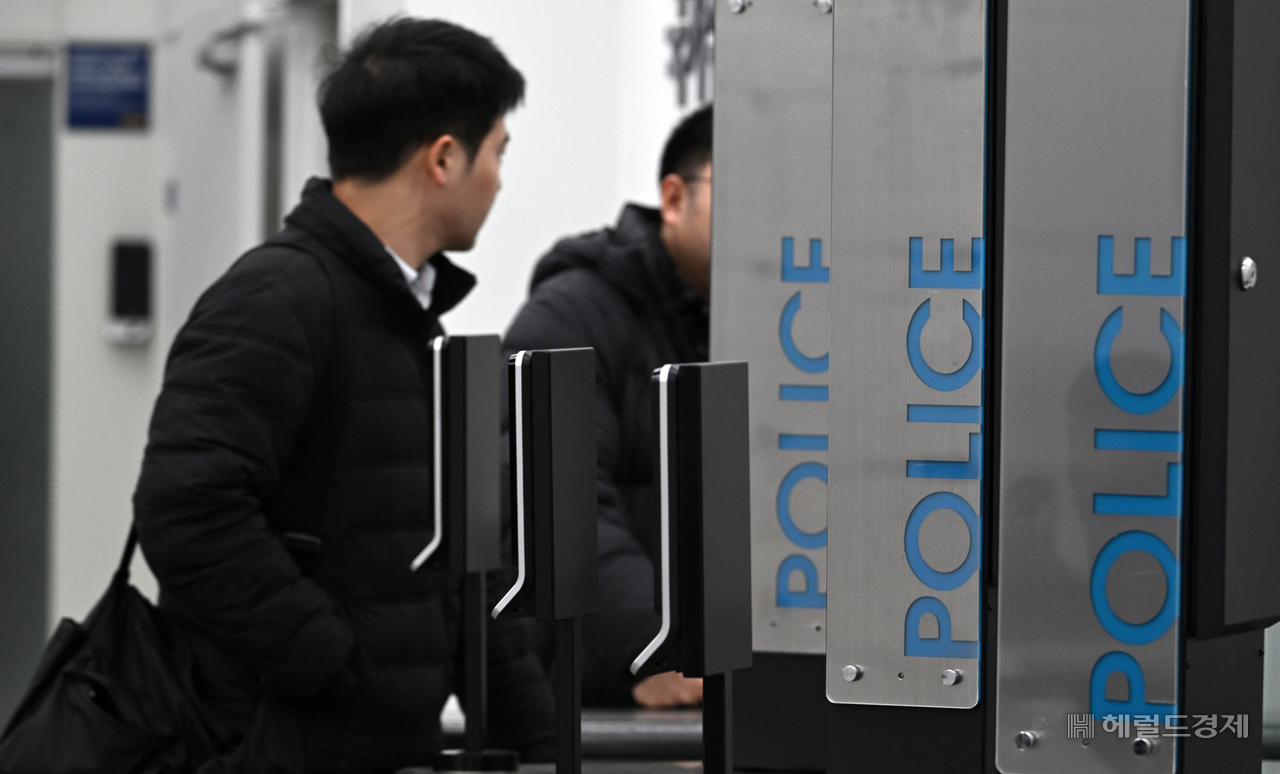
The government's Police Reform Committee holds its inaugural meeting Wednesday, formally launching its work.
The committee, established under the Office of the Prime Minister, was set up to devise mechanisms to check the expanded police powers that followed the abolition of the Prosecution Service on Oct. 2, which handed the police full investigative authority. It is composed of Prime Minister Han Seong-sook, heads of relevant agencies including the Ministry of Interior and Safety, the Ministry of Justice and the Korean National Police Agency, as well as civilian experts.
President Lee Jae Myung earlier directed the prime minister's office at a Cabinet meeting in August to draw up a police reform plan, citing lax discipline and a lack of accountability within the force. "I have doubts about whether the police are sufficiently fulfilling the responsibilities that come with such sweeping authority," Lee said. "I ask that you give serious thought to a police reform body and how to reform the police going forward."
Separately from the government committee, the Democratic Party of Korea's Police Reform Task Force was reported Tuesday to be reviewing ways to guarantee independent authority over personnel and budgetary matters at the National Investigation Headquarters under the Korean National Police Agency. The task force is also pushing to expand and codify a mandatory rotation system for local police officers to prevent collusion with local communities.
The task force, co-chaired by lawmakers Kim Nam-hee and Lee Hae-sik, was launched Sept. 1 as a body directly under the party leader, prompted by controversy over shoddy police investigations. Party leader Kim Min-seok said at the task force's first meeting that he had urged the police during his time as prime minister to develop a reform plan but had not been satisfied with the result. "It seems difficult for them to come up with a reform plan on their own," he added.
Kim called on the task force to pursue every possible measure to root out what he described as six chronic failings of the police: covering up for their own, burying cases, closing investigations without authorization, concealing and fabricating evidence, leaking investigative information, and violating personal privacy.
Police reform also emerged as a key issue at the current National Assembly national audit — the first since the abolition of prosecutorial investigative powers. Interior and Safety Minister Yun Ho-jung told the Assembly's interior affairs committee audit on Oct. 6 that the government was pushing hard for police reform, including rooting out internal corruption and overhauling the investigative system, to restore public trust in a force whose reputation had been damaged by botched and buried investigations.
Abolishing the National Police University was also raised as a way to reform the police command and investigative culture. Democratic Party lawmaker Lee Sang-sik, a former chief of the Daegu Metropolitan Police Agency, said the police needed to make painful sacrifices and endure hardship, arguing that the elitism fostered by the National Police University was undermining organizational cohesion. Yun said he would look into the matter.
Kim Jong-cheol, acting commissioner general of the Korean National Police Agency, said at the agency's national audit Monday that the changes to the criminal justice system represented "not an expansion of authority, but a heavier responsibility," pledging to steadily build public trust by quietly fulfilling the duties entrusted to the police.
arin@heraldcorp.com





