Finance minister visits Bangkok for G20, G7 meetings in first multilateral diplomacy
Calls for addressing global imbalances and strengthening international cooperation
Seeks to deepen supply chain and advanced industry ties with key partners
![Deputy Prime Minister and Minister of Finance and Economy Lee Hyung-il arrives at the G20 Finance Ministers and Central Bank Governors Meeting in Bangkok, Thailand, on Thursday (local time). [Ministry of Finance and Economy]](https://wimg.heraldcorp.com/news/cms/2026/10/16/news-p.v1.20261016.1cde245afa814ac9ab1482627a65b568_P1.jpg)
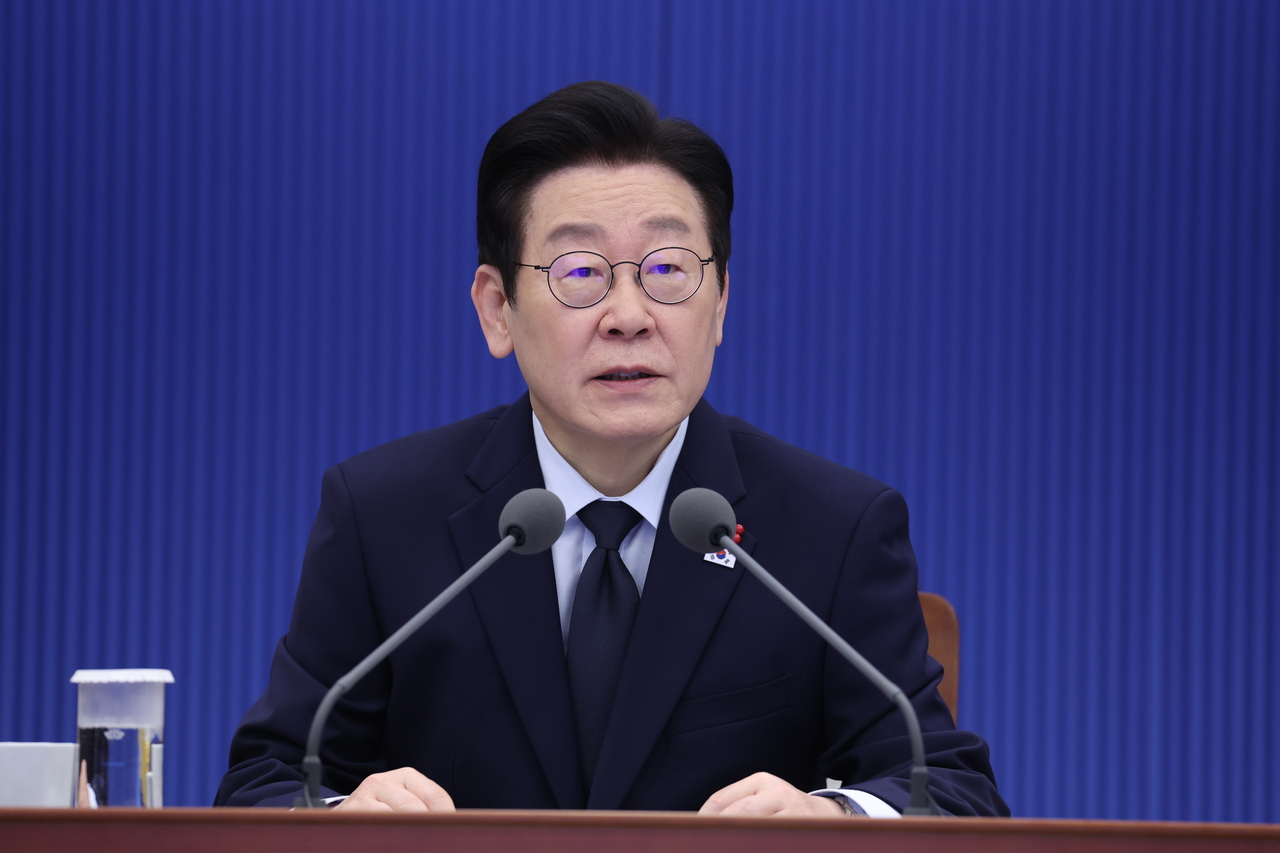
Deputy Prime Minister and Minister of Finance and Economy Lee Hyung-il called on G20 members to strengthen supply chain resilience and step up investment in future growth engines such as AI at his first multilateral diplomatic outing since taking office.
On the sidelines of the meetings, Lee agreed with Japan to extend a $10 billion currency swap for three years and proposed cooperation with Singapore on a strategic sovereign wealth fund, as he moved to deepen economic and financial coordination with key partners.
Lee attended the G20 and G7 Finance Ministers and Central Bank Governors Meetings in Bangkok, Thailand, on Thursday (local time), the Ministry of Finance and Economy said Friday. It was his first multilateral diplomatic engagement since taking office on Sept. 22.
The meetings — the final in-person gatherings of finance ministers under the United States' G20 presidency and France's G7 presidency this year — gave major economies a chance to review progress made during the year and discuss the road ahead.
At the G20 session, Lee identified supply chain disruptions from geopolitical tensions including the Middle East war, the challenge of high inflation and high interest rates, and the need to find new growth drivers in step with emerging technologies such as AI as the world economy's key tasks. He urged G20 members to bolster supply chain resilience, protect vulnerable populations and actively invest in future growth engines such as AI.
This year's G20 finance track centered on economic growth, global imbalances and debt, financial stability and regulatory reform, and improving financial literacy. Lee said South Korea, which will hold the G20 presidency in 2028, would continue troika cooperation with the United States and the United Kingdom to contribute to stable global economic growth. The G20 troika is a framework in which the outgoing, current and incoming presidencies work together to ensure continuity on key agenda items and coordinate policy.
Lee also attended the G7 Finance Ministers Meeting as an invited guest, where discussions covered the global economy and global imbalances. South Korea was invited to this meeting as well as the one held last May, making it the first time the country has attended two G7 finance ministers meetings in a single year.
Lee raised the issue of global imbalances — where large current account surpluses in certain countries contribute to deficit accumulation in others — and said broad macroeconomic policies and structural reforms are needed to address them. He also said comprehensive international cooperation through the G20, not just coordination within the G7, is essential.
At a G7 side event on Africa, Lee drew on South Korea's development experience to highlight the importance of investment and value creation, and expressed his commitment to continuing cooperation through the Korea-Africa Economic Cooperation ministerial conference and similar channels.
![Deputy Prime Minister and Minister of Finance and Economy Lee Hyung-il meets with Singapore's Second Minister for Finance Indranee Rajah at the Queen Sirikit National Convention Center in Bangkok, Thailand, on Thursday (local time), on the sidelines of the IMF-World Bank Annual Meetings and the G20 and G7 Finance Ministers and Central Bank Governors Meetings. [Ministry of Finance and Economy]](https://wimg.heraldcorp.com/news/cms/2026/10/16/news-p.v1.20261016.bb5b1a3493cf457aaccc8e267034a4d6_P1.jpg)
On the sidelines of the meetings, Lee held a series of bilateral meetings with finance ministers from major economies, combining introductory exchanges with discussions on key economic and financial issues.
With Japanese Finance Minister Katayama Satsuki, Lee agreed to extend the $10 billion Korea-Japan currency swap — set to expire at the end of next month — by three years to November 2029, with no change in size. Under the arrangement, each country provides its own currency and borrows dollars from the other. The two sides also agreed to hold the next Korea-Japan finance ministers meeting in South Korea at the earliest opportunity.
In a meeting with Singapore's Second Minister for Finance Indranee Rajah, Lee proposed that Temasek share its operational expertise and deepen cooperation in connection with the government's push to establish a strategic sovereign wealth fund. Rajah responded positively, the ministry said. Temasek is a state-owned investment company wholly owned by the Singapore government.
The two countries also agreed to work together to strengthen regional financial cooperation, as they are set to serve as co-chairs of the ASEAN+3 Finance Ministers and Central Bank Governors Meeting next year.
With Australian Treasurer Jim Chalmers, Lee said he hoped to continue multilateral cooperation built through their work as co-chairs of the G20 Global Imbalances Study Group. Lee also recalled Australia's support during the urea solution supply shortage in 2021 and reaffirmed the two countries' cooperation in supply chain areas including energy and critical minerals.
In a brief meeting with German Deputy Chancellor and Finance Minister Lars Klingbeil, the German side described the two countries as key partners in manufacturing, critical mineral supply chains and the digital sector, and expressed hope to expand cooperation in physical AI across traditional industries such as automobiles, chemicals and pharmaceuticals. Lee outlined South Korea's three major mega-projects and other key AI investment plans, and expressed interest in the European economic situation.
With British Chancellor of the Exchequer John Healey, Lee expressed support for the United Kingdom's plans to run the G20 finance track during its 2027 presidency and proposed cooperation to strengthen economic resilience, including youth employment. The British side also expressed hope to coordinate on global issues through the G20 troika, in which both countries participate.
With Asian Development Bank President Kanda Masato, Lee discussed follow-up steps on cooperation in AI, critical minerals and nuclear power plants that the two had discussed in September. Lee asked the ADB to play a role in translating the outcomes of summit diplomacy into concrete projects, and also requested support for expanding the presence of Korean personnel at the bank.
y2k@heraldcorp.com