Small vendors, self-employed losing bargaining power, Joo says
FTC chair calls for 1% sales penalty on firms that refuse probes
Tougher sanctions needed to deter violations, he adds
Fair Trade Commission Chairman Joo Byung-ki said Friday that the market power online platforms can wield over small businesses and gig workers "can become a weapon," warning that the economic weight of those who depend on such platforms is too large to ignore.
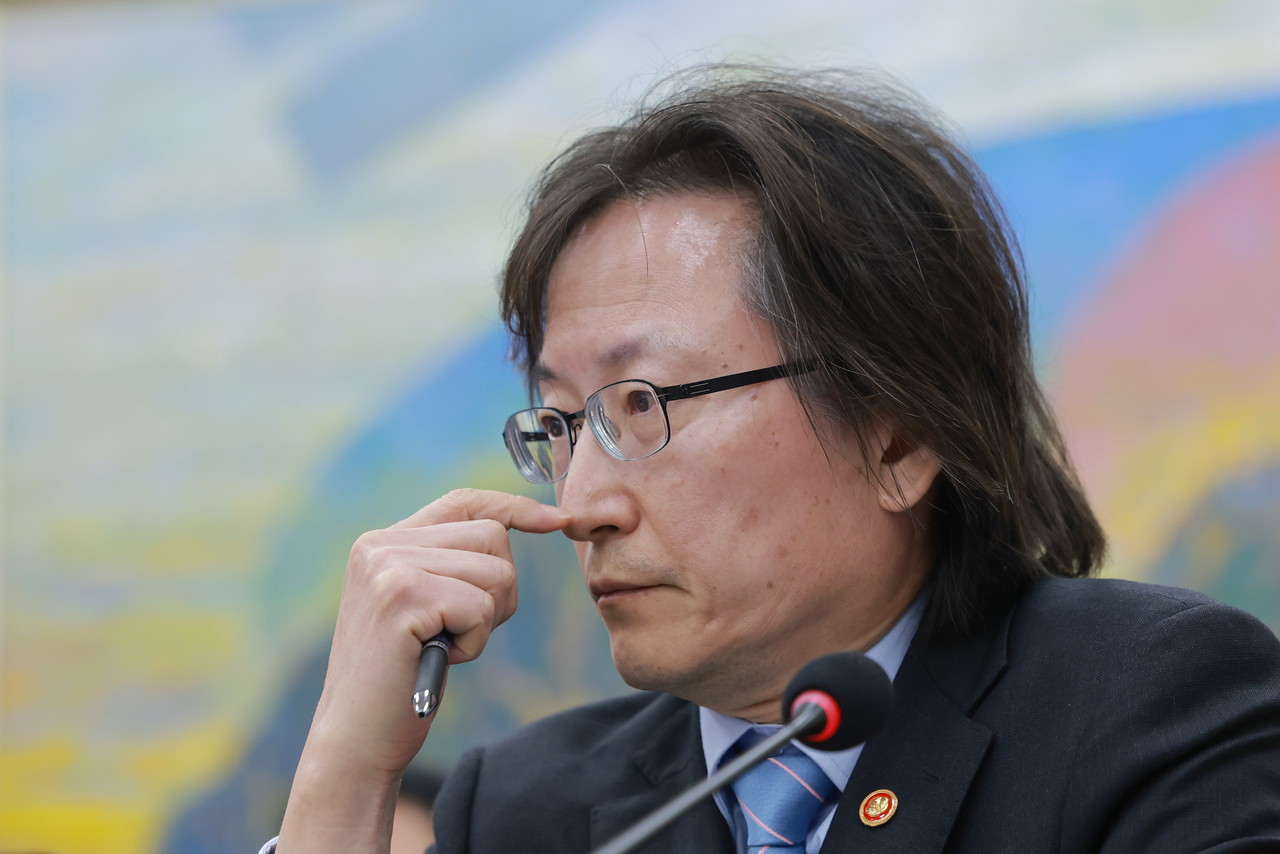
Joo made the remarks in a video address to an autumn academic conference jointly hosted by the FTC and the Korea Distribution Law Association, held Friday at the Life Insurance Education and Culture Center in Jongno-gu, Seoul. "South Korea is experiencing the fastest growth in e-commerce centered on online platform operators anywhere in the world," he said.
He acknowledged that consumers now enjoy far greater convenience than before, but said the other side of that picture was troubling. "It is also true that the bargaining power of small and medium-sized enterprises, small business owners, the self-employed, and workers in the production sector — all of whom are essential to meeting that consumer demand — is being eroded to an unprecedented degree," he said.
On online platforms specifically, Joo said they "freely control the transaction environment of their users, monopolize all data those users generate, and exercise powerful market influence backed by an unprecedented network effect."
He also pointed to the absence of platform-specific legislation as a serious problem. "If the real economy is changing at 100 kilometers per hour and enforcement cannot keep up, who will protect the rights of the economically vulnerable?" he said. "Interpreting and applying the law without grounding it in reality and common sense is no different from negligence."
Joo also sharply criticized recent media reports on the FTC's push to strengthen its investigative powers, saying they were "spreading falsehoods as if they were facts."
"There is rampant agitation on behalf of unfair companies — claiming that imposing a 1 percent surcharge on sales for refusing an investigation amounts to 'forced investigation using penalties as a weapon' or 'an infringement of the right to defense,'" he said.
He called for laws and regulations to be updated in line with changes in the economic environment and for sanction levels to be raised. "New types of unfair trade practices are emerging due to power imbalances and information asymmetry, and consumer harm is becoming more varied," Joo said. "Outdated laws must be revised and necessary new laws must be enacted to keep pace with these changes."
"Sanctions that meet only a developing-country standard must be raised to an advanced-country standard before we can secure real deterrence against violations," he added.
The conference also featured presentations by Hwang Yun-hwan, an attorney at law firm Yulchon, Korea University professor Lee Seung-hun, and Seoul National University School of Law researcher Jeong Ju-mi, who addressed key issues and challenges under the Large-Scale Distribution Business Act, major questions surrounding a dual-track surcharge system in the retail sector, and the case for introducing collective bargaining rights, respectively.
y2k@heraldcorp.com