
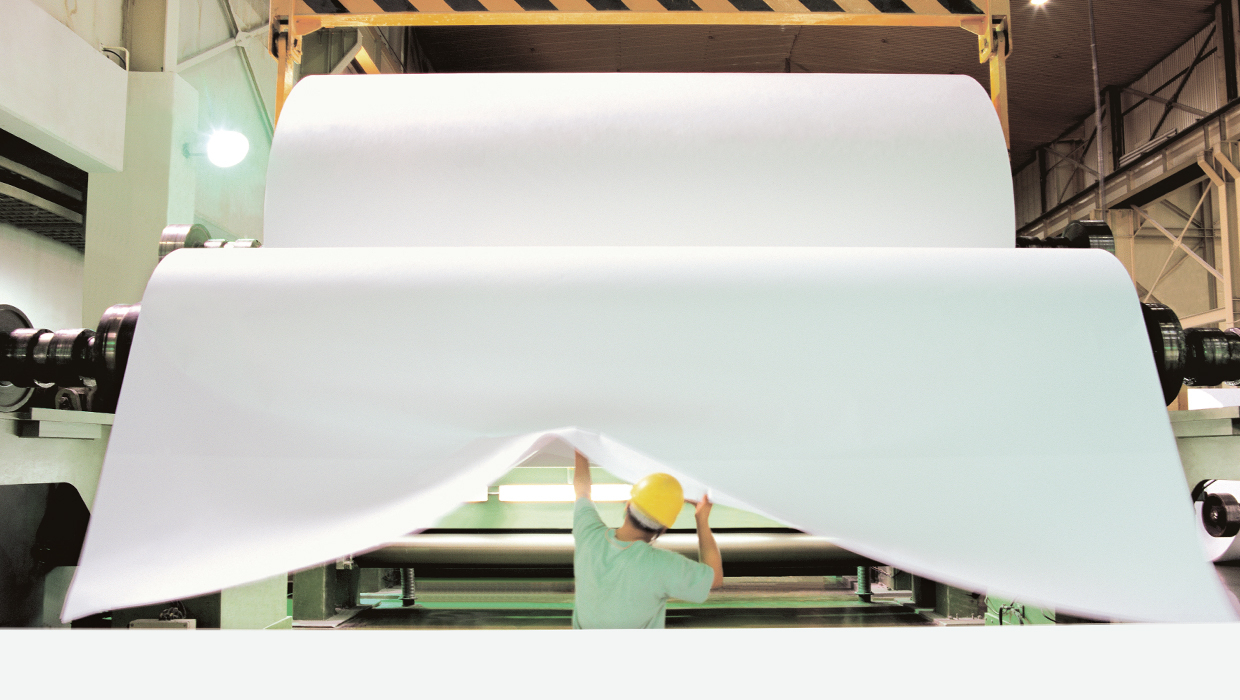
Paper industry maintains 83,000 hectares of plantations at home and abroad — 290 times the size of Yeouido
Hansol recycles process water; Moorim runs integrated pulp production from wood chips
Yuhan-Kimberly plants and tends more than 58 million trees over 42 years
Paper is made from trees. Use more paper, use more trees. Trees come from forests. Therefore, using more paper destroys forests. This is a long-standing misconception about the paper industry — one that falls apart under scrutiny. A useful analogy: eating more rice does not make rice paddies disappear, because farmers harvest the crop and replant. The same logic applies to paper. Just as rice is cultivated in paddies, trees for papermaking are grown on managed plantations, harvested, and replanted. The difference is timing — rice is replanted every year, while plantation trees take several years to mature.
South Korea's leading paper companies, including Hansol Paper, Moorim and Hankuk Paper MFG, have been running plantation programs at home and abroad, according to industry data released Friday. A 2023 tally by the Korea Paper Manufacturers Association put the combined domestic and overseas plantation area of these companies at about 83,000 hectares — roughly 290 times the size of Yeouido. Of that total, about 9,000 hectares are in South Korea and about 74,000 hectares are overseas.
This kind of forest management closely mirrors crop farming: trees are cultivated for timber, harvested at the right time, and replanted — much as a farmer harvests rice and puts new seedlings in the ground. Moorim offers a prominent example. The company owns Inje Forest, a roughly 2,000-hectare birch plantation in Inje, Gangwon Province, which received Forest Stewardship Council (FSC) certification for sustainable forest management in 2021. Moorim also announced in 2023 that it would halt logging in its existing plantation areas and focus instead on forest conservation and management.
Moorim P&P produces pulp domestically using wood chips, sourcing about 48 percent of its wood chip requirements from within South Korea as of 2025 and importing the rest from Vietnam, Thailand and elsewhere. At its Ulsan factory, the company runs an integrated production system linking the pulp plant directly to the paper plant. Wet pulp is fed straight into the papermaking process without drying first, cutting the energy needed for drying and re-pulping.
Hansol Paper has focused on reducing the water and energy consumed in paper production. Papermaking uses large volumes of water to dissolve pulp and form it into sheets. Hansol Paper operates a closed-loop system that collects and treats process water for reuse. In 2024, the company reused about 9.54 million cubic meters of water, achieving a reuse rate of 37 percent.
The company has also moved to cut energy costs. Hansol Paper is installing solar power systems this year at its facilities in Daejeon and Sintanjin, among other sites. At the Sintanjin factory, a roughly 1,860-kilowatt installation is expected to generate about 2.25 million kilowatt-hours of electricity annually and reduce greenhouse gas emissions by about 1,031 metric tons. The aim is to raise the share of self-generated power and lower spending on electricity purchased from the grid.
The use of internationally certified raw materials is also expanding. Hansol Paper holds FSC certification across all its facilities and supplies certified products. KleanNara uses FSC-certified pulp in its Sunu tissue line and other products. FSC is an international certification system that verifies sustainable forest management and supply chain oversight, allowing consumers to confirm on the product itself whether certified materials were used.
Yuhan-Kimberly has sustained long-term forest conservation efforts through its "Keep Korea Green" campaign, launched in 1984. Now in its 42nd year, the campaign has resulted in more than 58 million trees planted and tended in South Korea and abroad.
More recently, the company has expanded its scope to include the conservation of endangered tree species. On Thursday, Yuhan-Kimberly planted 500 ten-year-old Korean fir saplings at the National Baekdudaegan Arboretum in Bonghwa, North Gyeongsang Province. The planting marked the culmination of a seed collection, preservation and nursery program the company has pursued since 2021. Its partnership with the arboretum is set to continue through 2030.
Another common misconception is that forests produce most of the Earth's oxygen. In fact, roughly half of the planet's oxygen comes not from land but from the ocean. According to the US National Oceanic and Atmospheric Administration (NOAA), about 50 percent of the world's oxygen is produced at sea, generated by phytoplankton, algae and photosynthetic bacteria that use sunlight and carbon dioxide to produce oxygen.
hong@heraldcorp.com





