Seoul High Court overturns lower ruling, recognizing all processes as 'security work'; 20 million won penalty per violation
Union's planned three-week strike set for Oct. 26 dealt major blow as court accepts company's argument on cell degradation risk
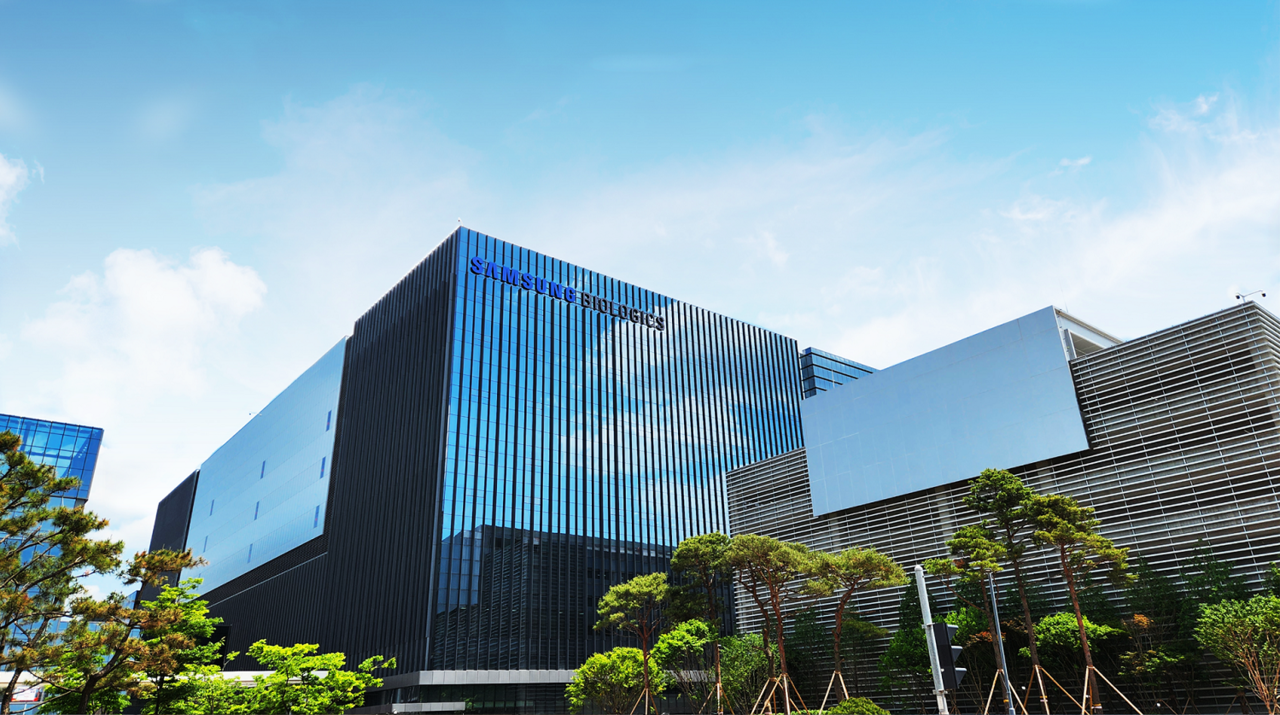
A court has barred the Samsung Biologics union from striking across all nine core biopharmaceutical production processes — from cell culture through bulk filling — just 10 days before the union's second general strike was set to begin.
The ruling designates the entire biopharmaceutical production line, which handles living cells, as "security work" under the Trade Union and Labor Relations Adjustment Act, meaning operations must continue uninterrupted even during a labor dispute. The decision deals a severe blow to the union's plan for a three-week general strike starting Oct. 26.
The First Civil Division of the Seoul High Court's Incheon bench ruled Friday, overturning a lower court decision and granting Samsung Biologics' appeal in full. The court accepted the company's application to ban strike action across all nine production processes and approved an indirect enforcement order, according to legal and industry sources.
The court ordered the union not to obstruct or impede the performance of work during any labor dispute at the same staffing levels, operating hours, operating scale and standard of care as during normal operations. Violations will carry a penalty of 20 million won ($14,800) per incident, payable to the company.
The nine processes subject to the blanket strike ban cover the full scope of biopharmaceutical manufacturing. In the culture stage, they are: flask culture, bioreactor culture, harvest, and media preparation and supply. In the purification stage, they are: chromatography, virus filtration, concentration and buffer exchange, bulk filling, and buffer preparation and supply.
The lower court at Incheon District Court had ruled on April 23 to grant the injunction only for the final three processes — concentration and buffer exchange, bulk filling, and related buffer preparation and supply — while rejecting the application for the earlier culture-stage processes. The appellate court reversed that decision, finding that biopharmaceutical manufacturing, which involves the proliferation and purification of living cells rather than chemical synthesis, constitutes a continuous process that warranted broader protection.
In its written decision, the court interpreted broadly the legal concept of "security work" under Article 38, Paragraph 2 of the Trade Union Act — defined as work performed to prevent damage to facilities or the deterioration or spoilage of raw materials and products. "Security work means work that, if not properly carried out, carries the risk of causing facility damage or the deterioration or spoilage of raw materials or products," the court said. "This must be assessed concretely in light of the industrial characteristics and specific circumstances of each individual workplace, and work must not be excluded from the category of security work simply because it is related to production."
The court fully accepted the company's argument that once a cell line is thawed, it enters a dynamic state in which it consumes nutrients and releases toxic byproducts, meaning deterioration and spoilage proceed in real time if the process is halted. It also accepted the company's contention that leaving protein residue inside equipment poses a significant risk of facility damage.
The ruling effectively neutralizes the union's drive for a large-scale second general strike planned to run for three weeks from Oct. 26. Not only has collective action to halt the production line been legally blocked, but any violation that disrupts operations will expose the union to a 20 million won penalty per incident. The decision comes as the union had recently broadened its campaign by demanding collective bargaining from Samsung Electronics — the second-largest shareholder — immediately after post-mediation talks collapsed, and observers say the ruling will significantly undermine the practical effectiveness of any strike.
Samsung Biologics welcomed the decision. "We are grateful for the court's wise judgment that all of the production processes for which the company sought an injunction to prevent unlawful strike action constitute security work — that is, work performed to prevent the deterioration or spoilage of raw materials and products — and must therefore continue to be carried out normally during any labor dispute, just as in ordinary times," the company said.
The company added that under the ruling, all nine processes must be carried out without disruption at the same staffing levels, operating hours, operating scale and standard of care as during normal operations. "The company will continue its dialogue and efforts to build a mutually beneficial labor-management relationship alongside stable production operations," it said.
silverpaper@heraldcorp.com