Three-day event runs Friday through Sunday at World Cup Park's Peace Plaza, bringing together salted shrimp from across the country at below-market prices
Historic Mapo ferry port revived through satto procession and hwangpo sailboat; highlights include a 19-meter shrimp kimbap roll and a pork-and-kimchi feast
Seoul's Mapo-gu has raised the curtain on its 19th annual Maponaru Saeujeot Festival, the district's signature autumn event. The festival revives the history and tradition of Maponaru — the Joseon-era port where salted shrimp and goods from across the country once converged — and offers visitors a chance to buy premium salted shrimp directly from producers at competitive prices.
Mapo-gu is hosting the 19th Maponaru Saeujeot Festival at World Cup Park's Peace Plaza from Friday through Sunday.
This year's slogan is "Come taste some saeujeot — Mapo-gu has it ready for you!" The event combines cultural programming that honors the area's history and traditions with a direct-from-producer market, food stalls and hands-on activities, creating a space for both residents and visitors to enjoy together.
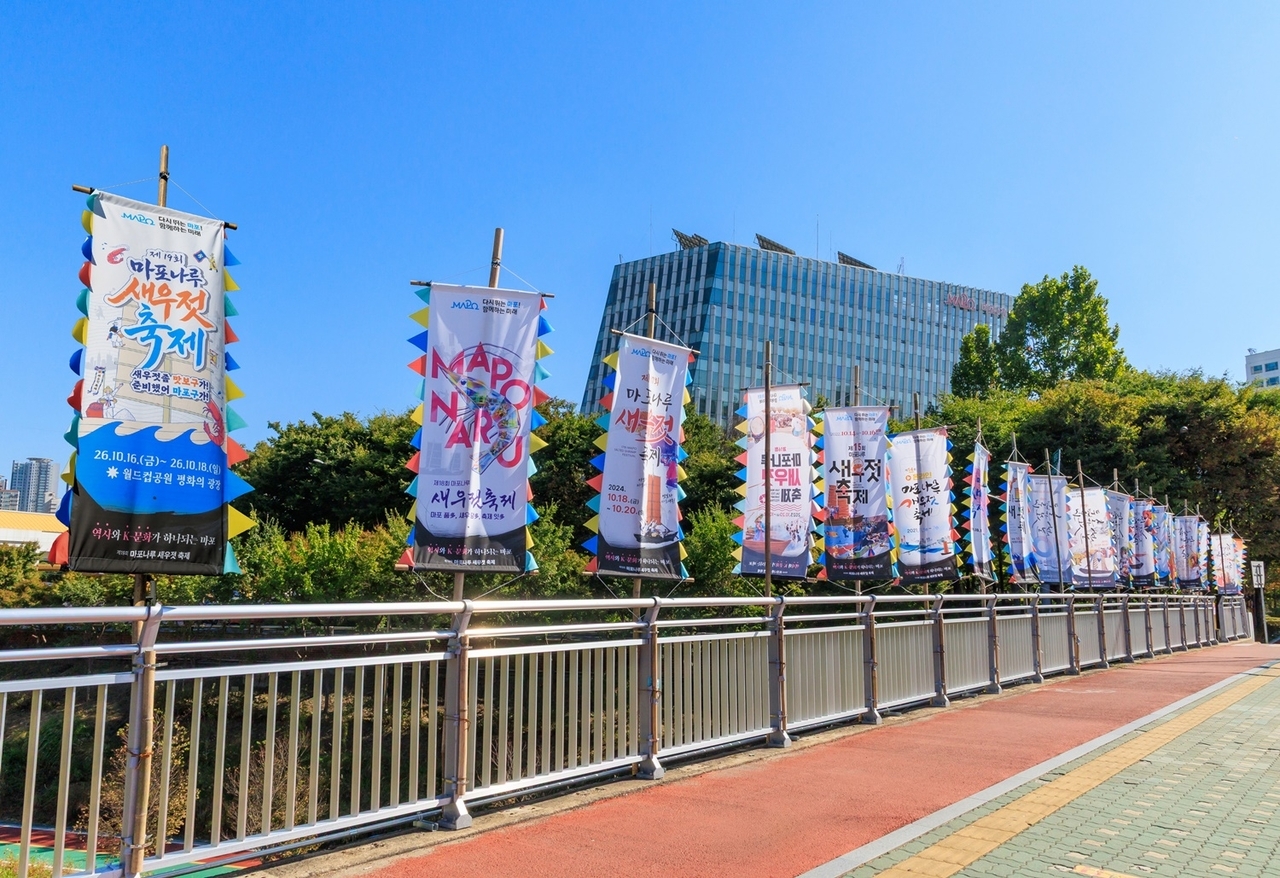
The occasion carries special meaning as it falls one year before the festival's 20th anniversary. A flag bridge made from past festival posters and a special exhibition tracing Mapo's past and present invite visitors to reflect on the event's nearly two-decade journey.
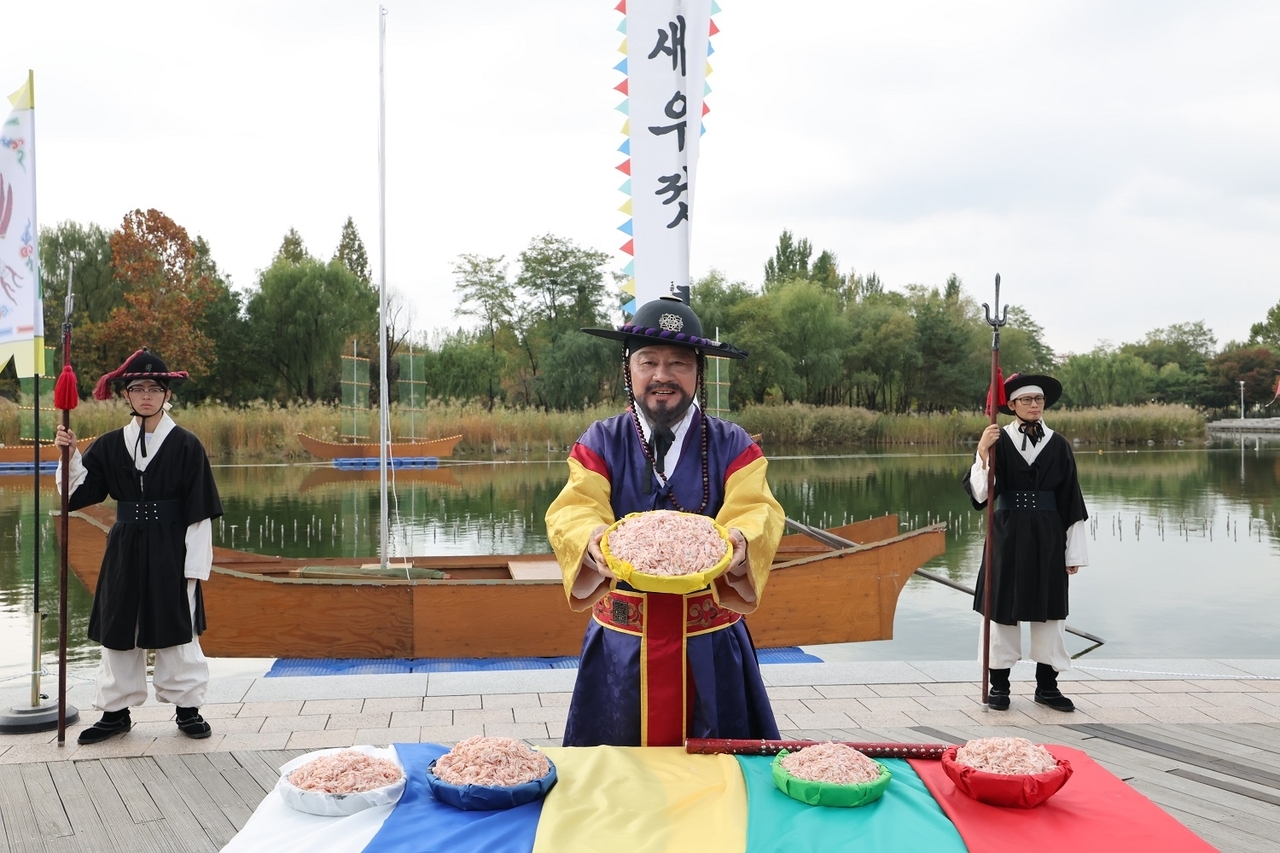
From a magistrate's procession to a hwangpo sailboat — the Joseon-era Maponaru comes back to life
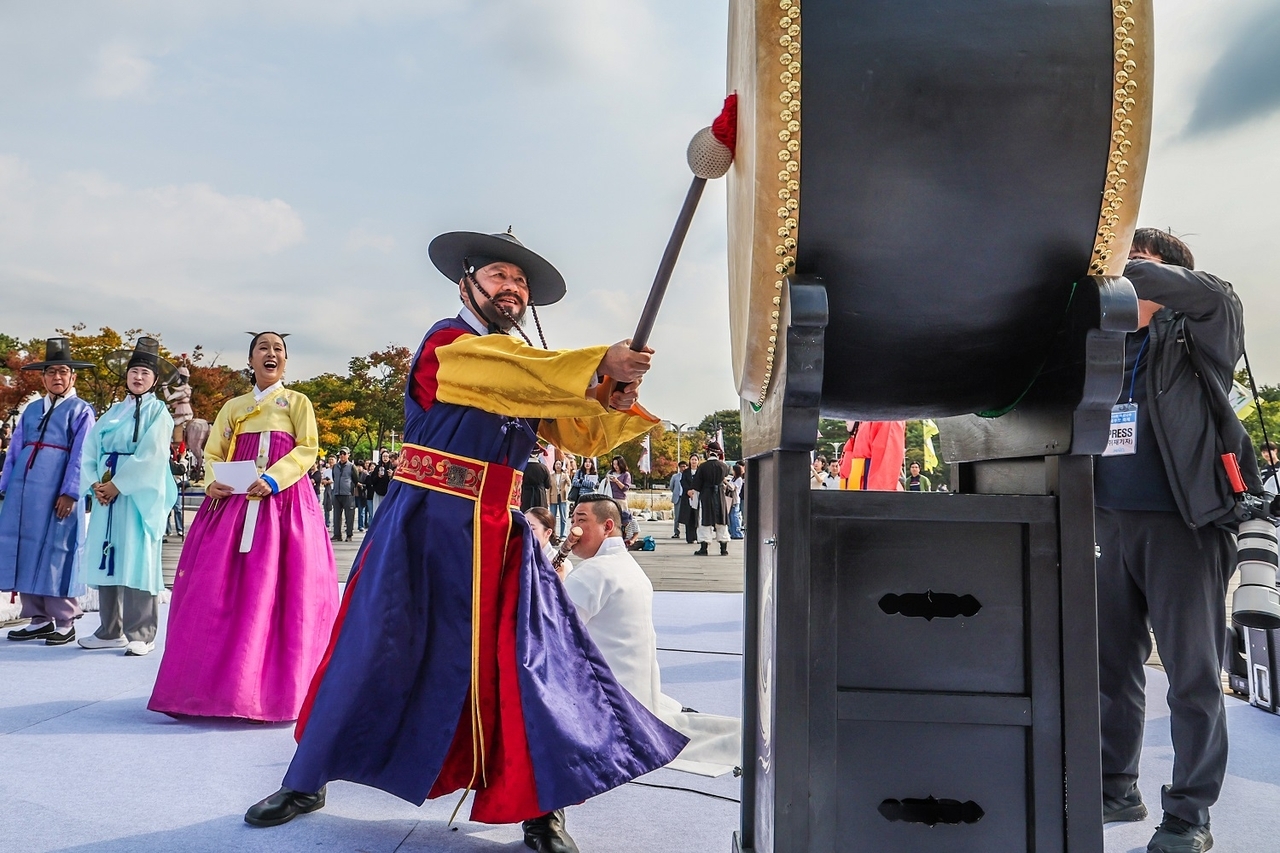
The festival opened with a satto haengcha, a ceremonial procession evoking the atmosphere of the old Maponaru ferry port.
On Friday morning, a procession of about 200 people — including District Mayor Yoo Dong-kyun dressed as a satto (Joseon-era magistrate), a traditional percussion band, peddlers and local residents — set off from the Mapo-gu district office plaza and marched to Peace Plaza at World Cup Park.
When the procession reached the waterside stage at Peace Plaza, a hwangpo sailboat carrying salted shrimp sailed in and an opening ceremony was held. Pansori singer Park Ae-ri performed a celebratory blessing, followed by a madangnori (traditional outdoor performance) centered on the unloading of salted shrimp and the judging of the finest batches. A communal harmony performance involving both cast and audience was also staged.
On Nanji Pond, LED-lit hwangpo sailboats glowed after dark to set the mood for the festival's evening hours. A special exhibition called "Maponaru Memory Tunnel," tracing the area's transformation from its historic past to the present, was also unveiled.
Along Bulgwangcheon's Sangam Bridge — on the route from the district office to the festival grounds — a flag bridge made from past festival posters was installed, symbolizing a look back at 19 years of history and a step forward toward the upcoming 20th anniversary.
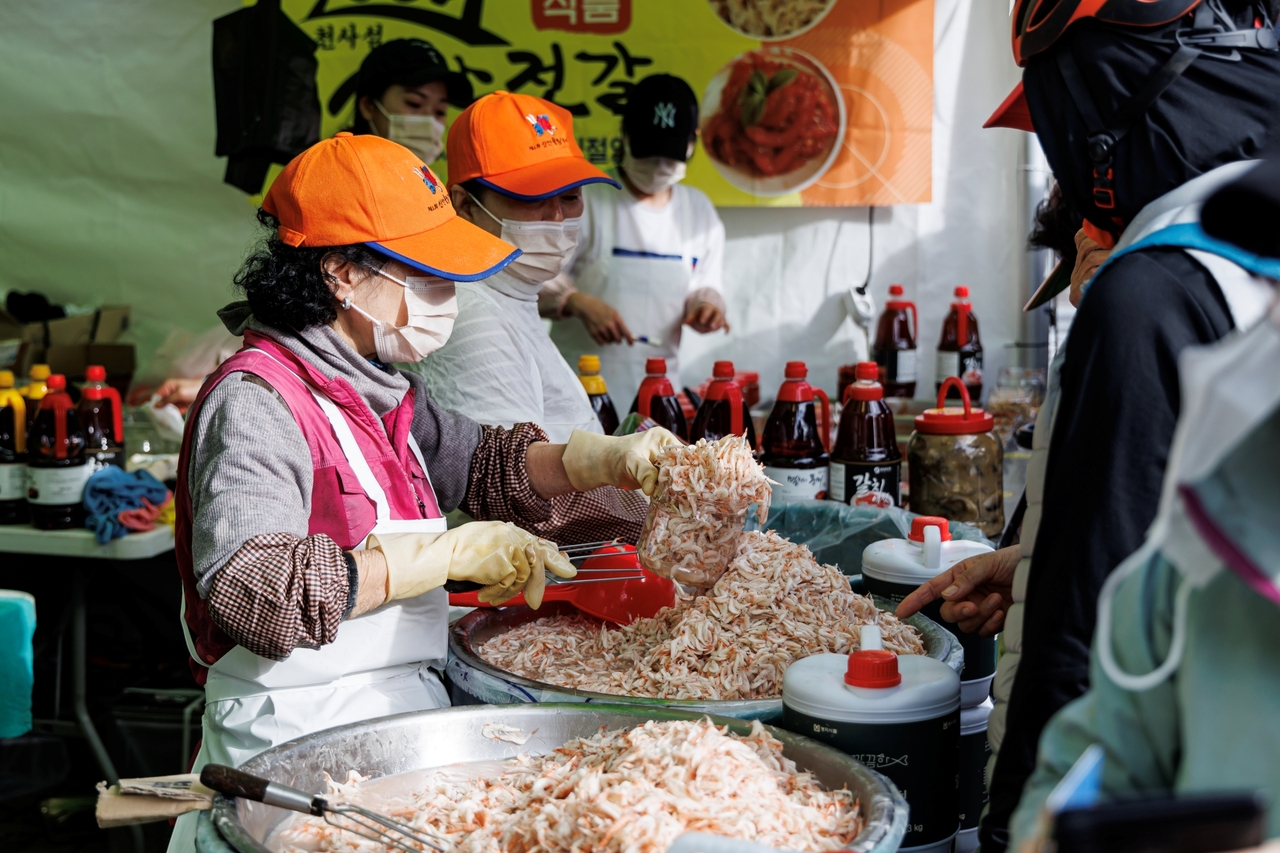
Salted shrimp from across the country — 10 to 15 percent cheaper than retail
At the heart of the festival is a direct-from-producer market where visitors can compare and purchase salted shrimp from regions across the country in one place.
This year's market features 12 salted shrimp vendor booths, four more than last year, showcasing products from major producing regions including Ganggyeong, Gwangcheon, Sinan, Buan and Sorae. Shoppers can choose from a range of varieties popular for kimchi-making — including yukjeot, ojeot and chujeot — based on their intended use and personal preference.
Prices are set 10 to 15 percent below retail, and clear country-of-origin labeling is intended to build consumer confidence.
Fourteen specialty product booths operated by Mapo-gu's sister cities — including Gochang, Sinan, Yecheon, Namhae, Cheongyang and Ongjin — and local agricultural cooperatives are also on offer, providing a platform to expand distribution channels for regional produce and foster urban-rural cooperation.
A newly introduced shrimp food booth is another draw this year, serving dishes such as shrimp pasta and shrimp fried rice alongside other festival fare including barbecue, janchi-guksu noodles and bindaetteok (mung bean pancakes).
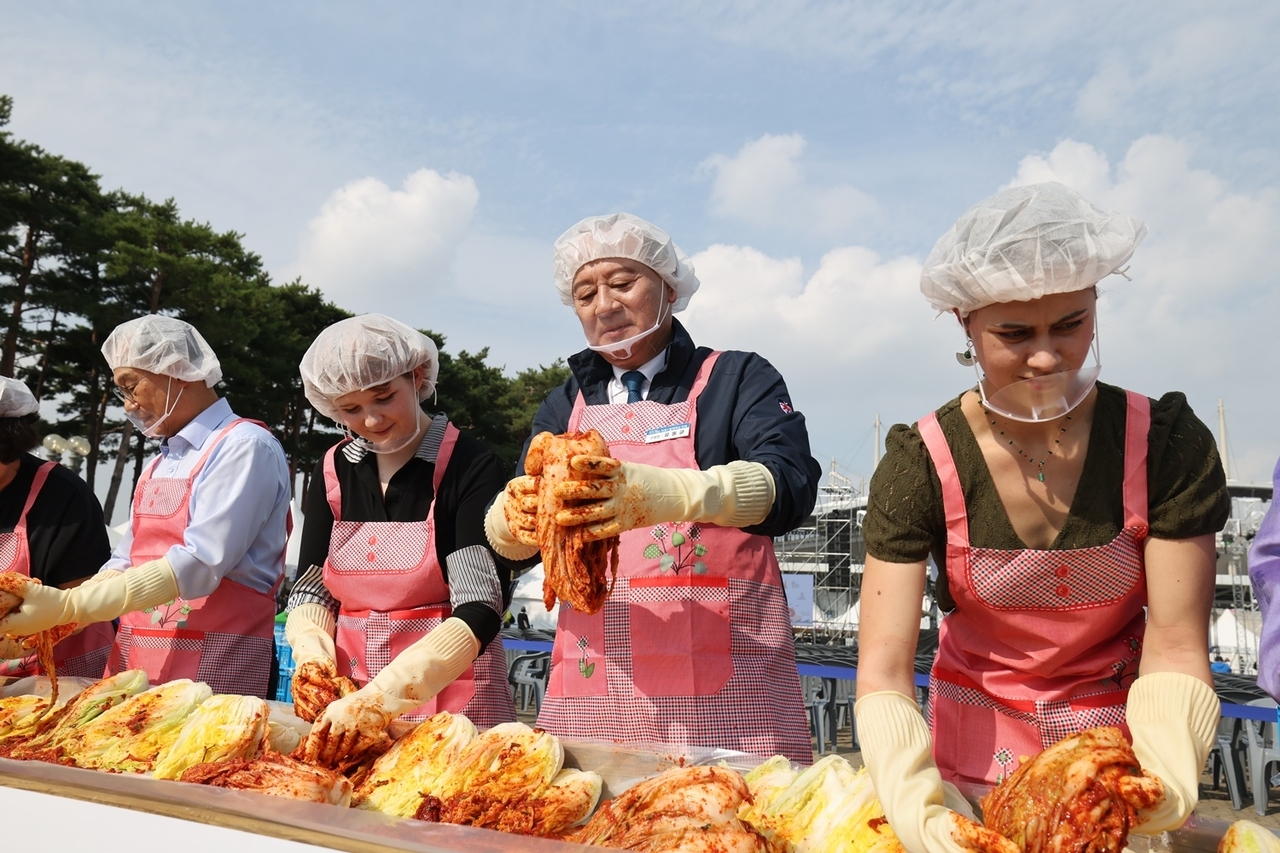
From a 19-meter shrimp kimbap roll to a pork-and-kimchi feast — hands-on shrimp experiences abound
Beyond buying and tasting salted shrimp, the festival offers a rich lineup of hands-on activities.
On the opening day, a kimchi-making session titled "Kimchi-making with foreigners" brought together about 20 foreign participants and roughly 50 members of the West Seoul Agricultural Cooperative Women's Association to make kimchi, which was then donated to low-income households in the district.
On Saturday, celebrity cooking researcher Lee Hye-jeong — known by her nickname "Big Mama" — will lead a "Big Mama's 19-meter shrimp kimbap rolling!" event. Thirty-eight children recruited through on-site registration will be split into two teams to compete in making the giant shrimp kimbap roll.
On the final day, about 200 visitors on a first-come, first-served basis will be treated to a "pork, shrimp and kimchi bossam feast," an event celebrating the combination of salted shrimp, kimchi and pork.
Shrimp catching, salted shrimp pickling and a salted shrimp auction will run throughout the festival. Children's activities — including a bounce house, a mini-satto dress-up experience and a bubble show — as well as traditional percussion performances, a pumbba (wandering entertainer) stage and traditional games are also on the program.
From Jeong Dong-ha and Ali to Hong Jin-young — live performances color the autumn nights
Three evenings of live performances add to the festival's energy.
The Friday opening ceremony, "Mapo on the Move, Songs We Sing Together," is hosted by comedian Kim Han-seok and features live sets by Jeong Dong-ha, the Hong Gyeong-min Band, Ali and Maya.
The waterside stage then hosts a TBS special open-air broadcast concert, "Autumn Love Concert: Rest," with performances by Jeong Su-ra, Hyeon-suk, Mokbi, Hyeondang and Ilmin.
On Saturday, a nationwide singing competition for parents, "National Mom and Dad Singing Contest," takes the stage. Twenty-one finalists who advanced through preliminary rounds will perform alongside invited singers Kim Sung-hwan, Jadu and Yun Su-hyeon.
On the closing day, Park Hyeon-bin, Hong Jin-young, Kim Yong-pil, Jeon Mi-gyeong, Park U-cheol and Seo Gabi are set to headline the finale concert, which will be capped by a fireworks display and laser show.
Heavy rain is forecast across the country on Sunday, a prospect likely to weigh on the organizers.
"The Maponaru Saeujeot Festival has been able to establish itself as Mapo's signature event thanks to the steady interest and support of residents and visitors," District Mayor Yoo said. "We have prepared an outstanding lineup of salted shrimp, diverse food, attractions and activities, and we hope many people will come and make the festival shine."
The Maponaru Saeujeot Festival stands as an example of a local community reviving the historical legacy of Maponaru — once a key logistics hub on the Han River — as a living neighborhood celebration. As the event approaches its 20th anniversary, attention is turning to what new chapter awaits a festival that has woven together salted shrimp, historical reenactment, direct-trade markets, community giving and cultural performances.
seouldream01@heraldcorp.com