
Mapo Naeru Salted Shrimp Festival and Dongjak's Urban Sea Festival open in succession
Mapo draws on the history of an old river port and kimjang-season markets; Dongjak pairs Noryangjin Fish Market with hands-on sea experiences — both aim to energize local economies. Heavy rain on Sunday, the final day of the Mapo festival, threatened to disrupt events.
Two Seoul districts separated by the Han River — Mapo-gu and Dongjak-gu — are drawing attention by staging back-to-back festivals centered on seafood.
Mapo-gu held its 19th Mapo Naeru Salted Shrimp Festival at World Cup Park's Peace Plaza from Friday through Sunday, while Dongjak-gu will host its 9th Urban Sea Festival around Noryangjin Fish Market and a nearby soccer field on Oct. 24 and Oct. 25.
The two festivals share a common thread — shrimp and seafood — but the local identities they seek to project are markedly different.
Mapo places its emphasis on recreating the history of Mapo Naeru, the Han River's central trading hub during the Joseon Dynasty, and the salted-shrimp markets that once defined the kimjang season. Dongjak, by contrast, showcases the appeal of the sea in the heart of the city, anchored by Noryangjin Fish Market, one of Seoul's premier seafood retail hubs.
Both districts share a strategy of transforming local history, industry and lifestyle culture into festival content to inject vitality into their local economies.
Heavy rain was forecast across the country from Sunday morning, threatening to disrupt events on the final day of the Mapo Salted Shrimp Festival.
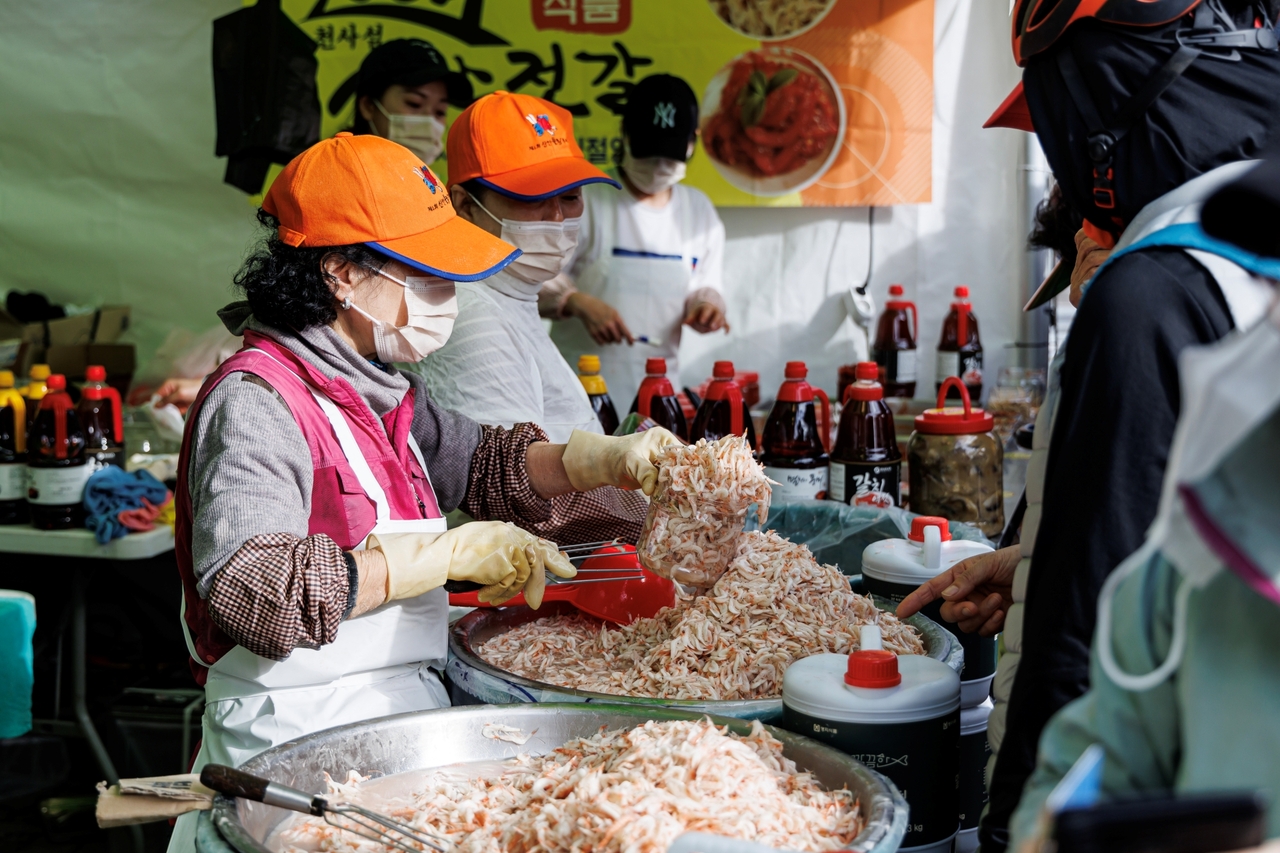
Mapo: history and tradition revived through salted shrimp
The defining quality of the Mapo Naeru Salted Shrimp Festival is its historical character.
The festival aims to revive the memory of Mapo Naeru — the Joseon-era port where goods and salted shrimp from across the country once converged — and to communicate the district's identity through that heritage. Salted shrimp sales take center stage, accompanied by a magistrate's procession, the arrival of a traditional yellow-sailed boat, and a madangnori folk performance depicting the unloading and grading of salted shrimp, all recreating the atmosphere of the old river port.
A particular draw, timed to the kimjang season, is the opportunity to compare and purchase salted shrimp from well-known production regions across the country in one place. Vendors sell varieties from Ganggyeong, Gwangcheon, Sinan, Buan and Sorae, and a local specialty market connects consumers directly with producers.
This year, the number of salted shrimp vendor booths was expanded to 12, and shrimp-based dishes such as shrimp pasta and shrimp fried rice were added to the lineup. Family-oriented activities — including kimchi-making with foreign visitors, rolling a 19-meter shrimp kimbap, and hands-on shrimp catching and salting — were layered onto the traditional market format.
The festival goes beyond simply displaying history, reinterpreting the past as a living cultural asset that today's residents can enjoy through food, hands-on activities and performances.
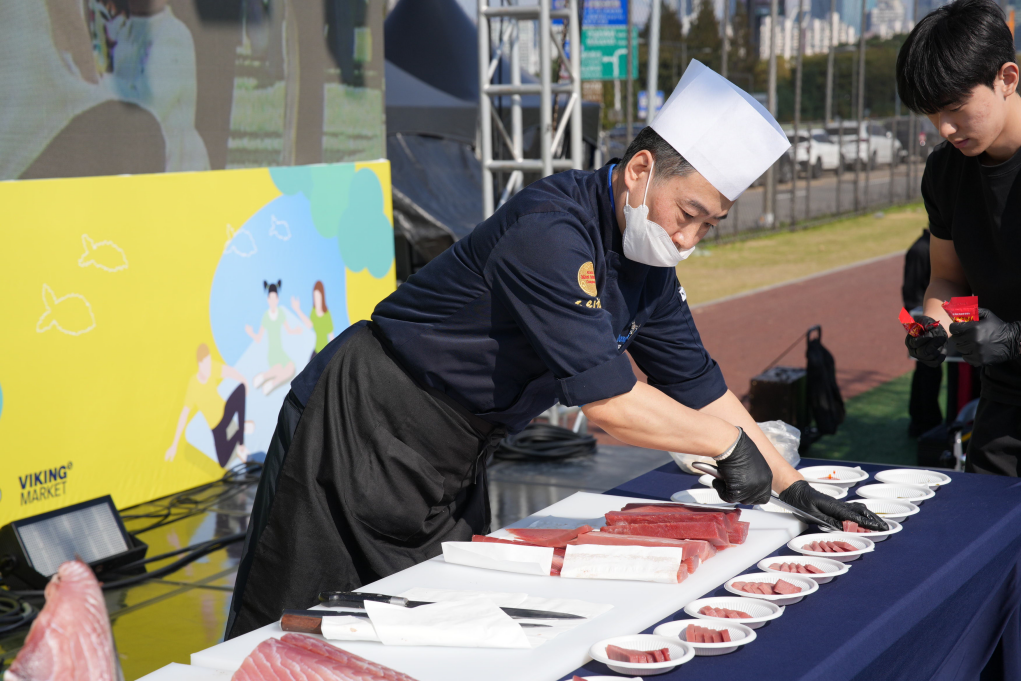
Dongjak: bringing the sea into the city through Noryangjin Fish Market
Dongjak-gu's Urban Sea Festival puts the district's most distinctive local asset — Noryangjin Fish Market — front and center.
Held under the theme "Noryangjin, Seoul's Sea," the festival uses the fish market and the surrounding soccer field as its stage. Visitors need not travel far to experience seafood and maritime culture; the sea comes to them in the middle of the city.
A live tuna-cutting performance and a seafood auction experience draw on the expertise and energy of Noryangjin Fish Market itself. Learning the hand signals used in fish auctions and taking part directly in a mock auction sets the festival apart from events built primarily around stage performances.
Family-friendly programs round out the offering — a wave playground, urban surfing, shrimp catching and a children's fishing area. A direct-sale ocean market run by the National Federation of Fisheries Cooperatives, food stalls from the fish market and food trucks are all part of the mix, along with discounts at raw-fish restaurants inside the market.
Where Mapo summons the past through history and tradition, Dongjak expands the industrial identity of a still-operating fish market into a festival that residents can experience firsthand.
The two festivals' most significant common ground is their use of local assets to draw visitors and stimulate spending.
Mapo connects producers and consumers through salted shrimp sales, an agricultural and fisheries market, and food booths. Dongjak links the festival experience to actual consumption at Noryangjin Fish Market through its direct-sale market, raw-fish restaurant discounts and surrounding vendors.
Both festivals also combine family-oriented activities with performances by popular singers to broaden their appeal. The goal is to evolve beyond single-product market events into multi-layered festivals where visitors of all ages can linger and enjoy themselves.
Their starting points, however, differ. Mapo builds its local brand by restoring the memory of a historically significant place. Dongjak expands the district's industrial image by fusing the present-day seafood trade with immersive sea experiences.
The two festivals also diverge in how they generate economic impact. Mapo centers on kimjang-season demand and direct sales of regionally sourced salted shrimp, while Dongjak focuses on channeling festival foot traffic into spending at Noryangjin Fish Market and nearby eateries.
The next challenge for both festivals is whether the excitement they generate translates into lasting economic benefits for their communities.
Visitor counts and audience figures alone are insufficient measures of success. Concrete indicators — salted shrimp and specialty product sales, changes in Noryangjin Fish Market revenue, increased spending in surrounding commercial areas and visitors' likelihood of returning — all need to be examined alongside attendance numbers.
Mapo must reinforce the historical credentials of a festival approaching its 20th anniversary while maintaining the trustworthiness and product competitiveness that have defined its traditional market.
For Dongjak, the key is a linkage strategy that preserves the unique appeal of Noryangjin Fish Market while naturally drawing festival visitors into the market and the surrounding commercial district.
Ultimately, the strength of both festivals rests not only on how many people they attract, but on how compellingly they translate local history and industry into engaging content — and how effectively they convert the attention and spending generated at the festival into sustained growth for their communities.
With two districts on opposite banks of the Han River promoting their local appeal through the distinct themes of "salted shrimp" and "the sea," the pair of festivals together point toward a model for what Seoul's community festivals can aspire to become.
seouldream01@heraldcorp.com





