Birds sighted at Ulsan Grand Park and Hakseong Park
Ornithologist credits improved urban environment
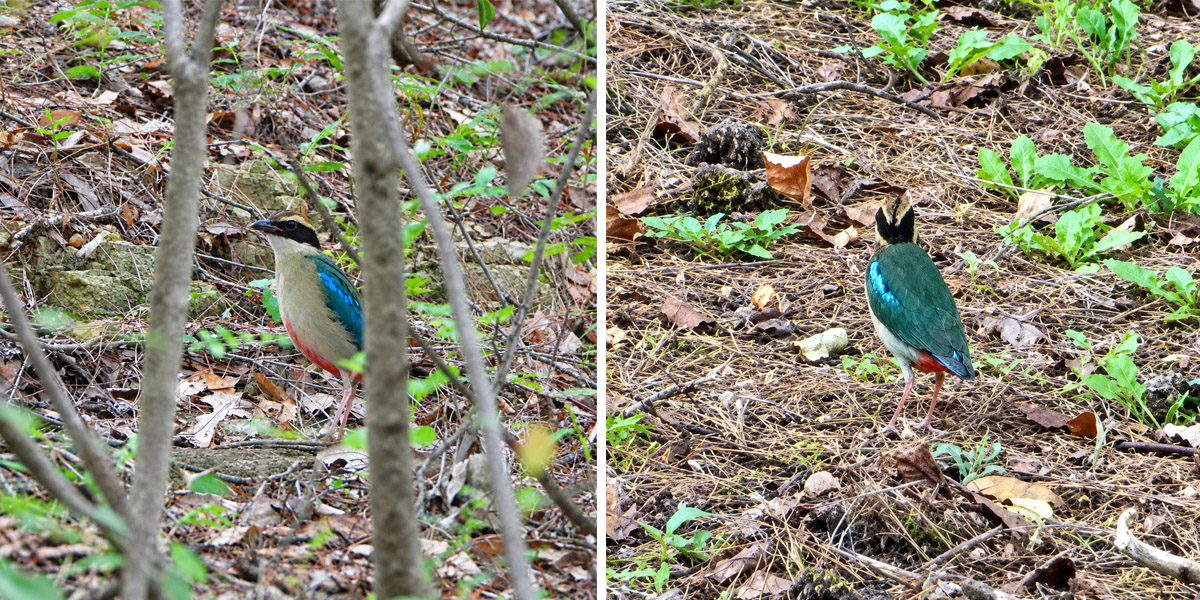
A fairy pitta — a natural monument, a Class II endangered wild species designated by the Ministry of Climate, Environment and Energy, and listed as vulnerable on the International Union for Conservation of Nature's Red List — has been spotted in urban parks in Ulsan for the first time.
Ulsan city said Monday that a resident, Kim Yun-gyeong, photographed a fairy pitta foraging near the south gate trail of Ulsan Grand Park in Nam-gu on Sept. 9, and that two days later, on Sept. 11, another resident, Jang So-yeong, photographed a separate bird beneath a tree near the summit of Hakseong Park in Jung-gu.
The fairy pitta was first recorded in the Ulsan area in 2016, when the entire breeding process of a pair was captured on video in a forest near Beomseo-eup in Ulju-gun. Since then, the species has been observed at various mountain sites on the city's outskirts, including Hoeya Dam, Sinbulsan and Gajisan.
The fairy pitta — whose scientific name, Pitta nympha, reflects its nickname "the fairy" — is a strikingly colorful bird. Its head is reddish-brown, its back blue-green, its rump bright indigo, its breast and flanks pale yellow, and its lower belly red.
The species winters around Borneo in Southeast Asia and arrives in South Korea in mid-May, nesting on the dark, damp ground beneath dense forest canopy. It typically lays four to five eggs in early to mid-June, raises its young and remains until late September.
Hong Seung-min, head of Ulsan bird-watching group Jjaekjjaek Hyugeoso, said the sightings showed that "the urban environment has improved to the point where endangered birds are being noticed by residents in city parks." A city official said Ulsan would work to "create an ecological environment that draws more birds into the city."
cityblue@heraldcorp.com