National Assembly Legislation and Judiciary Committee holds national audit of Seoul prosecution offices
Lawmaker Kwak Gyu-taek says those who served more than 20 years in prosecutors office should resign
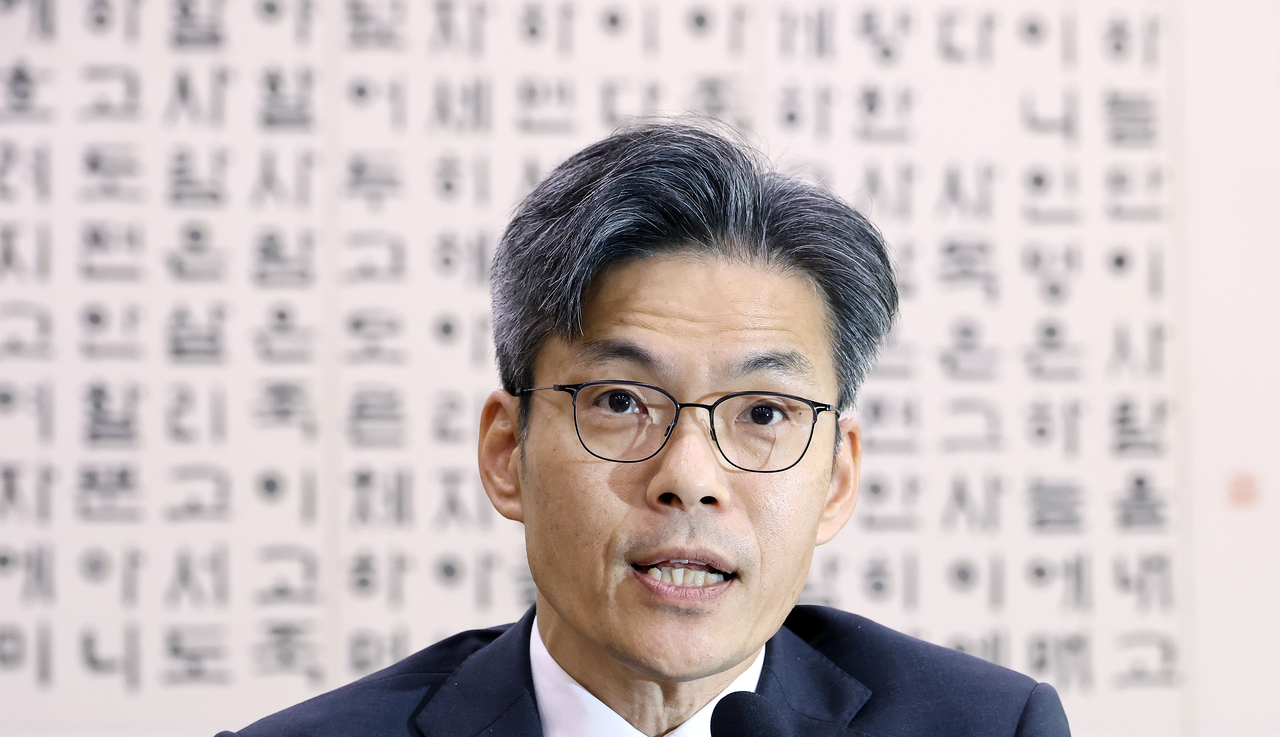
Park Chul-woo, chief of the Seoul Central District Public Prosecution Office, said Monday during a national audit that he could not suppress a "heavy heart" over the abolition of the prosecutors office.
Park made the remarks at a morning session of the National Assembly's Legislation and Judiciary Committee, which was conducting a national audit of the Seoul and Suwon metropolitan public prosecution offices and the Seoul Central District Public Prosecution Office. He was responding to questions from People Power Party lawmaker Kwak Gyu-taek.
When Kwak asked how long Park had served in the prosecutors office, Park replied that it had been about 25 years. Kwak then said, "The name 'prosecutors office' has disappeared, and this is the first national audit held under the name 'public prosecution office' — I, too, feel a heavy heart." Kwak, a graduate of the 25th class of the Judicial Research and Training Institute, served as a prosecutor for about 15 years.
Kwak said that with the prosecutors office stripped of its investigative powers and reorganized into a public prosecution office, those who had served for more than 20 years should resign. "The public had recognized the prosecutors office as the nation's top agency for rooting out grave wrongdoing," he said, adding that renaming it a public prosecution office for political reasons while unilaterally stripping it of its investigative capacity meant that those with more than 20 years of service should have stepped down honorably.
Kwak then turned to Park and said, "Chief Park and I both have years of service in the prosecutors office in common, and since this is the first national audit under the name 'public prosecution office,' I'd like to hear a few brief words — your reflections, your resolve."
Park said in response, "You said you feel a heavy heart, and I, too, cannot suppress that same feeling."
He said that among the many functions of the prosecutors office, the ability to directly root out grave wrongdoing had been a vital one. "Not only has that function been removed, but so has the supplementary investigative function — the role of reviewing the work of primary investigative agencies such as the police to ensure nothing is lacking for the public," Park said. "And on top of that, even the name has been changed to 'public prosecution office.' I, too, feel deeply troubled by all of this."
Even so, Park said, "There are core functions that must be carried out for the people, and regardless of how long that takes, my intention is to give my best without dwelling on what has been lost."
yg@heraldcorp.com