Analysis covers China's central government and 31 provincial five-year plans
AI, semiconductors, biotech among 7 priority industries
Eastern regions focus on R&D and manufacturing; central and western regions expand industrialization
Domestic localization of general-purpose parts seen opening demand for high-performance materials and equipment
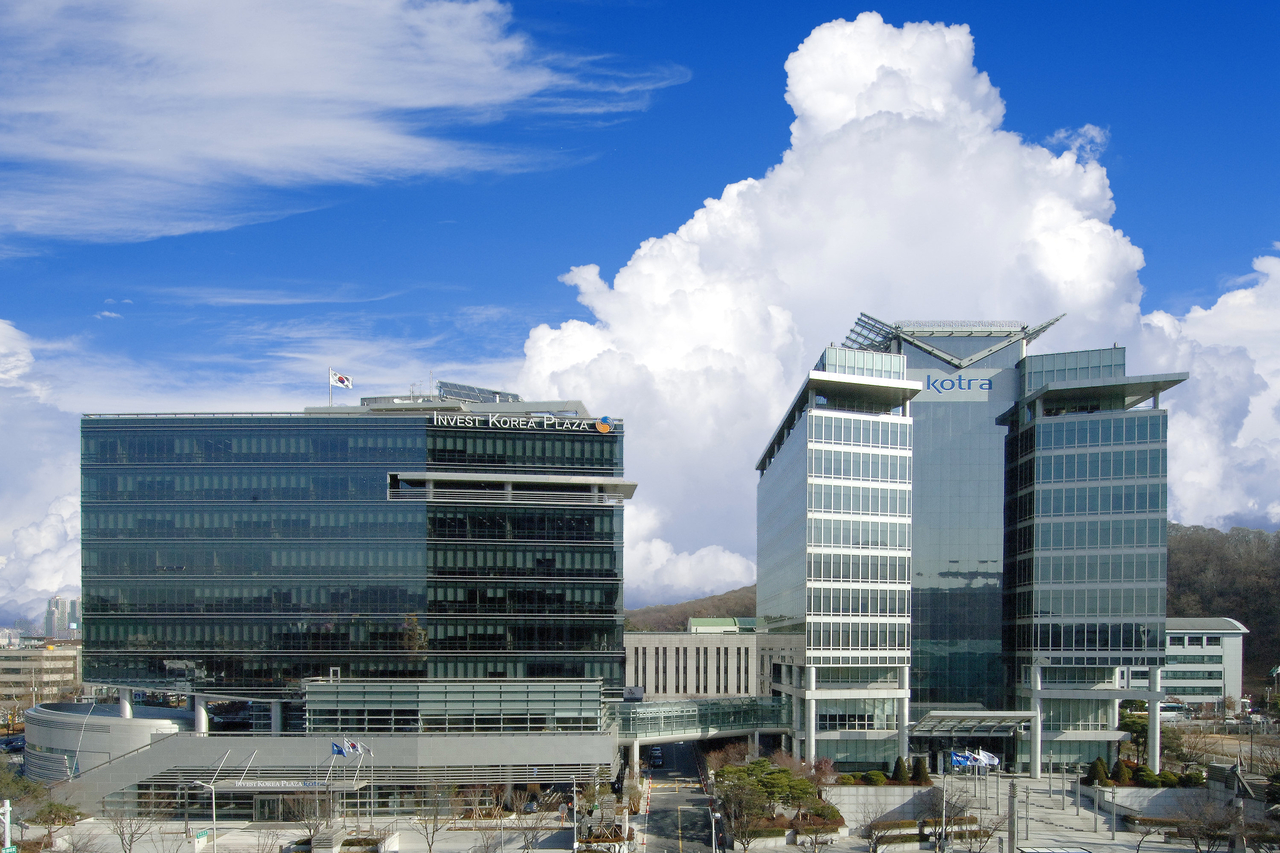
As China accelerates the development of advanced industries including AI, semiconductors and biotech, new business opportunities may be opening up for South Korean materials, parts and equipment companies, according to a new analysis. The report finds that as Chinese-made general-purpose products flood the market, South Korean firms need to differentiate through high-performance offerings and expand beyond the traditional eastern coastal market into central and western regions.
The Korea Trade-Investment Promotion Agency published a report Tuesday analyzing industrial policies from China's central government and 31 provincial and municipal governments, titled "China's Future Industry Landscape and Implications Through the 15th Five-Year Plan."
China draws up a medium-to-long-term policy blueprint for economic and social development every five years. The 15th Five-Year Plan, which runs from this year through 2030, identifies technological self-reliance and the cultivation of future growth industries as key priorities.
In the report, KOTRA compared the industrial development directions of China's central government and 31 provinces and cities, and analyzed sectors and regions that South Korean companies may want to consider entering.
The seven sectors covered are AI, integrated circuits, the low-altitude economy, biopharmaceuticals and advanced medical devices, hydrogen and nuclear fusion energy, brain-computer interface technology, and commercial aerospace. The low-altitude economy refers to transportation, logistics and service industries using low-altitude aircraft such as drones.
China's industrial development strategy varies by stage of technological maturity. In sectors where an industrial base already exists — such as semiconductors and biopharmaceuticals — the emphasis is on raising technological standards and expanding market scale. In nascent industries such as hydrogen and nuclear fusion energy, the focus is on securing core foundational technologies and building markets where those technologies can be applied commercially.
Regional roles are also clearly delineated. Beijing and Shanghai are concentrating on research and development and securing core technologies, while manufacturing-heavy regions such as Guangdong, Jiangsu and Zhejiang are focused on commercializing technologies into actual products and services.
Changes in central and western regions — including Anhui, Sichuan, Hubei and Chongqing — are also worth watching. These areas are leveraging existing manufacturing facilities and R&D infrastructure to expand pilot projects and commercialization of future industries. As advanced industry hubs spread from the traditional eastern coast into the interior, the market for supplying related parts and equipment is expected to grow as well.
However, the accelerating pace of technological self-reliance among Chinese companies poses a challenge for South Korean exporters. As locally made materials, parts and equipment become more widely available, general-purpose products competing on price may find their foothold in the Chinese market shrinking.
On the other hand, export opportunities for South Korean companies are expected to persist in areas requiring high levels of technological sophistication — advanced manufacturing equipment, precision components and high-performance materials. The report says it will be critical for firms to secure technological capabilities that set them apart from local Chinese competitors and to tailor their product and supply strategies to each region's leading industries.
China has also recently tightened controls on the overseas transfer of advanced technologies. On Friday, China's Ministry of Commerce and Ministry of Science and Technology released a draft amendment adding 40 technologies across three sectors — AI, biopharmaceuticals and solar energy — to the list of items subject to export bans or restrictions. The move signals an effort to strengthen control over core technologies alongside the push to develop advanced industries.
KOTRA said that as China's industrial policies shift rapidly, South Korean companies need to look beyond existing clients and examine regionally specialized industries and new supply chains. Entry strategies should also be tailored to each stage of development — R&D, pilot testing and mass production — as the products required at each stage differ, the agency said.
"This report synthesizes the 15th Five-Year Plans of China's central government and 31 provinces and cities, with a focus on identifying entry opportunities for our companies based on future industry development directions and regionally specialized sectors," said Jang Sang-hae, head of KOTRA's China regional headquarters. "Since China remains our largest export market, we will do our utmost to support Korean companies in seizing entry opportunities and expanding their presence there, on top of publishing this report."
kwater@heraldcorp.com