Senate blames Trump, House blames Senate, Trump blames 'weak politicians' — White House, party committees and campaigns turn on each other as polls point to disaster; leadership battles and a wave of departures already under way
In an era when a single word from Trump can shake global markets, The Herald Business international desk — on the move from 5 a.m. — delivers the essential Trump news you need, from Wall Street closing figures to market-moving developments, in under a minute. Subscribe to the daily newsletter at the Herald Business website.
With the midterm elections two weeks away, the Republican Party is already consumed by an internal blame game as fears grow that it will suffer a sweeping defeat.
US media reported Monday that the recriminations are spreading across every level of the party — from the president and congressional leaders to the White House, party campaign committees and individual candidate campaigns — with each side treating defeat as a foregone conclusion and pointing fingers at everyone else.
According to Politico, internal Republican polling has signaled a "catastrophic" outcome, with districts long considered safe Republican territory projected to flip to the Democratic Party. Party leadership, campaign operatives and individual campaigns have been thrown into a state of panic.
Donald Trump recently posted on Truth Social that "if Ken Paxton loses, it will be because of weak and ineffective politicians like John Cornyn and Karl Rove, who have been opposing me throughout my political career without any results."
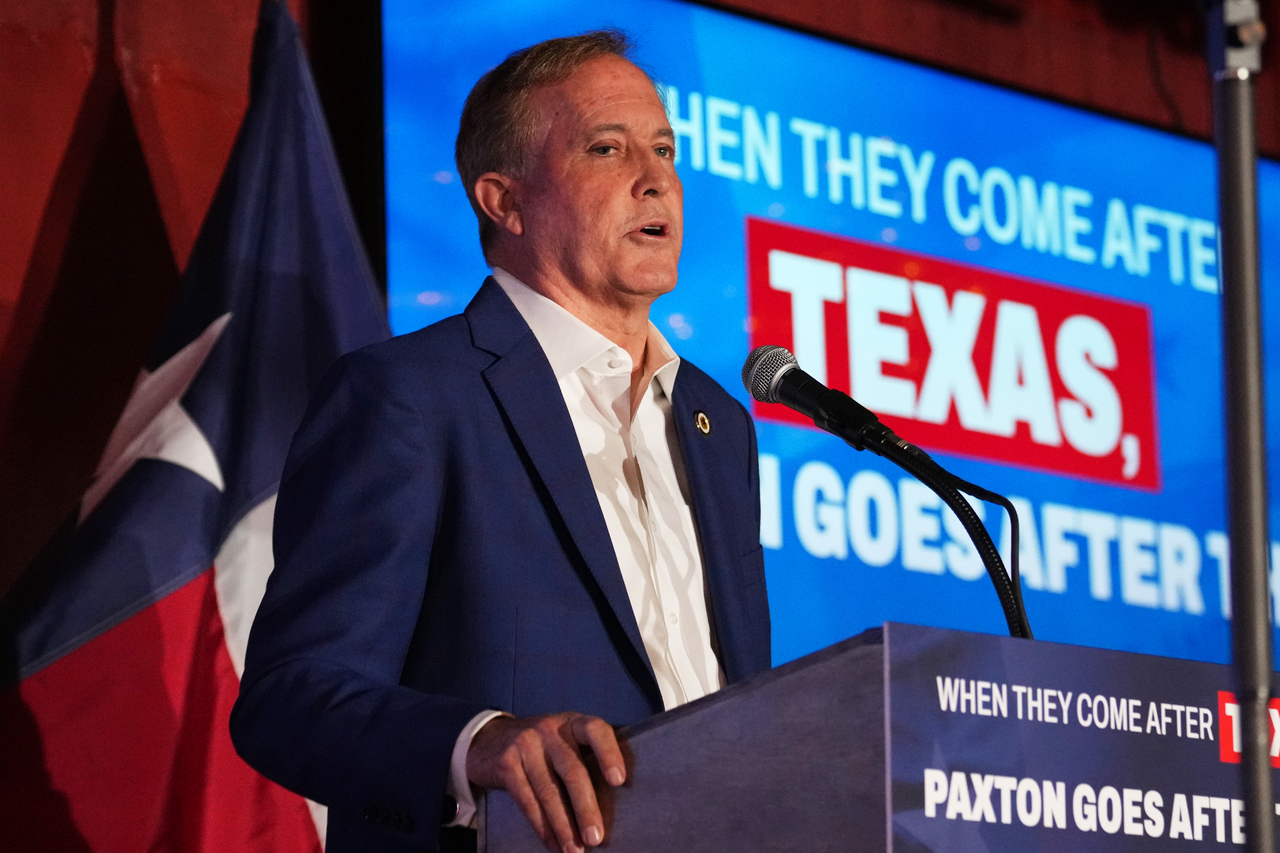
Paxton is the Republican Senate candidate in Texas. Trump backed him over incumbent Sen. Cornyn, but Paxton has struggled against Democratic candidate James Talarico amid misconduct allegations and personal controversies. Texas is considered the most fiercely contested race of this election cycle, and a Republican loss there would send shockwaves through the party.
Trump's remarks signaled that he would blame Cornyn and party strategist Rove if Republicans lose Texas. In an interview with Punchbowl News published Aug. 7, Trump said, "A lot of people are very angry at the Republican Party. But they're not angry at me," deflecting public frustration onto the party itself.
Among Republican senators, however, the mood points squarely back at Trump as the source of the problem. The prevailing view is that Trump bears the greatest political responsibility, having effectively handpicked candidates not only in Texas but across the country — and having triggered inflation through his Iran war and tariffs policies.
Sen. Bernie Moreno (R-Ohio) told reporters Thursday that "if Democrats actually win the House and Senate, it won't be because of their far-left crazy candidates — it'll be because people are angry about the price of gas."
House Republicans see it differently. They argue that uncompetitive Senate candidates have dragged down House races as well. Pointing to Paxton and Kansas Sen. Roger Marshall as examples, House members complain that money meant for competitive House races has been diverted to prop up Senate candidates who turned safe seats into toss-ups.
A Republican campaign strategist working in a competitive House district told Politico, "Nobody in the world anticipated that the Senate races would need this much money," adding, "All the money that was expected to go to House races is now mostly being wasted on Senate races."
While many Republican lawmakers in both chambers blame Trump for the party's electoral difficulties, those in Trump's inner circle have been pointing to the campaign committees and individual campaigns as the problem.
Rep. Anna Paulina Luna (R-Fla.), a Trump ally, attacked the National Republican Congressional Committee on social media for failing to do its job. Another House member said, "NRCC leadership is living in their own world. We are getting completely outmaneuvered on the ground."
Political aides to Trump at the White House argued that new personnel should be deployed to candidate campaigns immediately and strategies overhauled. The New York Times visited a Republican campaign office in Cleveland, Ohio — a competitive Senate battleground — and found it nearly empty, with far fewer volunteers than in past elections.
Politico reported that allies of House Speaker Mike Johnson and other House leaders are already positioning themselves to assign blame to rivals and jockey for the next leadership lineup, bracing for a post-election reckoning over who is responsible for any losses.
A wave of departures from the administration is also under way among officials who see defeat coming. Paolo Zampolini, who served as special representative for global partnerships at the Department of State, said in an interview with the Italian daily La Repubblica published Saturday that those leaving are "not just leaving — they are fleeing."
Reports have also emerged that internal power struggles within the White House — as factions maneuvered for influence in a post-election landscape — played a role in the dismissal of former White House spokesperson Katie Zacharia, whose tenure was the shortest on record.
yckim6452@heraldcorp.com