Samsung America researchers publish paper on 'CMM-MP'
CXL and Ethernet combined to break through 'memory wall'
Links memory across multiple servers into shared pool
Scales up to 256TB, with improved access latency
Company also unveiled CXL collaboration with AMD at OCP summit
Editor's note: "Chip Chip Fab Fab" is a series that explores the semiconductor industry driving the AI era — clearly and in depth. The name connects the "chip" at the heart of the AI revolution with the "fab" that makes it, and like a train chugging steadily forward, it captures the relentless progress of the semiconductor world. Complex technology is made accessible, the stories behind the news and the currents of the industry are examined closely, and the present and future of the semiconductors powering the AI age are explored together with our readers.
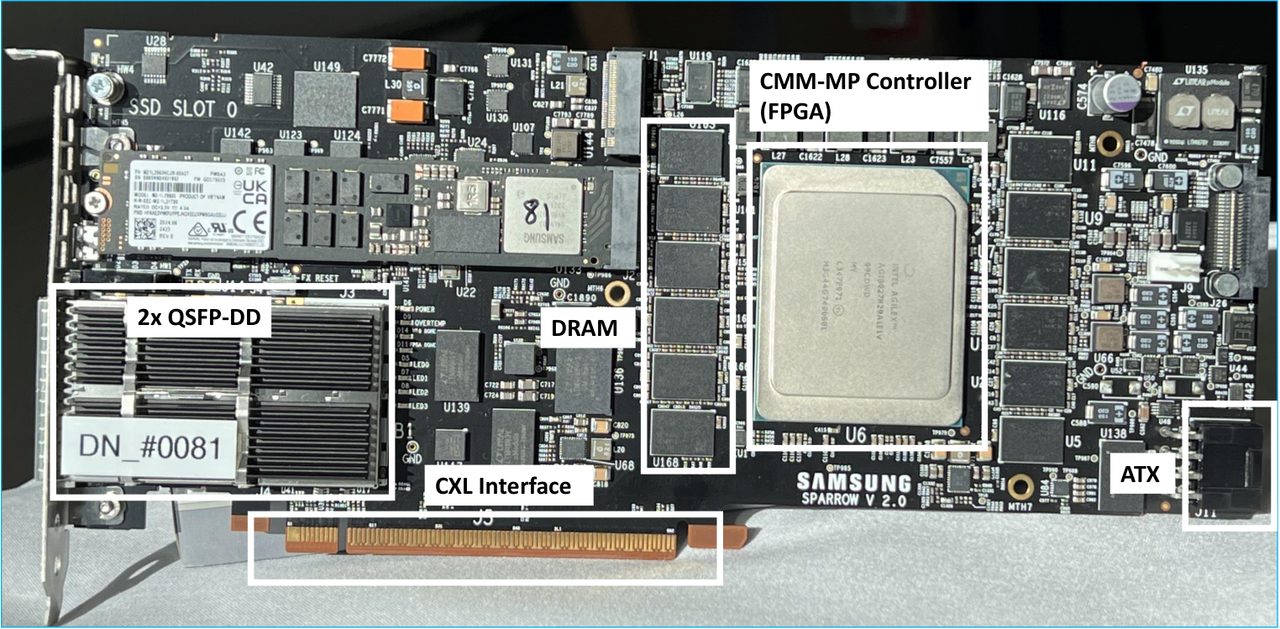
Researchers at Samsung Electronics' US subsidiary have unveiled a technology that links multiple memory devices over a network to expand server memory capacity to hundreds of terabytes. The approach combines Compute Express Link (CXL), a next-generation memory interface, with Ethernet, a widely used network communication technology.
As AI enters the inference era, overcoming the "memory wall" — the bottleneck that arises when processors outpace memory bandwidth — has emerged as a central challenge for the semiconductor industry. Samsung Electronics is pursuing more efficient memory utilization across multiple servers by combining CXL and Ethernet.
Researchers at Samsung Electronics' US Semiconductor Memory Solution Lab recently published a paper titled "CMM-MP (CXL Memory Module-Memory Pooling): A Novel Memory Pooling Architecture Utilizing CXL and Ethernet," according to industry sources Tuesday.
CMM-MP, as described in the paper, is a dedicated memory device that integrates and shares memory installed across multiple servers. As the spread of agentic AI intensifies data-movement bottlenecks, CXL technology is being put forward as a new solution — organically connecting CPUs, GPUs and memory chips to increase bandwidth and capacity.
The Samsung researchers added Ethernet's scalability to CXL. Ethernet is a communication technology that connects computers and servers to exchange data. While CXL supports memory expansion within a single server, Ethernet extends that connectivity to the memory of other servers as well.
Existing CXL technology already allows multiple memory devices to be pooled via dedicated switches, letting several servers share memory like a common reservoir. However, the researchers note that this approach has limited scalability, high costs and physical constraints on connection range.
CMM-MP reduces those constraints by using Ethernet, which is already widely deployed in data centers. This allows the DRAM across multiple CMM-MP devices to function as a single large memory pool. The device also handles tasks such as locating data across units and retransmitting packets lost during communication, easing the CPU load on servers.
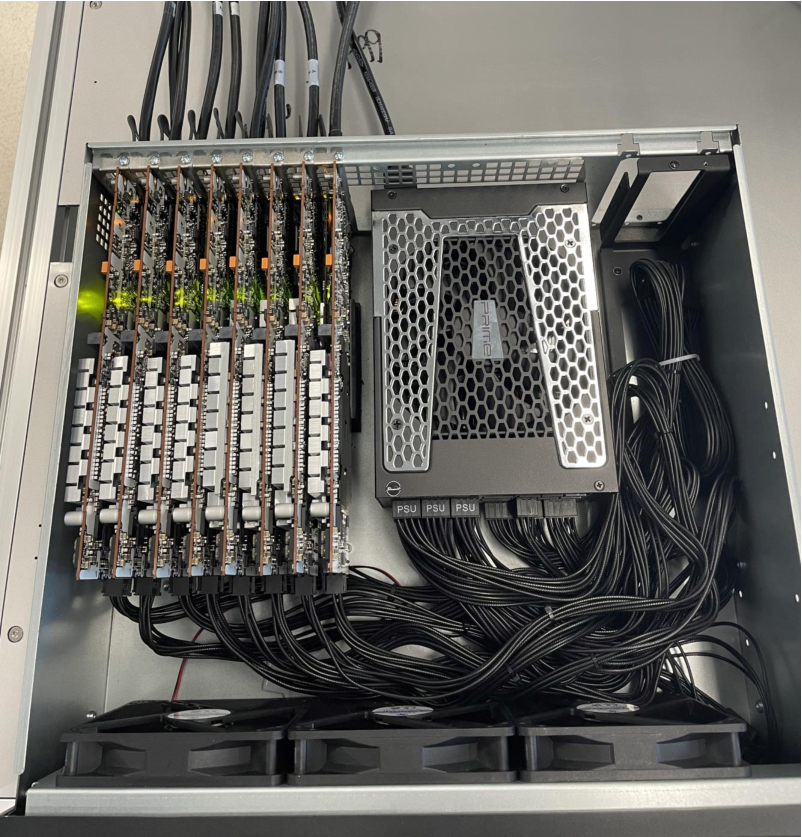
By design, the memory pool can scale up to 256TB. The prototype evaluation confirmed improved performance: two Intel Xeon processor-based servers and six CMM-MP units were connected to form a 288-gigabyte memory pool, with each device linked through a 200-gigabit-per-second Ethernet switch.
Tests showed that accessing memory on a remote device via the Ethernet switch took approximately 2.7 microseconds. Peak read throughput reached 23.1 gigabytes per second. The researchers said CMM-MP achieved competitive memory access latency compared with conventional RDMA (Remote Direct Memory Access)-based approaches.
Samsung Electronics is developing CXL as a new solution to handle the growing volume of data that must be processed during inference as agentic AI proliferates. CMM-MP is among the technologies the company is proactively preparing for future AI data centers.
Samsung Electronics also jointly demonstrated a CXL-based memory expansion solution with AMD at the 2026 OCP Global Summit held in California on Oct. 12 (local time). The demonstration showcased memory pooling technology based on CMM-D (a CXL-based DRAM memory module), enabling efficient use of memory resources across multiple systems and flexible memory capacity allocation for AI workloads.
However, analysts say it will take some time before CXL and CMM-MP gain traction in actual data center markets, as the entire AI data center ecosystem — including CPUs, GPUs and other components — must be prepared in concert.
Further technical refinement is also needed. The Samsung researchers plan to advance CMM-MP's memory resource management by developing finer-grained memory allocation that can be dynamically assigned based on usage. They are also pursuing ways to support next-generation communication standards for more efficient data transfer to computing units such as CPUs and GPUs.
jeongwan@heraldcorp.com