Data on daycare enrollment applications and wait times over the past five years
People Power Party lawmaker Seo Beom-su analyzes Ministry of Education figures
National average wait: 7.5 months; average for 1-year-old class: 8.5 months
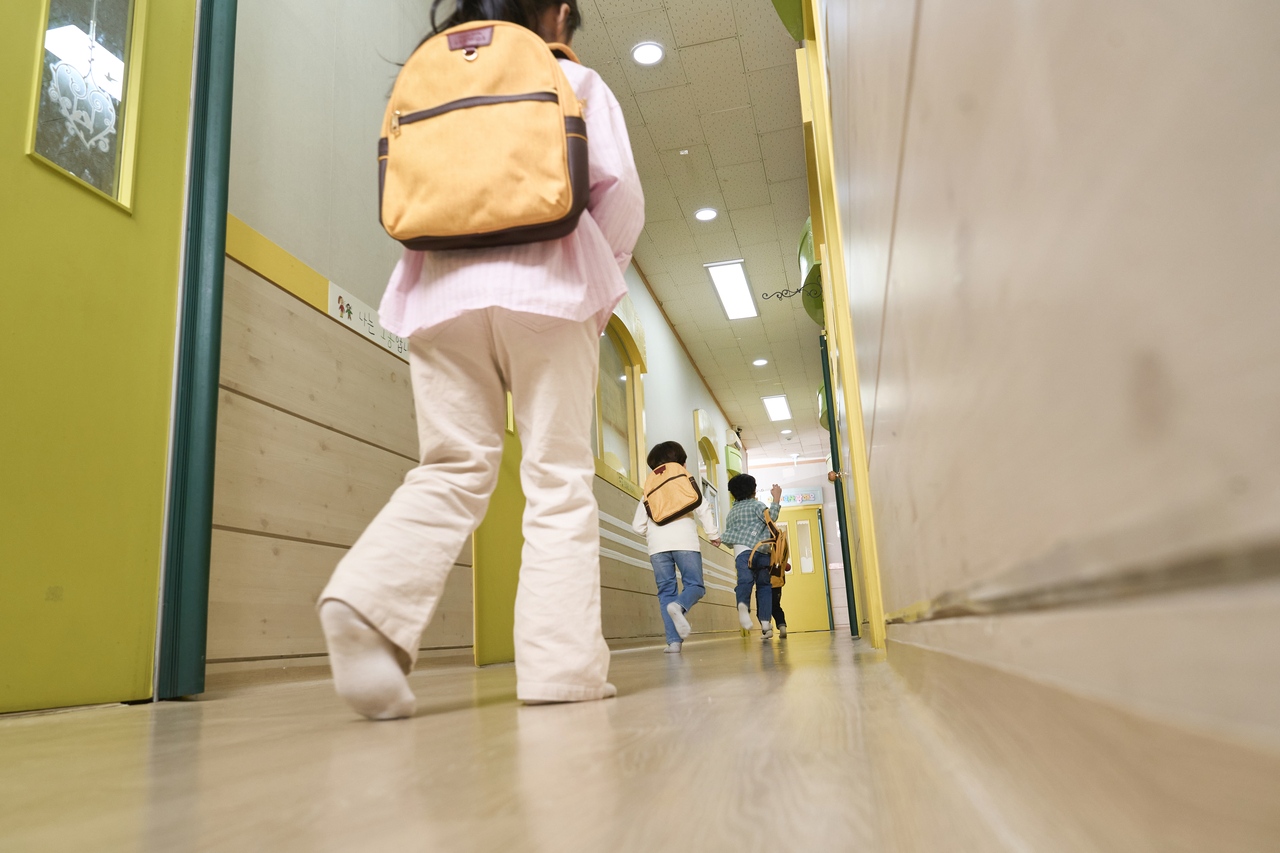
Despite years of government policies aimed at encouraging childbirth and supporting families, the wait to secure a spot at a daycare center has grown longer, not shorter. The culprit is the wave of closures among private and home-based daycare centers as the number of infants and toddlers has fallen amid the low birth rate — a trend that adds to parents' caregiving burden, interrupts women's careers and ultimately weighs on national productivity.
According to data submitted Tuesday to People Power Party lawmaker Seo Beom-su of the National Assembly's Education Committee by the Ministry of Education, the average wait for daycare enrollment nationwide stood at 7.5 months as of the end of June — up 2.2 months from 5.3 months at the end of 2022.
The figure means that from the time a parent submits an enrollment application in a child's name, it takes 7.5 months on average before a placement is confirmed.
By region, Sejong — a city with a large concentration of civil servants — had the longest average wait at 8.3 months, followed by Seoul at 8.2 months, Gyeonggi Province at 7.8 months, Busan at 7.7 months and Daegu at 7.6 months, all above the national average.
The picture is even starker when broken down by age group. The average wait for the 1-year-old class nationwide reached 8.5 months, up 2.7 months from 5.8 months in 2022.
Over the same period, the wait for the infant class (under 1 year old) rose 2.4 months to 6.2 months from 3.9 months, while the wait for the 2-year-old class increased 2.2 months to 8.0 months from 5.8 months.
For parents employed at private companies, the typical pattern is to complete a one-year parental leave and then enroll their child — by then around 1 year old — in daycare upon returning to work. This makes the 1-year-old class the most in-demand age group.
Among major cities, Seoul had the longest average wait for the 1-year-old class at 9.4 months, followed by Sejong at 9.3 months, Busan at 9.1 months, and Daegu and Ulsan each at 9.0 months.
Particularly striking is the wait at public daycare centers: the average for the 1-year-old class at national and municipal facilities nationwide surpassed 10 months, climbing to 10.6 months as of June from 7.9 months in 2022.
Delayed enrollment disrupts return-to-work plans for dual-income households. Families are left to rely on grandparents or paid caregivers, or one parent ends up abandoning plans to return to work altogether.
Seo said the lengthening waits are closely tied to the steady erosion of infant care capacity caused by ongoing daycare closures.
Over the past four and a half years, 11,093 daycare centers closed nationwide. Of those, 6,949 were home-based facilities and 3,284 were private centers, together accounting for 92.2 percent of all closures.
Gyeonggi Province recorded the most closures by region with 3,234, followed by Seoul with 1,502, South Gyeongsang Province with 994, South Jeolla Province and Gwangju combined with 633, North Gyeongsang Province with 609, South Chungcheong Province with 603 and Incheon with 594.
The most commonly cited reasons for closure were a decline in the number of children, accounting for 4,871 cases or 43.9 percent, and financial difficulties, at 3,477 cases or 31.3 percent.
As closures mount, calls are growing for the government to take more active steps to address the imbalance between the supply of and demand for childcare.
"They say the number of children is falling because of the low birth rate, yet parents still have to wait eight months to get into a daycare center — and more than 10 months for a public one," Seo said. "We need to carefully analyze actual childcare demand by region and age group, and put in place real measures to reduce wait times, particularly for the infant and toddler classes serving children aged 0 to 2."
jshan@heraldcorp.com