Beethoven's 200th death anniversary anchors 'freedom' theme
'Fidelio,' Mahler 3 and 5 headline ambitious program
Cho Seong-jin to return for first Seoul Phil concert in 11 years
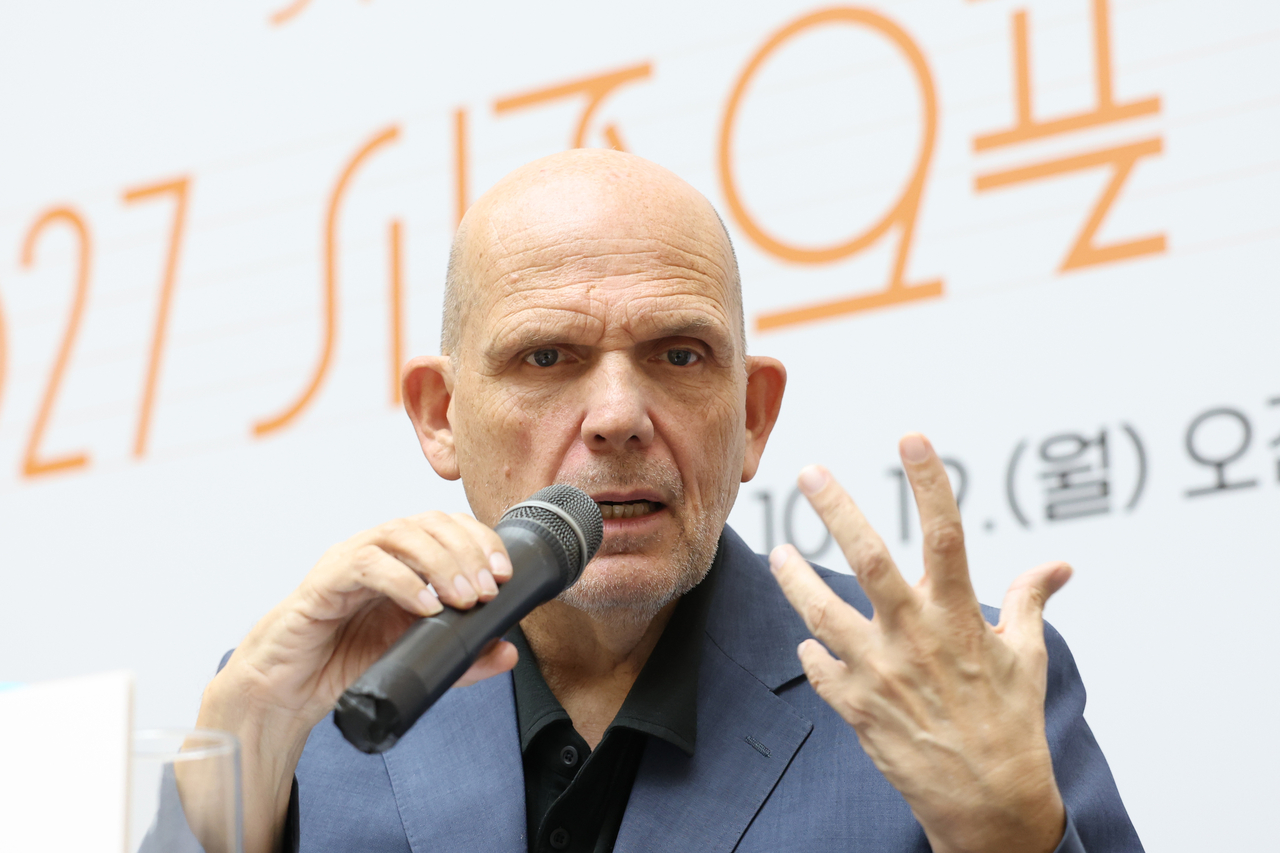
"He said he wanted to come back — but only with the Seoul Philharmonic."
That condition, set by Music Director Jaap van Zweden, was the spark behind a historic milestone: the Seoul Philharmonic Orchestra will become the first non-European ensemble to open the Prague Spring International Music Festival in the Czech Republic.
Van Zweden revealed the full story behind the Prague Spring invitation for the first time Monday at a press conference held at the Seoul Phil's CPX room at Sejong Center for the Performing Arts in Jongno-gu, Seoul, to announce the orchestra's 2027 season.
The story begins in May last year, when Van Zweden led the Chicago Symphony Orchestra at Prague Spring in a performance of Mahler's Symphony No. 6. After the concert, festival organizers approached him about a return engagement. Van Zweden told them he would come back only if the Seoul Philharmonic could join him. "The festival said, 'If that is your condition, then we have a condition too' — they asked us to open the festival with Smetana's 'Má vlast,'" he said.
Prague Spring, founded in 1946, traditionally opens on May 12 each year — the anniversary of Czech national composer Smetana's death — with a performance of "Má vlast." The Berlin Philharmonic performed the opening concert for the first time only in 2024. The Seoul Phil will open the festival's 82nd edition on the same date next year. Before heading to Prague, the orchestra will perform the complete "Má vlast" at Lotte Concert Hall on April 22 and 23, then continue through the Wiener Konzerthaus and Rome's Accademia Nazionale di Santa Cecilia before concluding the European tour in Prague.
"I have never conducted 'Má vlast' before, but getting to know a new work is a powerful source of inspiration for a conductor," Van Zweden said. "It is a great honor for the Seoul Phil — not just as a guest orchestra, but as the opening act, with the performance broadcast across Europe." The achievement reflects the deepening bond between the maestro and the orchestra as they enter their fourth year together.
From business partners to family: 'The sound comes from the back'
Van Zweden joined the Seoul Phil in 2024 and has now passed the midpoint of his tenure. For him, the past three years have been a journey of evolving relationships — a feeling that crystallized after the orchestra's European tour last August, when the ensemble gathered after its final concert in Amsterdam to share food and dance together.
"It is becoming a remarkable partnership where we can freely express everything we think and feel," he said. "We are no longer just business partners who play on stage — we have truly reached the level of family." The post-concert celebration in Amsterdam captured that spirit.
That sense of unity has translated into a sonic evolution. The most striking changes Van Zweden sees between his early days and now are mutual listening and sound balance.
"What I have focused on is not just playing your own music, but listening to each other and playing together," he said. "The orchestra's understanding of how it functions has improved enormously."
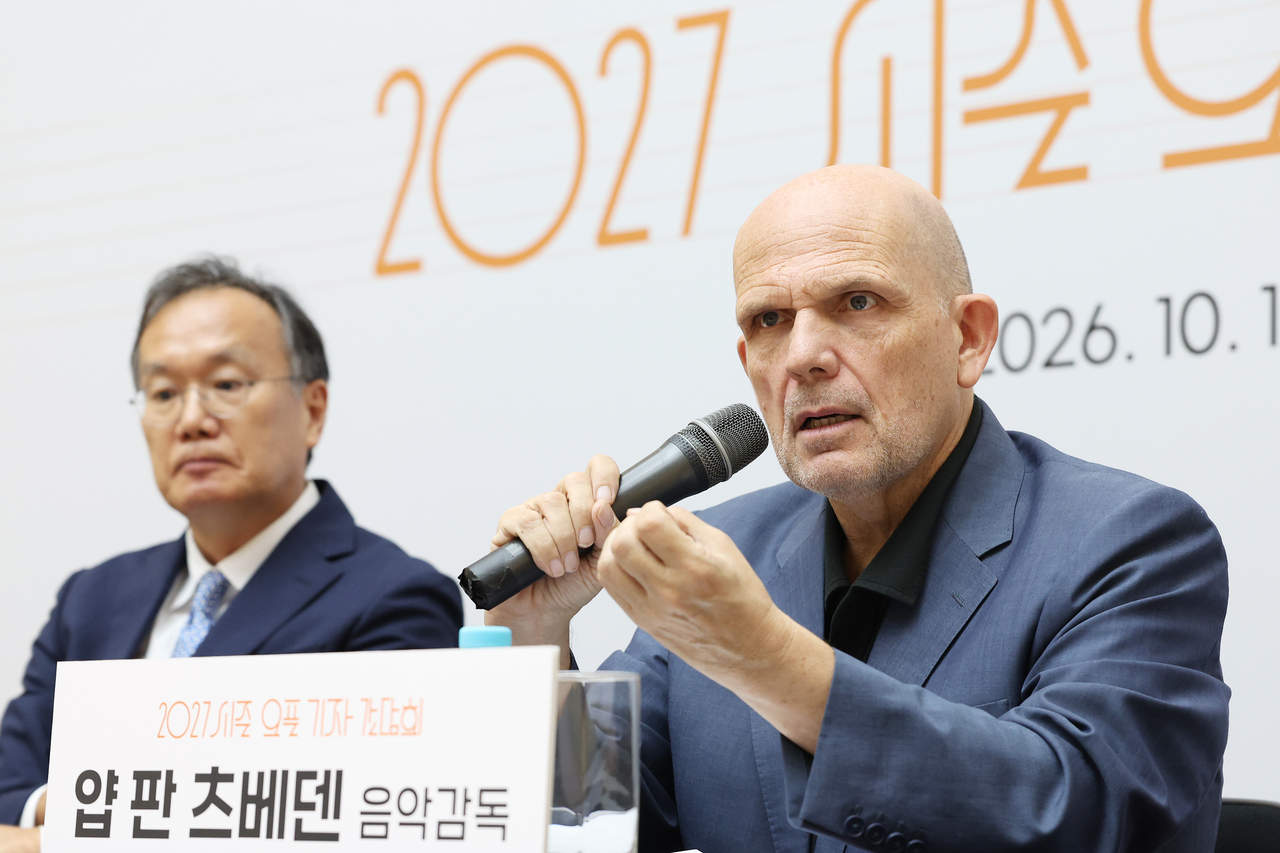
Van Zweden pointed to the Berlin Philharmonic's approach to sound-building as a concrete example of what he is pursuing. "With the Berlin Phil, I think of the sound as coming not from the front of the orchestra but from the back — and I have been working toward that every single day since my first day here," he said.
"When 16 first violins, 14 second violins and 12 cellists are playing, I want a different balance — one where the sound doesn't come from the front rows closest to the conductor, but from further back. To achieve that, the musicians need to truly understand one another, and we have definitely improved in that area."
The orchestra Van Zweden envisions is a chameleon — capable of delivering the grandeur of Mahler while also capturing the classical refinement of Mozart. "Having a wide range of styles has always been my vision for this orchestra," he said. "The musicians embrace new ideas with remarkable openness, covering everything from Wagner and Mozart to contemporary music. I feel I can dream even bigger here."
Cho Seong-jin returns after 11 years, teen prodigy Himari joins Beethoven-themed season
The theme of the Seoul Phil's 2027 season is "freedom" — drawn from the 200th anniversary of Ludwig van Beethoven's death. "The work that best captures Beethoven's longing for freedom — his liberation from the prison of silence and the illness that robbed him of his hearing — is the opera 'Fidelio,'" Van Zweden said.
For Van Zweden, freedom on stage is born of rigorous discipline. "Musicians sometimes ask me to let them play a little more freely," he said. "Every time, I tell them: freedom cannot be achieved without truly intense preparation. You need to be 110 percent ready before you can express freedom on stage."
The orchestra will perform Beethoven's symphonies No. 3 "Eroica," No. 5 "Fate," No. 7 and No. 9 "Choral," along with the Violin Concerto featuring soloist Augustin Hadelich and the concert opera "Fidelio." All five installments of the chamber music series "Chamber Classics" will also be devoted entirely to Beethoven. The Mahler symphony cycle continues with Symphony No. 5 in March and No. 3 in November.
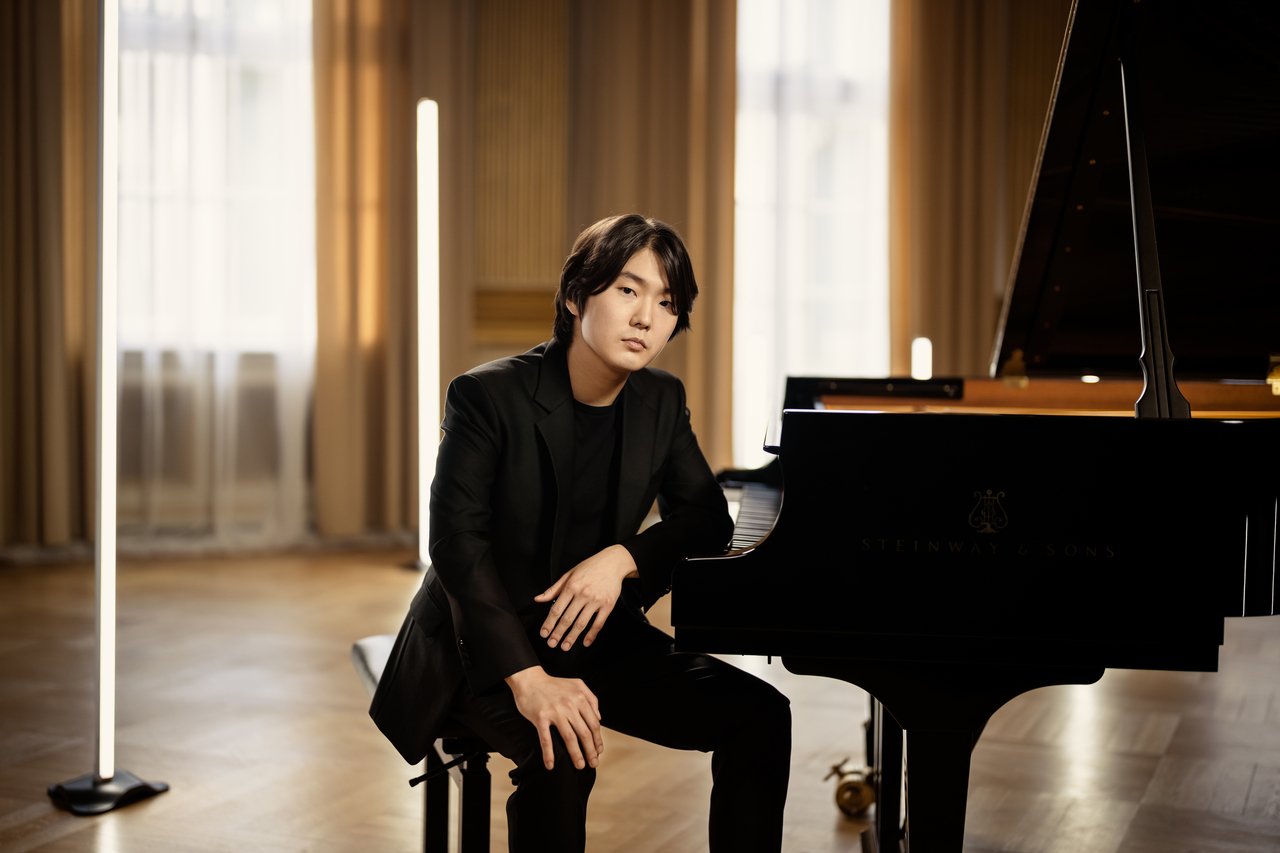
Pianist Cho Seong-jin will return to the Seoul Phil's subscription concert stage for the first time since 2016 — an 11-year absence. On June 24 and 25, he will join Van Zweden for the Asian premiere of a piano concerto by composer Shin Dong-hoon, the Seoul Phil's "Musician of the Year" — a designation the orchestra has revived after a five-year hiatus. Shin wrote the concerto for Cho; the world premiere was given by Cho and the London Symphony Orchestra in November 2025. Seoul Phil President Jeong Jae-wal said the "Musician of the Year" program will run across 2027 and 2028, with two works by Shin featured over that period. A two-year composition fellowship will also be launched to nurture emerging Korean composers, he added.
The New Year's concert on Jan. 9 will feature HIMARI, a Japanese violinist born in 2011 who made her Berlin Philharmonic subscription-concert debut in March last year at age 13, performing Prokofiev's Violin Concerto No. 2. "She is creating the biggest sensation in the history of the violin over the past half-century," Van Zweden said. "Introducing HIMARI to Korean audiences is a significant achievement for the Seoul Phil team and organization."
Other featured artists include pianists Sun Woo Ye-gun and Park Jae-hong, Korean-American violinist Randall Goosby, and conductors Choi Su-yeol, Lee Eol and Holly Choe. "About 90 percent of the young artists joining us next season are friends I already know well from performing together," Van Zweden said.
The Seoul Phil will perform three works three times each next season: Mahler's Symphony No. 5 (March 4–6), the concert opera "Fidelio" (including one special concert co-presented by the Sea & Air Yunhyung Cultural Foundation) and Beethoven's Symphony No. 9 "Choral" (Dec. 16–18). The orchestra said performing the same repertoire three times is unprecedented for a Korean orchestra.
"Korean orchestras have not been able to take risks or push boundaries because the market has been too small," Jeong said. "We want to find out whether the market has grown enough to sustain three performances." Behind the decision to increase performances is a foundation of nearly 100 community concerts a year. "Of our roughly 140 annual performances, almost 100 are outreach concerts — neighborhood concerts, after-work concerts, riverside concerts," Jeong said. "The idea that classical music has a high barrier to entry is a thing of the past. If three performances succeed, we will look for ways to add even more."
shee@heraldcorp.com