Suncheon National University runs field-centered education from seeding to harvest, donating the produce to the community
Suncheon city and horticulture students at Suncheon National University harvested 150 kilograms of vegetables from an urban smart farm and donated the produce to local welfare organizations.
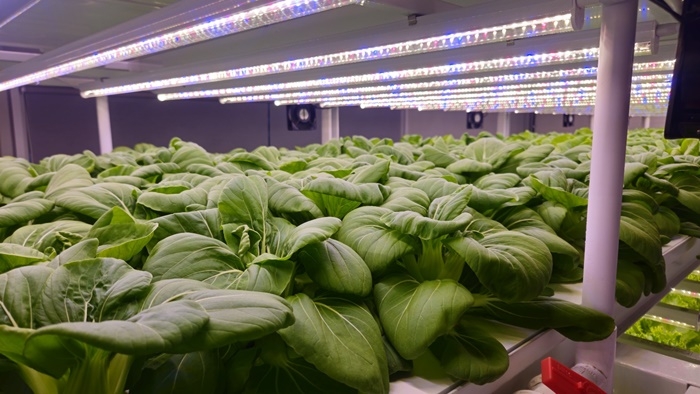
The vegetables were grown at Suncheon City Farm, located inside the Eco Business Center near Suncheon Station. The harvest marks the first yield from an indoor smart plant factory operated as part of an off-campus class under the Green Smart Farm School horticulture program.
Suncheon City Farm is a vertical smart farm that uses information and communications technology to precisely control light levels, temperature, humidity, carbon dioxide and nutrient solutions indoors, enabling year-round crop cultivation regardless of season.
The harvested vegetables will be delivered first to five facilities — the Suncheon General Social Welfare Center, the Suncheon Jorye General Social Welfare Center, Inseonwon, Hyangnim Silver Ville and Yegwang Village — with additional deliveries to follow.
The donated produce consisted of three varieties — bok choy, green glace and Nordis — grown directly by horticulture students through smart farm education and hands-on training. Students harvested 550 plants and packed them into 30 boxes of 5 kilograms each.
At Suncheon City Farm, horticulture students practice every stage of vertical smart farm cultivation, from seeding and transplanting to nutrient and environmental management, growth monitoring and harvesting.
The two institutions plan to package and deliver harvested produce every other Friday. They will also conduct satisfaction surveys on the number of users at each facility, actual consumption and the usefulness of each crop variety, using the results to adjust future distribution volumes and donation frequency.
"The plant factory that students cultivated themselves — in a space provided by Suncheon city, combining classes and hands-on practice — is free from fine dust, produces pesticide-free crops and connects to community sharing, which makes it all the more meaningful," said Lee Beom-seon, a professor in the department of horticulture.
parkds@heraldcorp.com