Food tells the story of the world. Welcome to Midam, a column about delicious stories.
Poor food quality at highway rest stops back in the spotlight
Government points to multilayer contract structure as root cause
State-led 'public management company' proposed to overhaul the system
Concerns raised over revival of defunct Korea Highway Management Corporation
Highway rest stop food has long been synonymous with overpriced, underwhelming meals — and a bowl of seaweed soup at one rest stop has reignited the debate.
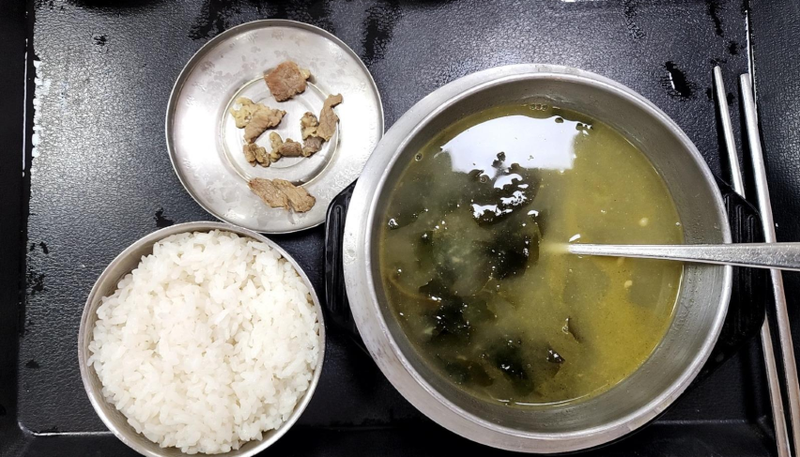
A photo of beef seaweed soup purchased at a highway rest stop was posted Sunday to the online community Bobaedream. The image showed little more than about five thin slivers of beef floating in the broth.
"I can't bring myself to name the rest stop, but I ordered the beef seaweed soup and fished out the solids — there was less meat than what the army cook used to make 40 years ago," the poster wrote.
The user added, "The government said it would fix highway rest stop food — when will ordinary people actually feel the difference?"
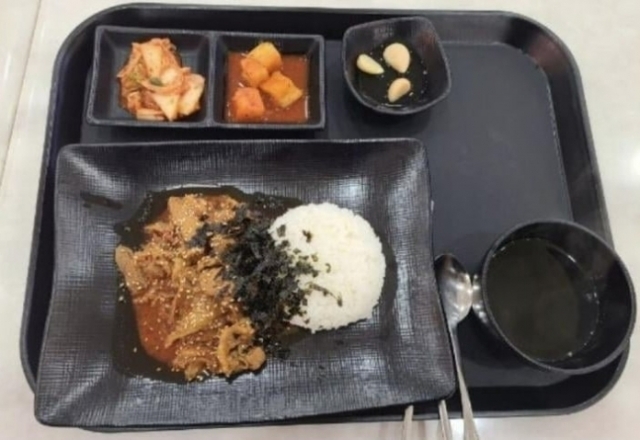
Complaints about poor rest stop food are nothing new. In 2024, one highway rest stop drew criticism for charging 13,000 won ($10) for a spicy stir-fried pork dish while serving a meager portion.
The problem stretches back even further. Newspaper articles from the late 1980s regularly criticized rest stop food and drinks for costing more than twice the going market rate, with poor service and hygiene to match.
Govt eyes public management company to cut multilayer contracts; echoes of defunct highway body stir concern
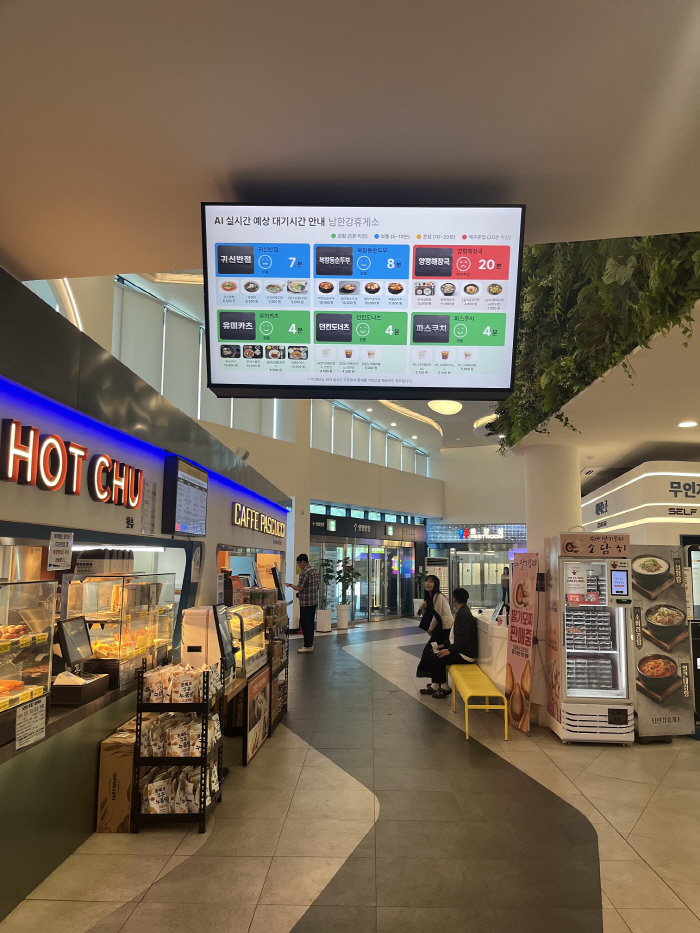
The multilayer contract structure governing highway rest stops has been identified as the root cause of the poor food quality.
President Lee Jae Myung raised the issue directly at a Ministry of Land, Infrastructure and Transport briefing in December last year. "Why is rest stop food so bad and yet so expensive? It turns out that by the time fees and commissions are skimmed off at each layer, half the money is gone," he said, ordering swift improvements.
According to a Ministry of Land, Infrastructure and Transport investigation, rest stop operators collected an average commission of 33 percent — up to 51 percent — of tenant vendors' sales, while the Korea Expressway Corporation took 13.9 percent of operators' sales in rent.
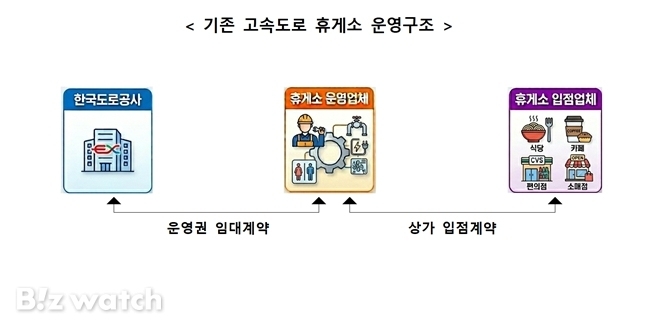
Starting next year, the Ministry of Land, Infrastructure and Transport plans to establish a separate "public management company" to replace the Korea Expressway Corporation and the intermediate operators, contracting directly with tenant vendors.
By cutting the two-tier commission structure down to a single layer, the ministry expects the fees paid by tenant vendors to fall to around 8 to 9 percent of sales.
The overhaul will be rolled out gradually, starting with rest stops newly opened or whose contracts expire this year. The ministry aims to bring about 100 locations under the new system next year, expanding to 80 to 90 percent of all roughly 200 highway rest stops nationwide by 2030.
"Whether the government will invest directly or whether the Korea Expressway Corporation will fund it as a subsidiary is still under discussion," a ministry official said. "We will maintain the company's independence by blocking, for example, retired Korea Expressway Corporation executives from taking management positions."

However, some critics argue that creating a public management company amounts to little more than reviving the Korea Highway Management Corporation, a state body dissolved more than two decades ago.
That corporation was shut down after a lack of market competition led to a broad decline in service quality and mismanagement. Some warn that a new public management company could repeat the same failures.
Also notable is that among the roughly 200 highway rest stops nationwide, the three directly operated by the Korea Expressway Corporation — Munmak, Mungyeong and Hana Dream — already contract directly with tenant vendors without an intermediate operator. Yet the commissions those vendors pay are reportedly not significantly lower than at privately operated rest stops.
123@heraldcorp.com