- Four ultra-small satellites for military reconnaissance and surveillance planned for 2031 launch
- Next-generation rocket to triple payload capacity; second space center site to be confirmed by year's end
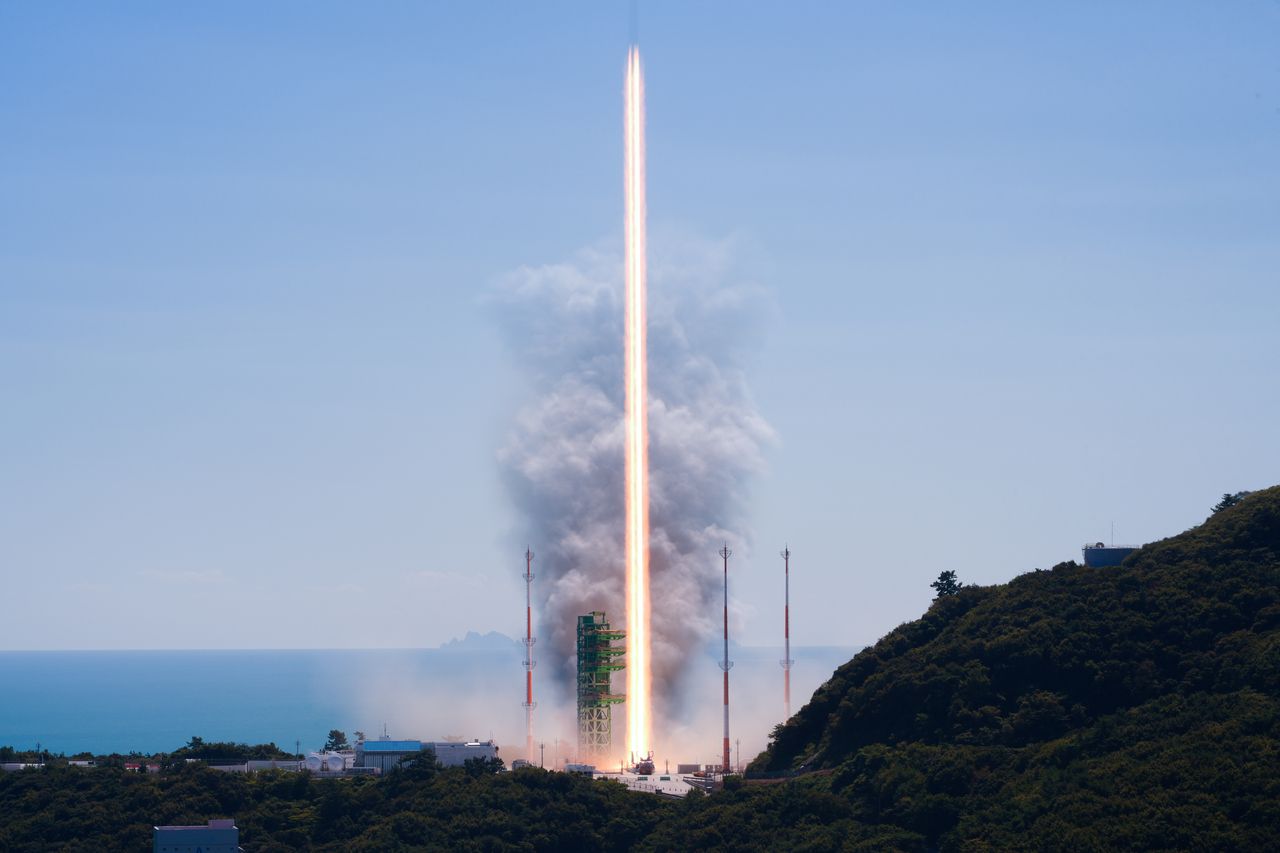
South Korea plans to launch defense satellites aboard its homegrown Nuri rocket for use in national security and military reconnaissance and surveillance missions. The government aims to secure an independent space transport capability for defense purposes by launching Nuri at least once a year through 2032, including sending up four electro-optical satellites as part of a micro-satellite system in 2031.
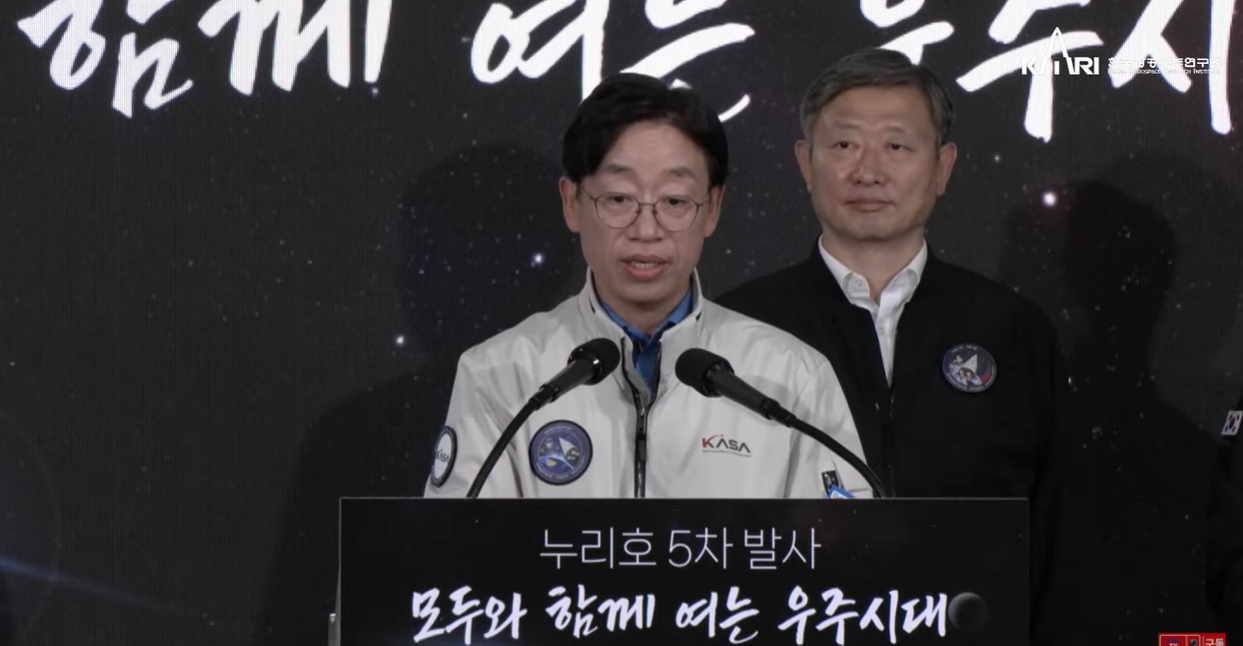
Korea AeroSpace Administration Commissioner Oh Tae-seok unveiled the plan — along with results from Nuri's fifth launch — at a Cabinet meeting Tuesday.
The rocket's sixth launch, scheduled for next year, will carry five additional micro-cluster satellites into orbit. Once all 10 satellites are operating as a constellation, they will observe the Korean Peninsula at least three times a day. The imagery gathered will be used for national security and disaster response.
The launch schedule calls for next-generation medium satellite No. 5 in 2028, a lunar-orbit communications satellite in 2029, two low-orbit communications satellites and a small lunar lander in 2030, four micro-satellite electro-optical satellites in 2031, and multipurpose practical satellite No. 8 in 2032.
KASA aims to push Nuri's cumulative launch success rate above 90 percent through repeated missions. The agency is also reviewing plans to increase launch frequency if additional demand arises, such as for low-orbit communications satellites or space data center demonstration missions.
Development of a next-generation launch vehicle is also being accelerated. The current Nuri can carry a 2.2-ton payload to an altitude of 500 kilometers, but the next-generation rocket under development through 2032 will triple that capacity to about 7 tons, enabling South Korea to independently transport large satellites and lunar landers.
South Korea is also moving to develop reusable rocket technology, breaking from the current practice of discarding launch vehicles after a single use.
By 2028, a 12-meter small test vehicle will undergo vertical takeoff and landing trials at an altitude of around 500 meters. In 2032, the first stage of the 50-meter next-generation rocket will verify vertical takeoff and landing at around 1,000 meters. The ultimate goal is to complete reusable technology by 2035, enabling a first-stage rocket to return to the ground after carrying out a satellite launch mission.
Construction of a second space center is also moving forward. KASA completed evaluations of two candidate sites — Goheung in South Jeolla Province and Jeju — in September, and plans to finalize the location through the National Space Council by December.
The second space center will include launch pads for the next-generation rocket and private small- and medium-sized launch vehicles, a first-stage rocket landing facility, maintenance facilities, and a flight tracking and control system. The facility is designed to serve as a space transport hub capable of supporting more than 10 reusable and commercial launches per year.
Through these efforts, KASA said it will strengthen South Korea's independent space transport system — under which domestic satellites are launched on domestic rockets — and expand the private-sector-led space industry ecosystem.
nbgkoo@heraldcorp.com