Incheon unveils urban innovation vision
City to reshape space linking old and new districts with Life-Live-Link strategy; K-culture tourism belt to connect Cheongna, Jemulpo and Munhak; housing and transport reforms to sharpen city's competitive edge; new vitality planned for older downtown areas
Incheon Metropolitan City is seizing on the 2028 G20 summit as a catalyst for a sweeping urban overhaul spanning culture, tourism, housing and transportation.
The plan envisions a chain of K-culture hubs running from Cheongna through Jemulpo to Munhak, paired with downtown regeneration, expanded housing supply and a broader metropolitan transport network — all aimed at transforming Incheon from a city people pass through into one where visitors linger and residents put down roots.
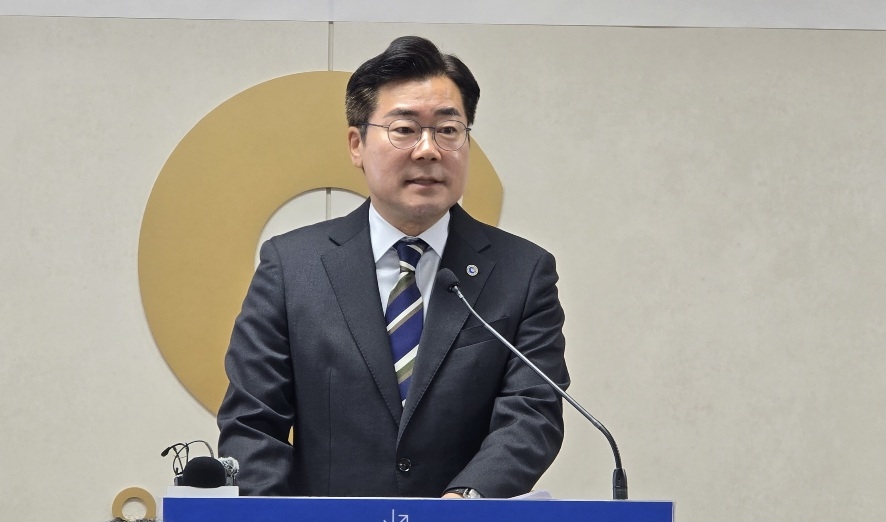
Incheon Mayor Park Chan-dae unveiled the "Incheon Urban Space Remaking" vision at a City Hall briefing on Wednesday, presenting three strategic pillars: a city where joy stays (Life), a city that builds lives (Live) and a city within a one-hour living radius (Link).
At the heart of the vision is a departure from the old model of developing new and old districts separately. Instead, the city aims to weave together cultural and tourism assets, living spaces and transport networks into a single connected whole, spreading vitality across the entire urban area.
To that end, the city plans to establish three connective axes: a K-culture corridor, a local Incheon corridor and a green Incheon corridor.
Tied closely to the bid to host the 2028 G20 summit, the plan calls for developing Incheon's port-opening history, its islands and tidal flats, traditional markets and alley commerce into internationally recognized tourism content, while nurturing the K-content industry as a new growth engine.
On the culture and tourism front, Park named the K-culture corridor — linking the Cheongna Film and Culture Complex, the Jemulpo open-port district and Munhak Stadium — as the centerpiece project.
The Cheongna Film and Culture Complex, which has already cleared a revised development plan review, is set to become a mixed-use hub combining film and content production, immersive media, and exhibition and convention functions.
The city expects the project to generate more than 2.7 trillion won ($2.03 billion) in production-inducing effects, 1.15 trillion won in added value and roughly 13,000 jobs.
The Jemulpo area will draw on the historical and cultural assets of Incheon's inner harbor Piers 1 and 8, the Sangsang Platform, Chinatown and Dongincheon Station to develop into a destination for foreign tourists.
The city plans to improve the transport network around the Sangsang Platform and Incheon Station, renovate the plaza in front of Incheon Station, and pursue inner harbor redevelopment along with elevated pedestrian walkways.
Plans also include attracting K-beauty brand stores, producing an "Inseulaeng" dining map showcasing local restaurants, and linking services through the Incheon-e-ji app — all designed to extend tourists' stays and boost spending.
The area around Munhak Stadium will be transformed into a "K-Culture Park" concentrating performances, esports, and the video, webtoon and character industries.
The city intends to build an arena venue capable of hosting large-scale domestic and international performances, attract esports tournaments, and extend commercial and MICE functions as far as the Guwol District 2 site — developing it into a mixed-use space combining the cultural industry, housing and employment.
The city's strategy is to make Munhak the anchor of its culture and tourism network, channeling visitors who arrive at Cheongna and Jemulpo deeper into the older downtown and across Incheon as a whole.
For the plan to translate into actual tourist inflows and higher sales for local businesses, however, the city will need to go beyond building large facilities and ensure that transport access, content operations and linkages with local small businesses are all in place.
The second connective axis, the local Incheon corridor, focuses on expanding the city's everyday life and local culture into tourism content.
The city plans to build a mixed-use cultural library at Camp Market in Bupyeong and connect it with the Bupyeong underground shopping arcade, the Gulpocheon café street and Bupyeong Kkang Market to create a local tourism hub where visitors can enjoy shopping, culture and food together.
Central Park near City Hall will see its fragmented green spaces and walking paths connected, with improved access to surrounding cultural facilities and commercial areas.
Along Incheon Boulevard, the city plans to add everyday cultural facilities and new commercial spaces, converting a road corridor that once divided the city center into a cultural axis linking neighborhoods.
The city will also pursue a "Classic Arts Road" connecting the mixed-use cultural library, the arts and culture center, Museum Park and Art Center Incheon.
A green Incheon corridor linking historical, cultural and ecological assets is also in the works. The city plans to develop tourism routes connecting islands, tidal flats, urban forests, traditional markets and historic cultural spaces, channeling the area's natural environment and distinctive local character into economic revitalization.
The city will expand tourism information and local-currency-linked services, create specialized programs for individual traditional markets, and pursue local job creation drawing on older residents and career-returning women.
On housing, the city is prioritizing reforms to urban planning regulations that have blocked development in older districts, alongside renovation of aging residential areas and new land development to broaden residents' housing choices.
The city plans to revise the zoning and floor-area-ratio framework for quasi-residential zones and the height-district management standards, and to apply differentiated development density based on local characteristics.
It will also petition the central government and the National Assembly to amend laws that restrict military base relocations, aiming to improve conditions for using idle land and developing older downtown areas.
Renovation of aging planned cities will be accelerated. Centered on the 16,267 units across six priority zones already designated, the city will assign master planners and operate an "Incheon-style administrative fast-track" system using expert committees and integrated reviews.
The city also set a target of designating new renovation project sites covering roughly 10,000 households each year.
Guwol District 2, the area around Gyulhyeon Station's ammunition depot and idle land in older downtown areas are all slated to become development zones combining housing, employment, transport and everyday amenities.
Guwol District 2 in particular is envisioned as a self-sufficient city combining cultural industry jobs and residential functions, developed in tandem with the Munhak K-Culture Park.
The city will also introduce a new housing model — a cooperative long-term rental housing scheme — using the central government's 20-year long-term rental system and the Housing and Urban Fund to reduce residents' housing costs and enable tenant participation in management.
AI-based safety technology, automated parking and energy-saving equipment will be incorporated to improve residential convenience, while the supply of transit-oriented housing for young people will be expanded.
To prevent jeonse fraud, the city plans to block tenant recruitment by operators not enrolled in guarantee insurance, strengthening the housing safety net for young residents.
For the plan to deliver genuine housing stability, however, the city will need to spell out actual supply volumes, move-in timelines, rent levels and project financing — and secure the capacity to execute from the planning stage onward.
On transport, the city will focus on organically connecting rail, roads and buses to cut travel times between Incheon and key destinations across the greater metropolitan area.
The city will push for the timely opening of the GTX-B line and seek to have the GTX-D and GTX-E lines included in the fifth national railway network development plan.
It also plans to review the procedures for establishing a new Cheonghak Station, extending Incheon Metro Line 1, and building Metro Line 3, the Juan-Yeonsu line and the Yonghyeon-Seochang line.
Road network plans include widening the Yeongdong Expressway, building a new Sorae interchange, constructing the Gyeyang–Ganghwa Expressway and putting the Gyeongin Expressway underground.
The city will also upgrade its ring-road network to keep pace with downtown redevelopment and new land development, and has listed the East-West Peace Logistics Expressway — connecting Gangwon Province, northern Gyeonggi Province, Ganghwa and Incheon International Airport — as a priority project.
To make Incheon-originating KTX services more convenient, the city will expand connecting transport and strengthen an express bus transfer system linking the airport, the city center and major destinations nationwide.
Everyday mobility policies will also move forward, including the introduction of autonomous buses using dedicated median bus lanes, expansion of parking in older downtown areas and broader mobility support for transportation-disadvantaged residents.
Through this transport expansion, the city aims to ease commuting burdens for residents and improve tourist access to the city center, creating synergies between its culture and tourism policies and its transport agenda.
Above all, Park framed the 2028 G20 summit as a defining opportunity to showcase Incheon's urban competitiveness to the world, and expressed his commitment to driving urban space innovation with citizen participation at its core.
To that end, he also proposed forming a "2028 G20 Incheon Citizens' Promotion Committee" and a citizen supporters group.
"The G20 summit is a decisive opportunity to bring together all of Incheon's appeal and prove to the world its value as a city worth staying in," Park said. "Having passed the first 100 days of preparation, I will work with our citizens to open a new future for Incheon."
gilbert@heraldcorp.com