Review report on petition to abolish virtual asset taxation
Taxation already decided through tax subcommittee process
Linking to financial investment income tax seen as inappropriate; separate from stock market support policy
Government submits position on expanding tax infrastructure to Assembly
Working group formation floated amid calls for postponement
A National Assembly report has warned that reversing the virtual asset tax — already delayed three times and set to take effect in January — could undermine the credibility of tax policy, amid continued calls for abolition or postponement on grounds of inequity and regulatory gaps. The report also drew notice for finding that it would be inappropriate to prop up the virtual asset market through policy measures in the same way as the stock market.
The government, for its part, submitted its position to the Assembly stating that it plans to launch an integrated analysis system for virtual asset taxation by year's end and that it will be able to track overseas transactions starting next year.
The industry continues to raise concerns about youth asset formation and market contraction, and both ruling and opposition parties have introduced bills to delay the tax, setting the stage for a fierce debate during the regular National Assembly session in the second half of this year over whether to proceed with implementation in January.
The National Assembly's Finance and Economy Planning Committee released a review report Wednesday on a petition to abolish the virtual asset tax, stating that "reversing a decision on whether to tax virtual asset income — a matter already settled through discussions in the tax subcommittee — could undermine the credibility of tax policy." The committee also said concerns about destabilizing the domestic virtual asset market should be taken into account. The tax had originally been set to take effect in 2022 but was delayed three times due to system readiness issues, investor protection concerns and market conditions.
The petition, filed by a person surnamed Min and more than 50,910 others, was referred to the committee in May. The petitioners argued it was unreasonable to tax virtual assets with only a basic deduction of 2.5 million won ($1,880) per year while the abolition of the financial investment income tax had preserved a capital gains tax exemption for ordinary domestic stock investors. Their core demand for abolition rested on the argument that investor protection measures and the tax base had not been sufficiently established.
A separate petition filed last month by a person surnamed Jo — calling for a two-year delay on the cryptocurrency tax — also garnered more than 50,000 signatures, reflecting sustained investor pressure for reconsideration. In reviewing the petitions alongside the government's position, the Assembly identified four key issues: tax equity relative to stocks and other financial assets, market conditions and youth asset-building opportunities, the appropriateness of the tax structure including loss deductions and rates, and the market impact of implementing the tax.
The Assembly found some merit in the argument about tax equity across asset classes. Since one of the stated goals of the virtual asset tax was to achieve parity with other assets such as stocks, it acknowledged that the abolition of the financial investment income tax could give rise to calls to scrap the virtual asset tax as well. However, the report countered that linking virtual assets to the financial investment income tax framework was inappropriate, and that the question of whether the virtual asset market requires the same kind of policy support as the domestic stock market was a separate matter.
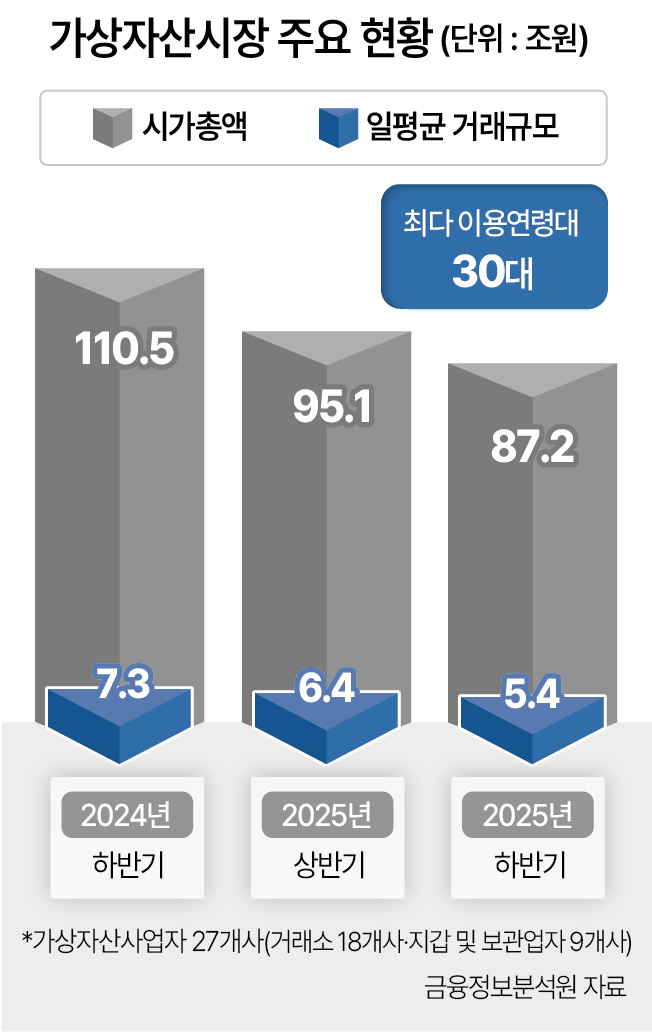
The committee expressed sympathy with concerns that taxation could dampen the market and negatively affect young people's ability to build assets. According to a Korea Financial Intelligence Unit investigation, the domestic virtual asset market capitalization in the second half of last year stood at 87.2 trillion won, down 21.1 percent from the same period the previous year. People in their 30s have been the most active age group on exchanges every year since 2023. The Assembly said there was "a possibility that implementing the tax could further depress the market and negatively affect youth asset formation," but added that "whether the virtual asset market should be propped up through policy measures remains a matter of debate."
Even if the tax goes ahead, the extent to which losses can be offset remains a separate point of contention. Virtual asset income is calculated by netting gains and losses within the same year, but loss carryovers — which allow losses to be deducted against income in future years — are not permitted. Petitioners argued this was unreasonable compared with the now-abolished financial investment income tax, which had been designed to allow loss carryovers of up to five years. They noted that tax liability could arise in a given year even when investors are still recovering from prior losses.
The report said the two assets could not be treated identically on loss deductions. It explained that the financial investment income tax had allowed carryovers to foster risk capital, while virtual assets had not been granted the same treatment due to concerns about encouraging speculative behavior. On the argument that classification as miscellaneous income subjects investors to a high tax rate of 22 percent, the Ministry of Economy and Finance said "the current classification as miscellaneous income is appropriate when considering the 2.5 million won basic deduction, a flat income tax rate of 20 percent, and reduced compliance costs."
With outright abolition increasingly seen as unlikely, analysts expect the key issue determining whether the tax is delayed further to be the state of the tax infrastructure. The industry has raised strong concerns that taxing virtual assets before adequate investor protection and transaction data management systems are in place could drive investment funds toward overseas platforms. The government is also expected to demonstrate how much of the infrastructure shortfall — long cited as a reason for past delays — has actually been resolved.
The government submitted its position to the Assembly that it has continuously expanded and improved the relevant infrastructure and sees no obstacle to proceeding with taxation as planned. On top of an existing system for collecting and managing virtual asset transaction data, it plans to launch an integrated analysis system by the end of this year. From 2027, it intends to exchange cross-border virtual asset transaction information through the Crypto-Asset Reporting Framework. On that basis, the government said it sees no difficulty in taxing overseas transactions as well.
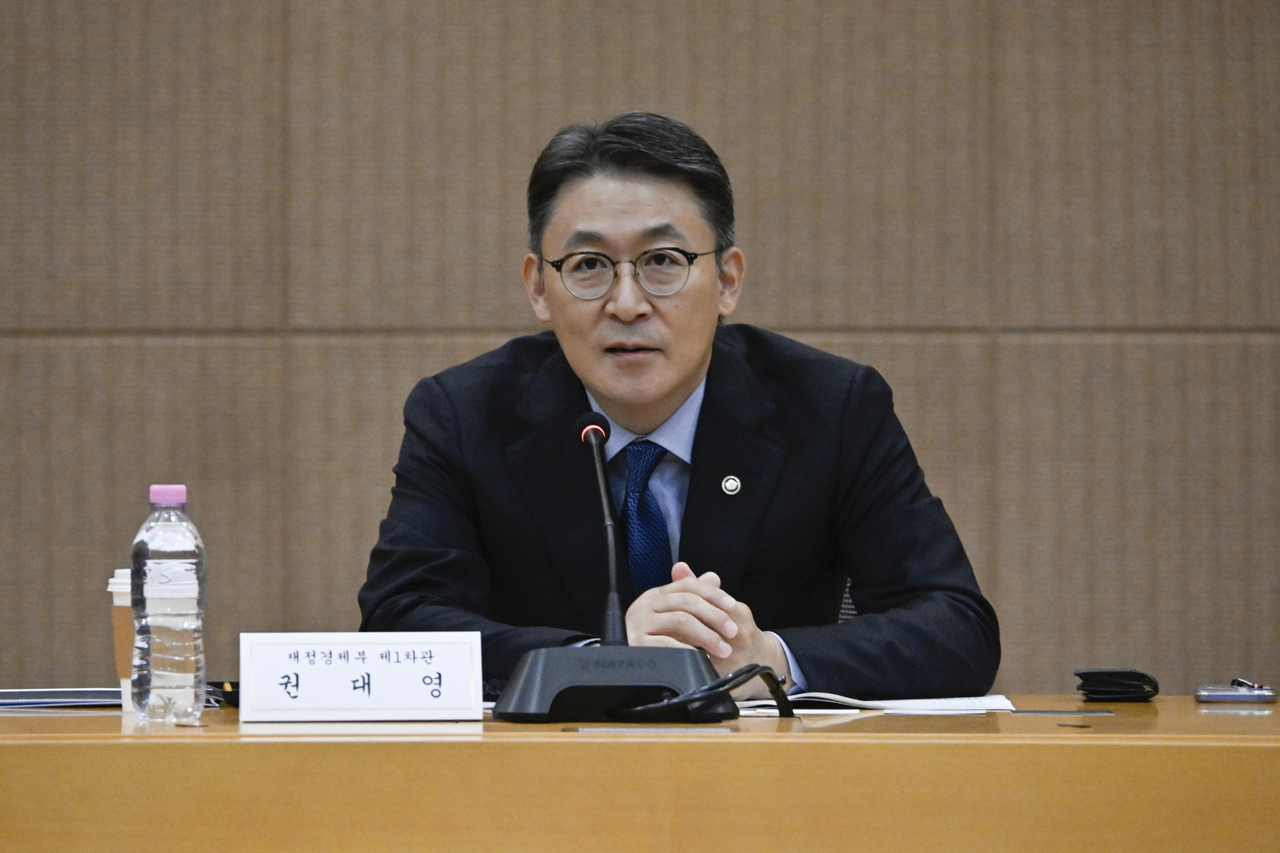
At a meeting with the industry, however, the government appeared to leave open the possibility of discussions on the timing of the tax. The Ministry of Economy and Finance held a field consultation Tuesday, chaired by First Vice Minister Kwon Dae-young, with the heads of the five major won-denominated exchanges, the Digital Asset eXchange Alliance (DAXA), and experts from academia and the legal profession. The meeting did not lean toward either postponement or proceeding as scheduled, and no detailed review of individual exchanges' readiness was conducted. The possibility of forming a working group among officials to discuss specific issues — including tax standards and securing transaction data — was also raised.
The industry conveyed that it does not oppose the principle of taxation itself, but that institutional preparation and improvements must come first. Its position was that tax standards for each transaction type should be clarified and that measures such as loss carryover deductions should be reviewed. Participants also raised the view that as the digital asset market expands into areas linked to finance — including payments and security token offerings (STO) — the international consistency of the tax framework should be examined. Meanwhile, bills currently pending in the National Assembly include a proposal by lawmaker Song Eon-seog to abolish the tax entirely, and separate bills by lawmakers Jeong Seong-guk, Kim Sang-hun and Park Min-gyu to delay its implementation.

forest@heraldcorp.com
kyoung@heraldcorp.com