Three crypto cards put to the test in Sydney, Australia
Payments made at Starbucks, a hypermarket and an airport convenience store
Cashback-adjusted final costs differ by up to $0.21
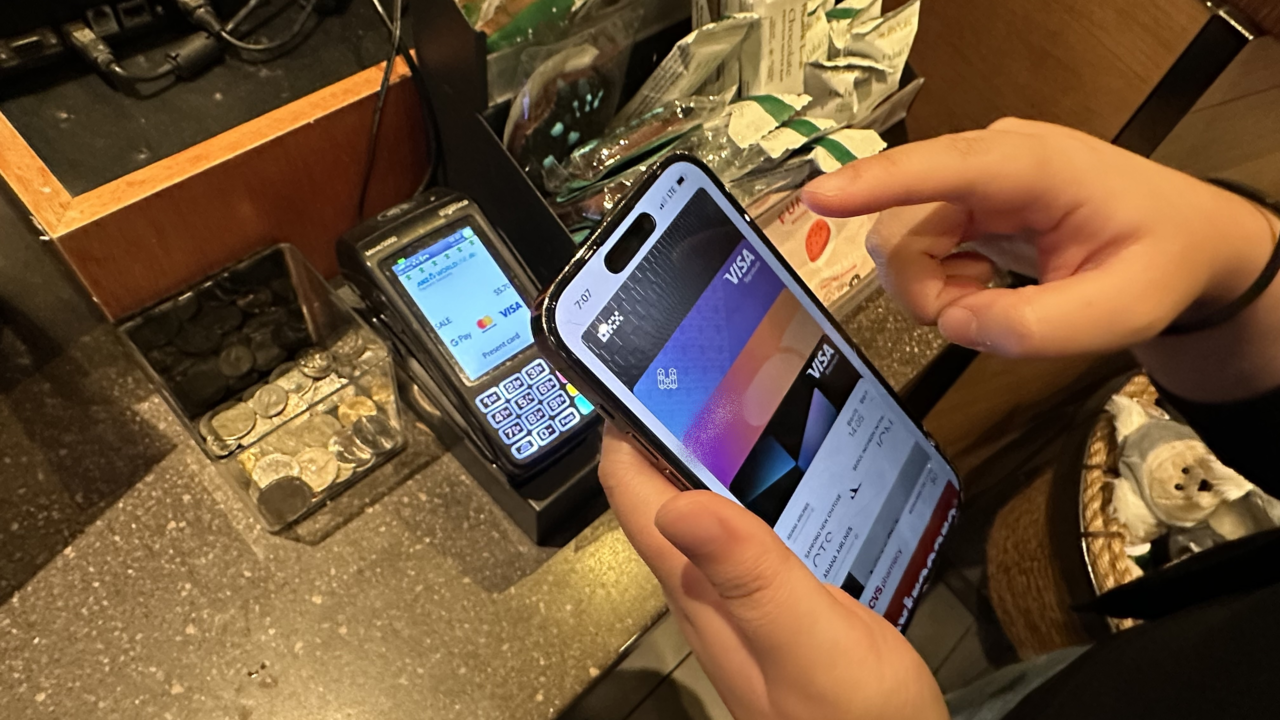
"Three iced Americanos, please. Would it be all right if I paid for each one with a different card?"
It was 7 p.m. on Nov. 19 at a Starbucks store in Sydney, Australia. Café culture runs deep in Australia, but most independent coffee shops close by 3 p.m., making a late-afternoon cup surprisingly hard to come by. Starbucks fills that gap — the store, quiet during the day, was packed with customers once the sun went down. Three iced Americanos at A$5.70 ($3.91) each were paid for separately, one card at a time, and cashback notifications from each card pinged the reporter's phone in quick succession.
The three cards used that day were foreign crypto cards: Tria, Ether.fi and OKX Wallet. A previous test in the Gangnam area of Seoul the month before showed that crypto cards allow users to pay as easily as a standard debit card while earning cashback rewards. The question this time was how much the actual amount charged — and the benefits returned — differ from card to card. Each card's basic membership tier was used for a direct comparison on the ground in Australia.
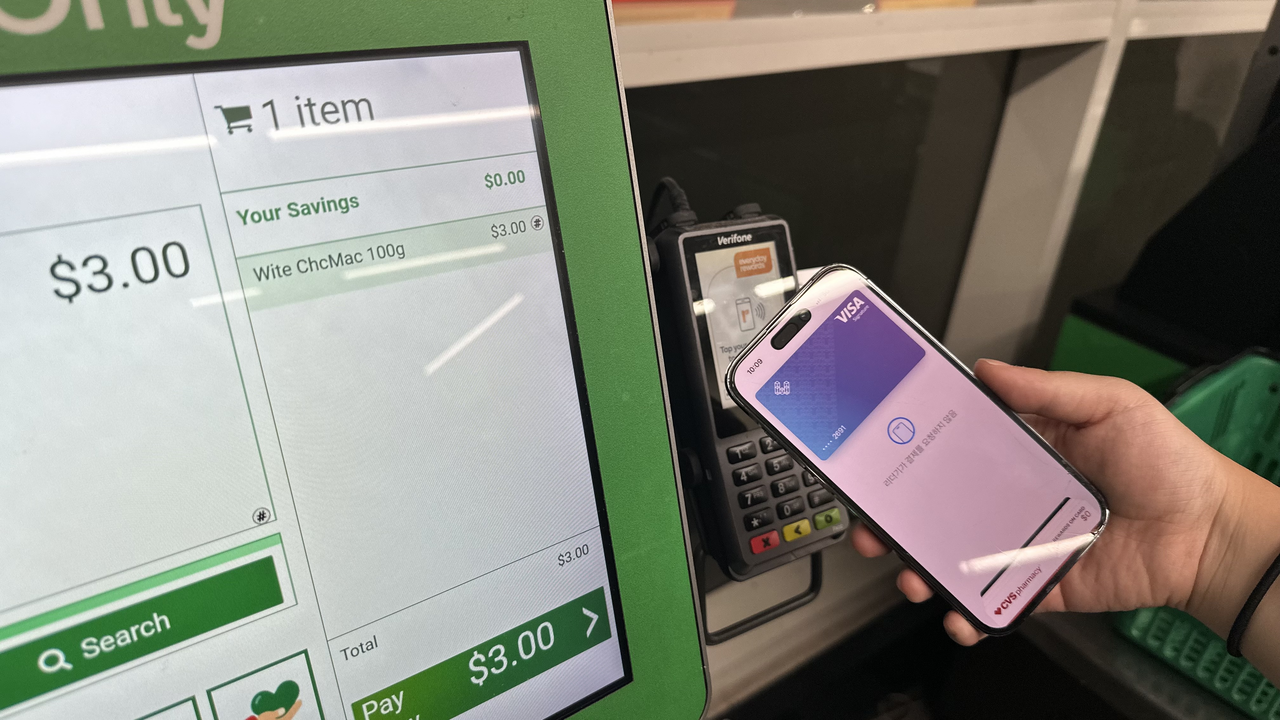
The test covered three locations: a Starbucks, a Woolworths hypermarket and a convenience store inside Sydney Airport. On Thursday and Friday, the reporter made identical purchases at each venue using all three crypto cards. The total charged per card was the same — A$17.69 — but the actual amounts deducted differed.
At Starbucks, the coffee price was the same A$5.70 across all three cards, but the dollar amounts settled in each app varied. Tria and Ether.fi each settled at $3.91, while OKX came in at $3.85 — a gap of up to $0.06 for the exact same cup of coffee.
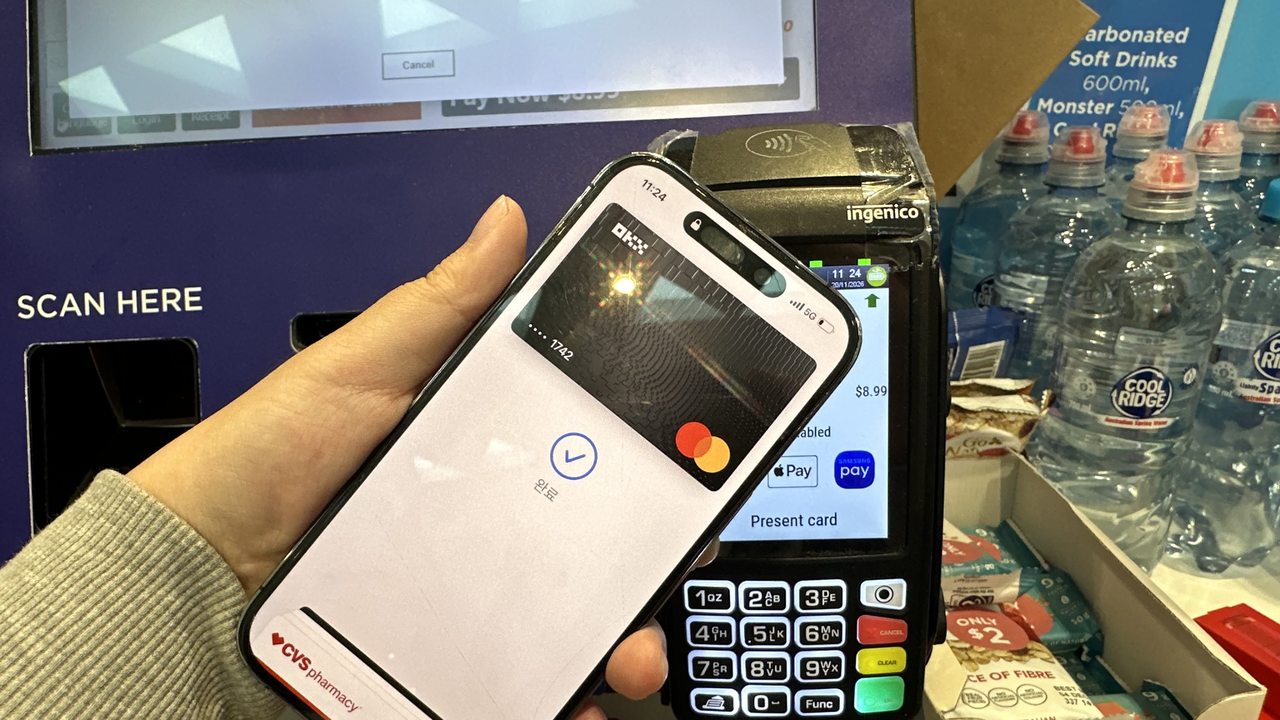
At Woolworths, an A$3.00 snack was purchased three times, once per card. OKX deducted $2.02, Ether.fi $2.05 and Tria $2.06. At a convenience store in Sydney Airport on the way home, an A$8.99 lip balm was bought with each card. Again OKX posted the lowest deduction at $6.05, followed by Ether.fi at $6.13 and Tria at $6.14.
Once cashback was factored in, the picture shifted. Ether.fi returned the most, paying back a total of $0.35 across the three purchases. OKX returned $0.19 and Tria $0.17. After subtracting cashback, the final net cost came to $11.73 for OKX, $11.74 for Ether.fi and $11.94 for Tria — a difference of up to $0.21 for the same total spend.
The reason costs diverge card by card comes down to differing exchange rates, fees and cashback structures. Crypto cards deduct the payment amount from a user's digital assets even when the transaction is made in a foreign currency. In that process, each card network and service applies its own exchange rate and fee schedule, meaning the final cost to the consumer can vary even for identical purchases.
Tria's basic Light membership offers 1.5 percent cashback on purchases. Its app transaction history showed a 1 percent Visa currency conversion fee and a 0.5 percent Tria service fee listed separately, along with the applied exchange rate. On Thursday at Starbucks and Woolworths, the rate was approximately A$1.47 to the dollar; at the airport convenience store on Friday, it was approximately A$1.48.
Ether.fi's basic Core membership offers 3 percent cashback and applies an additional 0.5 percent foreign currency conversion fee on overseas transactions. The OKX Wallet card currently offers a flat 2 percent cashback.
Crypto cards can also draw from multiple digital assets in a single transaction. When the reporter paid A$8.99 at Sydney Airport using the OKX Wallet card, the wallet simultaneously deducted 4.12 USDG and 1.92 USDC — both dollar-denominated stablecoins loaded in advance.
The prospect of crypto card launches in South Korea is gaining traction. A recently proposed digital asset bill, introduced by Democratic Party of Korea lawmaker Yoo Dong-su, would ban interest payments on digital payment tokens — stablecoins — based on holding periods, while allowing transaction-related benefits that do not threaten sound market order to be carved out by presidential decree. Market observers interpret this as potentially opening the door to payback schemes similar to those offered by Naver Pay and Toss Pay, as well as points accumulation on card payments.
Funding the high cashback rates, however, remains a challenge. Compared with domestic debit cards, the base cashback rates on foreign crypto cards are relatively generous. The Hana Travelogue debit card — one of the most popular travel-focused cards in South Korea — earns 0.3 percent of spending in Hana Money at domestic merchants. The three crypto cards tested here offer base cashback rates of 1.5 to 3 percent, at least five times higher.
Steering won-denominated stablecoins toward use as a retail payment method is another hurdle. "The first priority is building demand for won stablecoins," an industry official said. "There need to be additional benefits compelling enough to make users willing to go through the hassle of acquiring stablecoins via a centralized exchange."
kyoung@heraldcorp.com