From rice texture to toppings, major chains compete on quality
Kimbap prices up 8.3%, yet consumer demand keeps rising
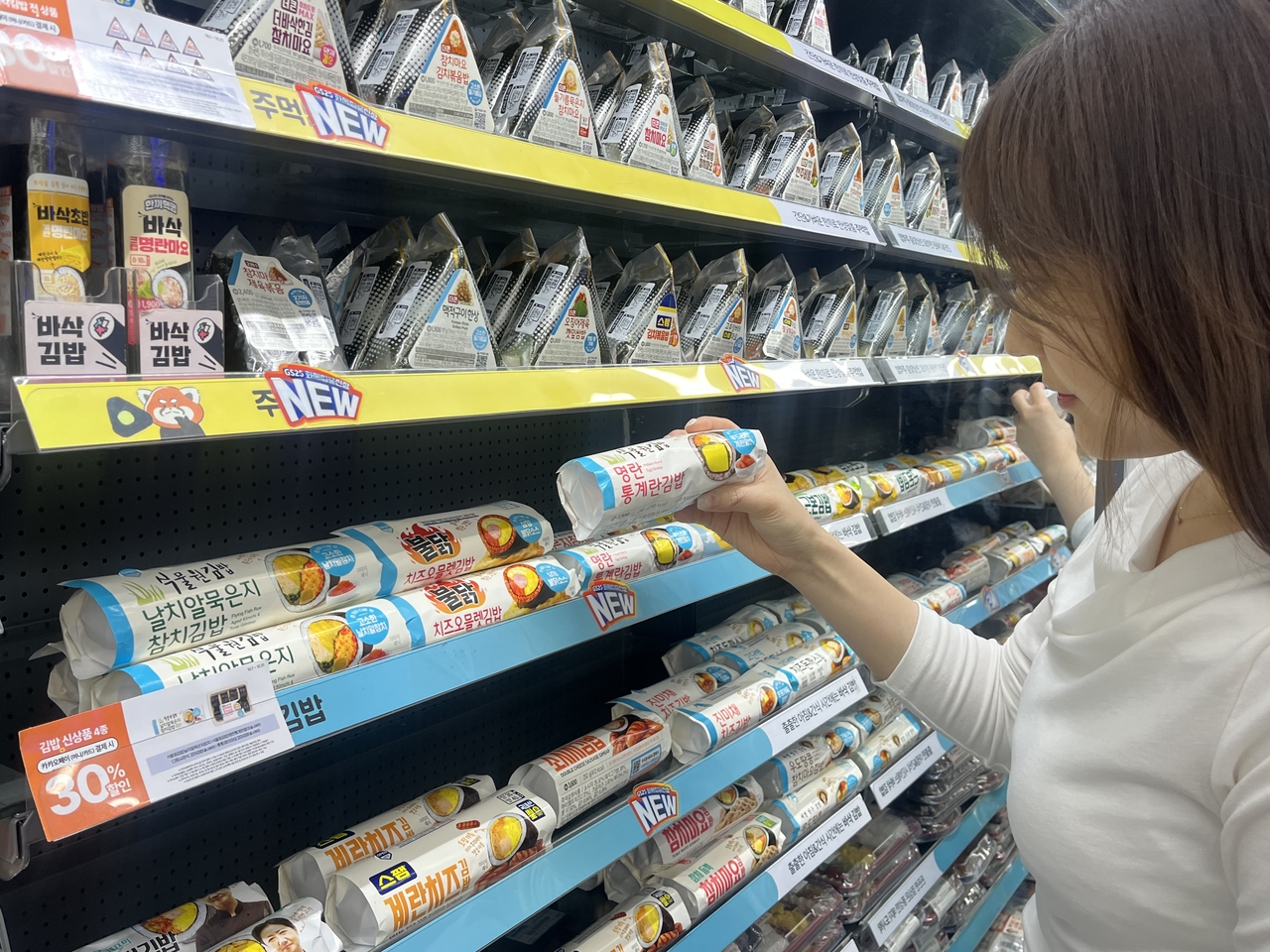
"Convenience store kimbap these days is nothing like the ready-made food you used to find there."
Convenience store kimbap has changed. As more consumers turn to ready-made meals to get through the day amid high prices, chains are reworking everything from the texture of the rice to the fillings inside. The competition has moved beyond price — it is now about taste and quality.
The four major convenience store chains — GS25, CU, Seven-Eleven and E-mart24 — are upgrading the ingredients and manufacturing technology behind their kimbap, industry officials said Wednesday. Because kimbap is a product consumers buy repeatedly, the chains plan to improve elements customers can actually notice in order to sharpen their competitive edge.
Unconventional combinations and new recipes trending on social media are also being embraced, since buzz translates directly into sales. Each chain's focus on product planning reflects the same thinking.
GS25 has been running a quality-improvement initiative called "Full Change Renewal" since March, with kimbap — one of its highest-frequency, fastest-turning products — as the first target. The chain reduced the proportion of rice and increased the amount of filling to bring out richer flavor. Sesame seeds and sesame oil were added to give the rice a nuttier, more savory taste, along with a proprietary seasoning essence.
The fillings were also refined, with fried imitation crab, more flavorful egg and ham, and fish cake seasoned with a deeper soy-sauce marinade. GS25 completed the renewal of 16 kimbap varieties by the end of March and plans to apply the same quality standards to all new products going forward.
Collaboration products have been quietly building a following. GS25 partnered with Sikmulwon Kimbap, a brand that went viral after a well-known celebrity featured it on YouTube. The mentaiko whole-egg kimbap and flying-fish-roe aged-kimchi kimbap are the standout items — both shot to the top of GS25's own app "Our Neighborhood GS" after launch and surpassed 100,000 cumulative units sold within a week.
GS25's kimbap category sales grew 37.6 percent year-on-year in 2023, 42.3 percent in 2024 and 21.0 percent in 2025. Sales rose another 25.4 percent in the first half of this year. From Oct. 1 through Oct. 18, when the Sikmulwon Kimbap collaboration went on sale, kimbap sales climbed 37.6 percent compared with the same period last year.
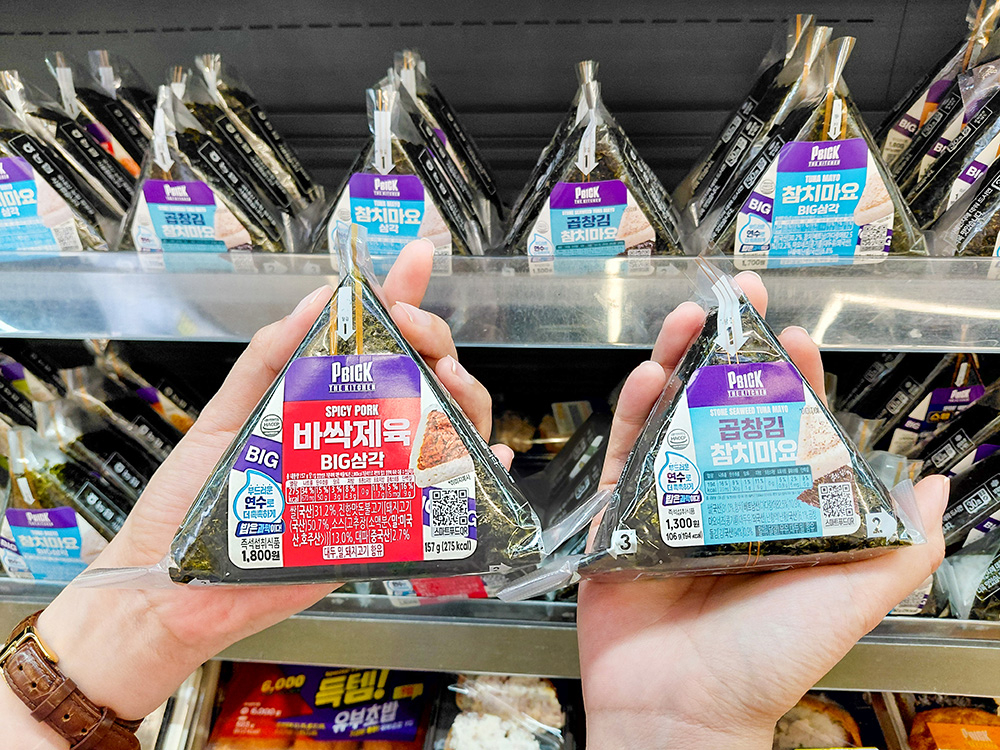
CU zeroed in on the rice itself, reasoning that rice quality determines customer satisfaction not only in kimbap but across products such as dosirak. The chain applied soft water with a hardness of 5 mg/L or below at every stage — washing, soaking and cooking. Finding the right hardness level took 10 months. Internal tests showed that rice cooked with soft water retained more than 20 percent more moisture even near its expiration date compared with rice cooked the conventional way.
The results were clear. CU's triangle kimbap sales rose 37.3 percent year-on-year from Oct. 1 through Oct. 19. The chain plans to extend the use of soft water from triangle kimbap to kimbap, dosirak and other ready-made products.
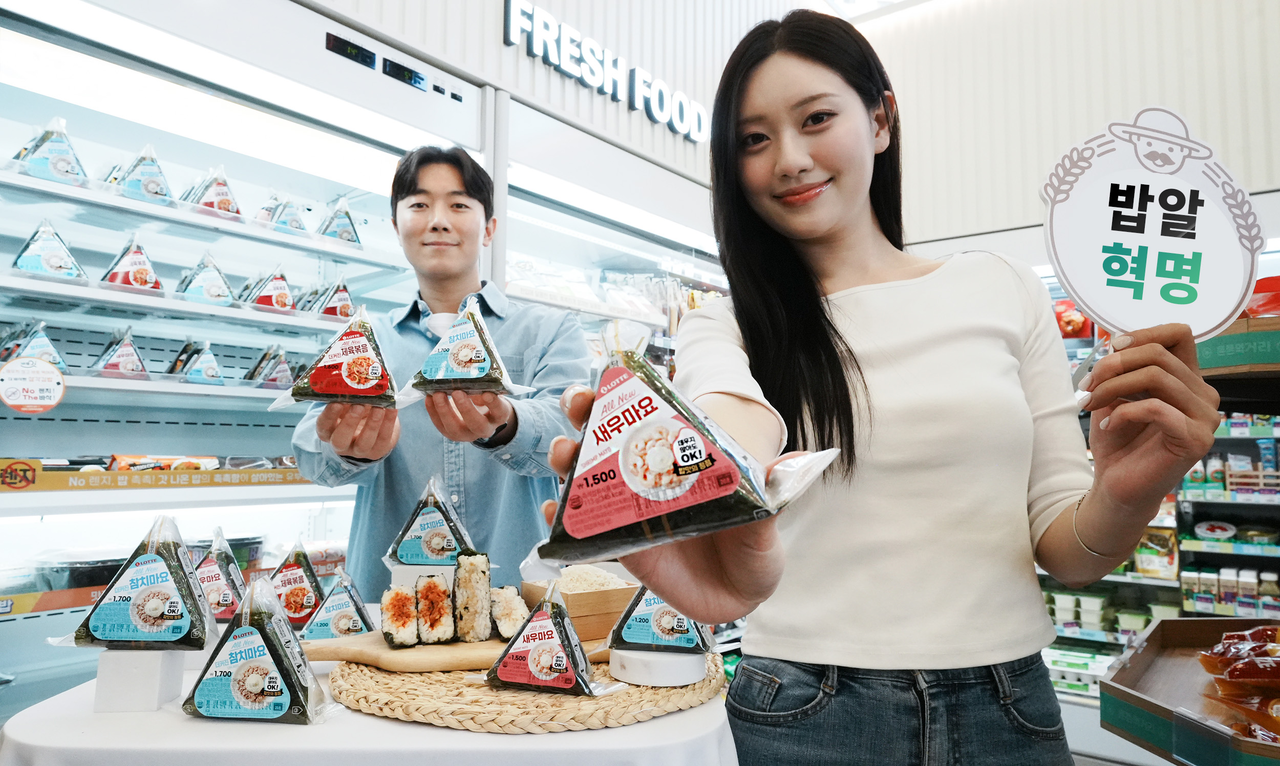
Seven-Eleven is also competing on technology. In April, the chain developed techniques under its "Rice Project" to slow the staling of refrigerated rice and preserve its moisture. The effort is gradually paying off: Seven-Eleven's triangle kimbap sales for January through September rose 27 percent year-on-year, while kimbap sales climbed 21 percent.
E-mart24 launched a comprehensive overhaul in July, upgrading the seaweed, rice and fillings — the core ingredients of its triangle kimbap. Daily triangle kimbap sales in July through September averaged 15 percent higher than the same period last year. The chain is also internally researching new ingredient combinations built on a foundation of getting the basics right.
The push to improve kimbap quality is largely driven by the growing number of consumers who rely on convenience stores for a full meal. Ready-made foods including kimbap in fact account for 10 percent of convenience store sales, and they also draw customers who go on to buy other items such as cup ramyun and beverages.
Relentlessly rising dining-out costs have also fueled the growth of ready-made foods. According to price-tracking service Chamgagye, the average price of one roll of kimbap in Seoul in September was 3,923 won, up 8.3 percent from 3,623 won a year earlier. Some convenience store kimbap has also crossed the 3,000-won mark, but many consumers now see it as a reasonable choice given the variety of toppings on offer.
"As high prices have made convenience store ready-made food an alternative for a full meal, consumers' quality expectations have also risen," an industry official said. "Products that compete not only on price but on rice quality, ingredients and differentiated offerings will keep coming."
siuu@heraldcorp.com