More than 400 farms in Naju applied for a combined 1,500 seasonal workers for 2027, reflecting sustained growth in demand.
Naju renewed its MOU with Laos, expanding recruitment regions and strengthening worker protections.
New provisions ban unauthorized fees and make insurance enrollment mandatory to ensure safer working conditions.
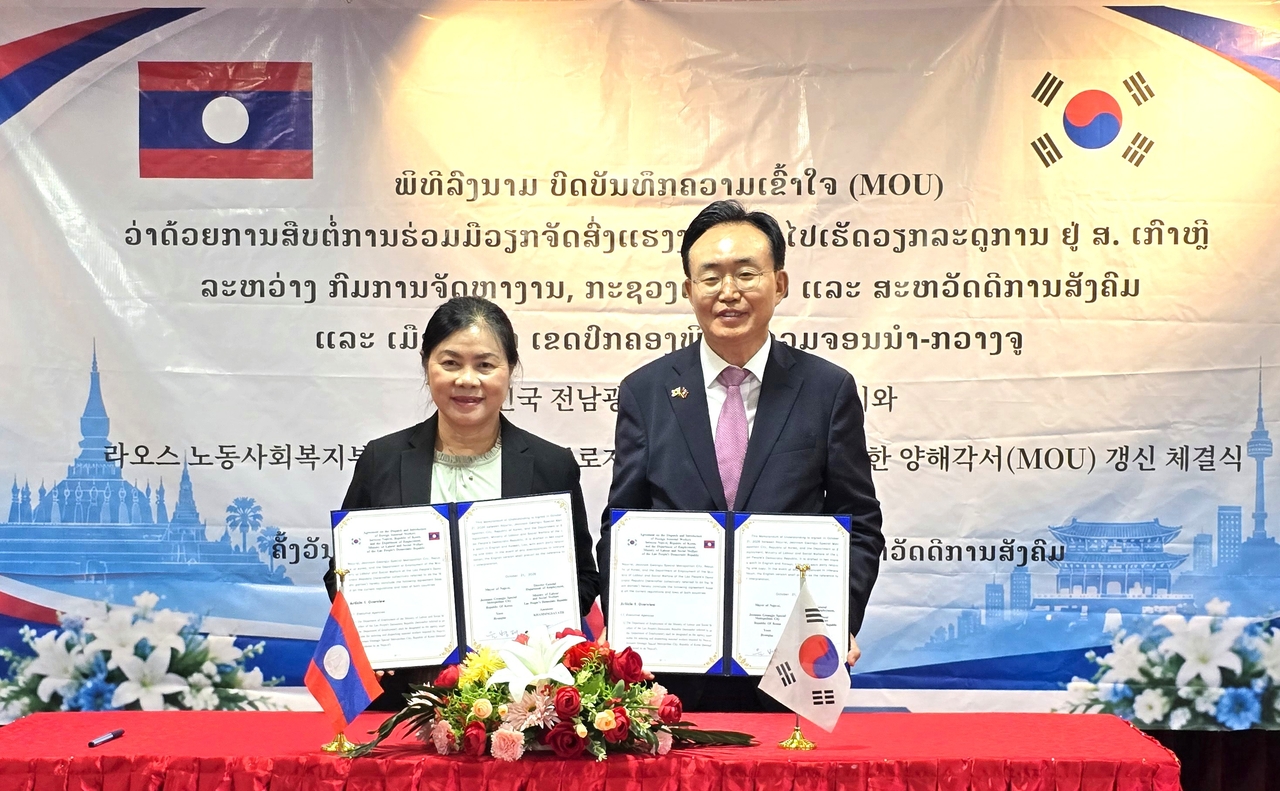
The city of Naju is moving to secure a more stable supply of agricultural labor by expanding the recruitment regions for Laotian seasonal workers and strengthening protections for their rights, as demand for farm hands during peak growing seasons continues to grow.
Naju said Wednesday it had renewed its memorandum of understanding on the dispatch and introduction of foreign seasonal workers with Laos' Ministry of Labour and Social Welfare, reinforcing the cooperative framework for bringing in foreign seasonal workers in 2027.
Since signing its first MOU with Laos in December 2024, the city has steadily brought in Laotian seasonal workers to address labor shortages in its farming communities.
Under the renewed agreement, the number of recruitment regions has been expanded from three to five, giving the city a broader base from which to secure qualified agricultural workers.
By diversifying its recruitment regions, Naju aims to reduce dependence on any single area and supply seasonal workers in line with each farm's planting and harvesting schedule.
The scale of Naju's foreign seasonal worker program has grown consistently as labor shortages in rural areas have deepened. The number of workers brought in rose from 360 in 2023 to more than 1,100 in 2026, and demand is expected to climb further in 2027 as seasonal workers have proven effective in filling gaps during peak farming periods.
A survey the city conducted in August found that more than 400 farms had applied for a combined total of 1,500 seasonal workers.
Naju submitted its application to the Ministry of Justice in September for the 2027 seasonal worker quota and plans to proceed with selecting workers in Laos, arranging their entry into South Korea, and placing them with farms as soon as the allocation is confirmed.
The renewed MOU also includes stronger provisions to protect seasonal workers' rights and improve transparency in how the program is run.
The agreement tightens rules against unauthorized third-party involvement in the recruitment, selection, and dispatch process, and explicitly prohibits charging workers any fees or administrative costs beyond those strictly necessary. The measures are intended to ensure workers are not harmed by excessive financial burdens or unfair contracts.
Employer responsibilities have also been strengthened: farms are now required to enroll workers in agricultural accident insurance to cover injuries that may occur during fieldwork, and must also take out guarantee insurance against unpaid wages, so that seasonal workers can work in a safer environment.
In addition, the agreement now spells out procedures and sanctions for cases of unauthorized absence, bolstering the stability and accountability of the seasonal worker system.
Naju said it would continue to work closely with the Laotian government to secure a reliable supply of diligent and skilled seasonal workers, while strengthening oversight of the entire process from arrival and farm placement to on-site management and departure.
The city also plans to sustain support policies for seasonal workers — including education for participating farms, on-site inspections, and improvements to working conditions — so that both farms and workers come away satisfied.
"Laotian seasonal workers are working diligently in the fields and making a real difference in easing the labor shortage during peak farming seasons," Naju Mayor Yun Byeong-tae said. "Demand has grown significantly, with more than 400 farms applying for 1,500 workers for 2027." He added that the city would use diversified recruitment regions and responsible cooperation with the Laotian government to deliver workers to farms when needed and provide workers with a safe and fair working environment. "We will manage the program carefully so that the foreign seasonal worker system takes root as a model that works for both farms and workers," he said.
kkm9971@heraldcorp.com