Korea Construction Association chief holds press briefing
Marginal firms nearly triple in 3 years as sector faces triple burden
'Expand public investment, secure fair construction costs,' association urges
The number of general contractors filing for closure hit a record high in the first half of this year, the Korea Construction Association said Wednesday, warning that proposed legislation imposing heavy fines on construction companies involved in accidents could derail the government's housing supply targets as bankruptcies and financially distressed firms continue to mount.
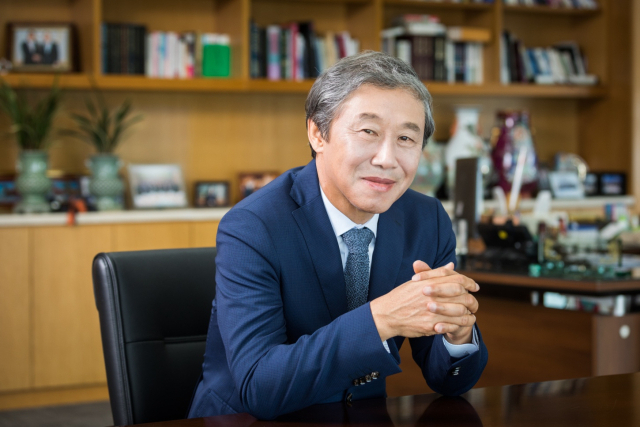
Korea Construction Association Chairman Han Seung-gu made the remarks at a press briefing held at an undisclosed location in Seoul on Wednesday. "The construction industry is currently suffering a triple burden — a shortage of projects, rising construction costs and tightening safety regulations," he said.
According to the association, general contractors filed 378 closure notices in the first half of this year, up 16 percent from 326 in the same period last year — the highest figure ever recorded for a half-year period. The increase has been particularly pronounced outside the Greater Seoul area, where closure filings soared from 165 in 2021 to 378 in 2025. An analysis of externally audited construction firms also found that the number of marginal firms — those with an interest coverage ratio below 1 for three consecutive years — nearly tripled, rising from 62 in 2021 to 173 last year.
The prolonged slump in the construction sector has been compounded by a buildup of unsold units, a sharp rise in construction costs and a contraction in real estate project financing.
Han said systemic reforms are needed to secure fair construction costs and timelines, noting that cost increases driven by soaring raw material prices and stricter safety regulations have not been reflected in contract prices.
He also raised concerns about proposed construction safety legislation. Two bills currently before the National Assembly would require project owners to factor in adequate timelines and costs, and impose business suspension orders or fines — up to 3 percent of sales, capped at 100 billion won ($75.3 million), or up to 1 billion won when sales figures are unavailable or difficult to calculate — if accidents occur due to violations.
"A fine of 3 percent of sales, even accounting for the cap, would seriously damage corporate financial health and would be difficult even for large companies to absorb," the association said. It added that if additional penalty provisions under the Serious Accidents Punishment Act — up to 2 percent of project sales — and the Occupational Safety and Health Act — up to 5 percent of operating profit — are also enacted, the cumulative effect could trigger mass layoffs and a chain of insolvencies among subcontractors and related industries.
"From a company's perspective, the penalties from an accident would far outweigh any project profit, making a cautious approach to business inevitable," the association said. "The government's plan to supply 1.35 million housing units and push forward social overhead capital projects would become virtually impossible."
Korea Construction Association Standing Vice Chairman Kwon Hyeok-jin also expressed skepticism. "The government has signaled its determination to push ahead aggressively with supply, but I am doubtful whether the construction industry can devote its full efforts to that goal under these circumstances," he said. "We are asking for regulations that the industry can actually bear — not double or triple layers of them."
Calls also emerged for more active investment to pull the sector out of its slump. Construction investment last year fell to 265 trillion won ($200 billion), down about 9.7 percent from the previous year, and shrank a further 1.2 percent year-on-year in the second quarter of this year.
Han noted that while the government has drafted a record budget of 821 trillion won for next year, the social overhead capital allocation directly tied to the construction industry was limited to 29 trillion won — only 2 percent more than this year. He called for expanded public investment and institutional support to help the sector recover.
The association also highlighted gaps in legal provisions governing contract price adjustments for inflation in private construction projects, saying the absence of clear rules has led to frequent payment disputes that need to be addressed. It added that it plans to push for supplementary legislation to the Trade Union Act that would prohibit treating a company as an employer solely on the basis of fulfilling safety obligations.
lucky@heraldcorp.com