Trade minister Kim Jung-kwan attends Hyundai Mobis automotive semiconductor forum
'Skipped Semiconductor Day, but had to be here,' minister says
Government invests about 300 billion won across 12 R&D projects in five fields
24 organizations including Hyundai Motor, Hyundai Mobis and LG Electronics launch 'One Team TF'
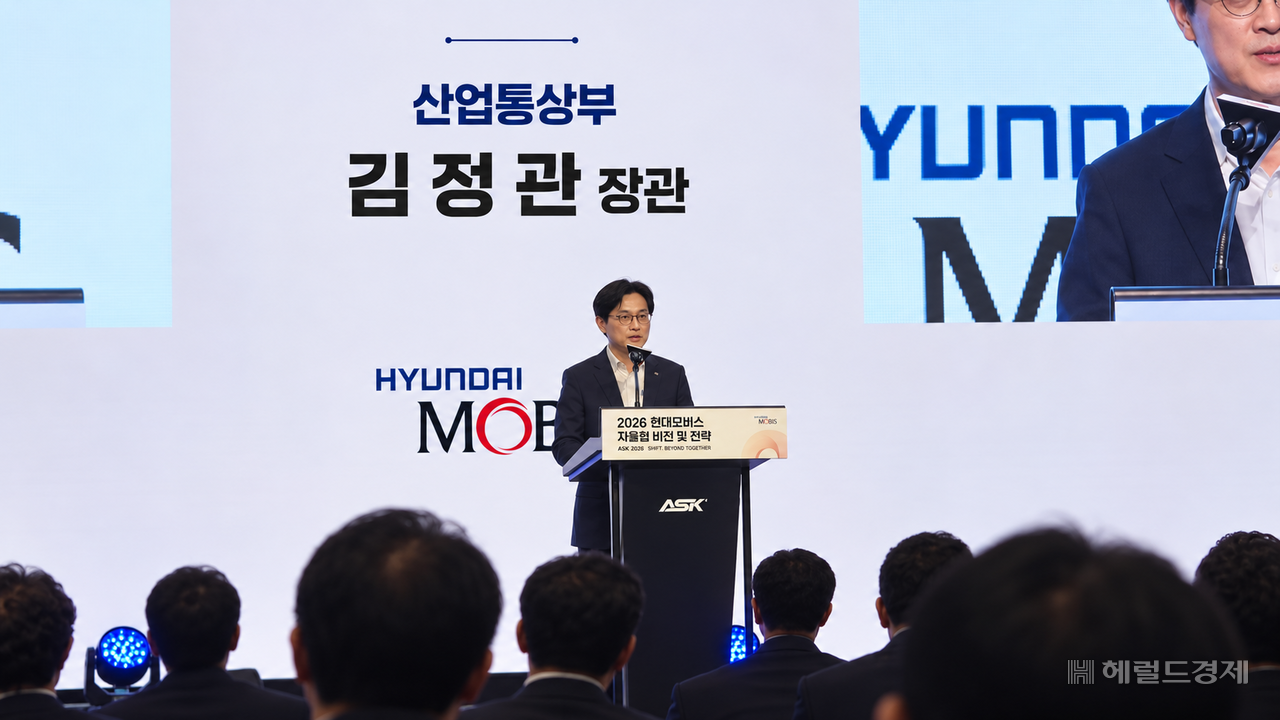
South Korea's trade minister on Wednesday pledged strong government support for the domestic automotive semiconductor industry, setting a target of raising the local content rate in vehicle chips from below 5 percent to more than 10 percent by 2030.
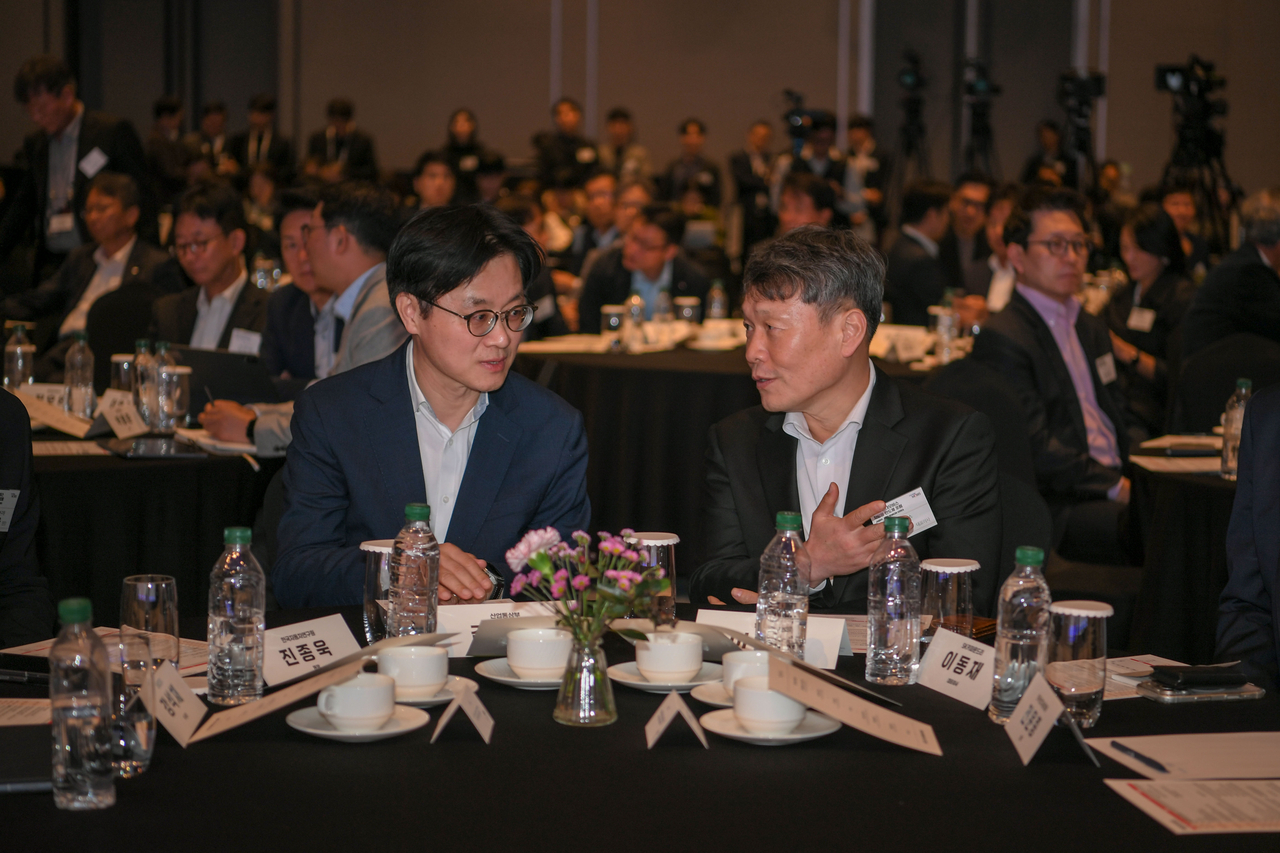
Minister of Trade, Industry and Energy Kim Jung-kwan made the remarks at the second Auto Semicon Korea forum, hosted by Hyundai Mobis at the DoubleTree by Hilton Seoul Pangyo in Seongnam, Gyeonggi Province.
Kim said he had turned down numerous event invitations but was determined to attend this particular forum. "I asked for understanding when I missed last week's Semiconductor Day event, but this was one forum I absolutely had to attend," he said. "Rather than visiting large events or big companies, what matters is identifying industries that can truly flourish with government attention and support."
He added that automotive semiconductors hold significant potential but still face obstacles. "If we can clear just a few of those hurdles, I expect this sector can grow far beyond where it stands today," Kim said.
Kim said the shift toward electric vehicles and software-defined vehicles is expanding the role of chipmakers in the automotive industry. "I am convinced that automotive semiconductor companies will be among the key players shaping the future of the car industry," he said. "We will look after the difficulties the automotive semiconductor sector faces more carefully and with greater urgency."
Kim said domestic companies face a steep barrier between securing semiconductor technology and actually bringing products to market.
"No matter how strong a single company's technology may be, it is difficult to break through the thick wall of commercialization alone," he said. "The government will do its utmost to share and ease the risks and burdens that arise during the commercialization of automotive semiconductors alongside industry."
The government's push to develop domestic automotive chips reflects a persistent gap: while South Korea's automotive industry is globally competitive, its vehicle chip supply chain remains heavily dependent on overseas suppliers.
To meet the 2030 localization target, the government has invested about 300 billion won ($226 million) across 12 research and development projects in five fields. More than 60 percent of that — about 186 billion won — has been concentrated in AI computing for autonomous driving. Vehicle communications, electrification control, sensors and semiconductor packaging technology are also among the supported areas.
Significant obstacles remain between chip development and actual vehicle deployment, including high testing and certification costs and the reluctance of automakers to adopt new suppliers. Profitability is also difficult to secure given low production volumes per product and the requirement to guarantee supply for more than a decade.
In response, the government plans to go beyond basic technology development by strengthening a cooperative framework in which domestic companies jointly develop chips to automakers' specifications and connect the process from verification through to mass production. The government also plans to expand support for non-memory chips through the Semiconductor Innovation Growth Support Center, which launched Tuesday.
To put these plans into action, the forum saw the official launch of the Automotive Semiconductor One Team TF. The task force follows a recommendation made by industry at a future mobility ecosystem cooperation meeting chaired by Kim on Sept. 30, when participants called for a standing cooperation framework.
Organized under the government's M.AX Alliance — a cooperative framework for AI transformation in manufacturing — the One Team TF brings together 24 organizations in total: 17 companies including Hyundai Motor, Hyundai Mobis, LG Electronics, LX Semicon, Telechips, SK Keyfoundry and DB HiTek, along with five industry associations and two research institutes.
Hyundai Motor will lead development of high-performance AI chips for autonomous driving and software-defined vehicles, while Hyundai Mobis will spearhead localization of vehicle control and electrification semiconductors. LG Electronics will focus on chips for infotainment and display systems and take charge of overseas market entry strategy. The Korea Automobile Research Institute will support the establishment of testing and verification infrastructure and improvements to the regulatory regime.
Under the framework, automakers and parts suppliers will provide chip specifications, domestic fabless design firms will develop the products, and foundry and packaging companies will handle production. Items identified for localization by the TF will receive government support from R&D through mass production under the M.AX Project.
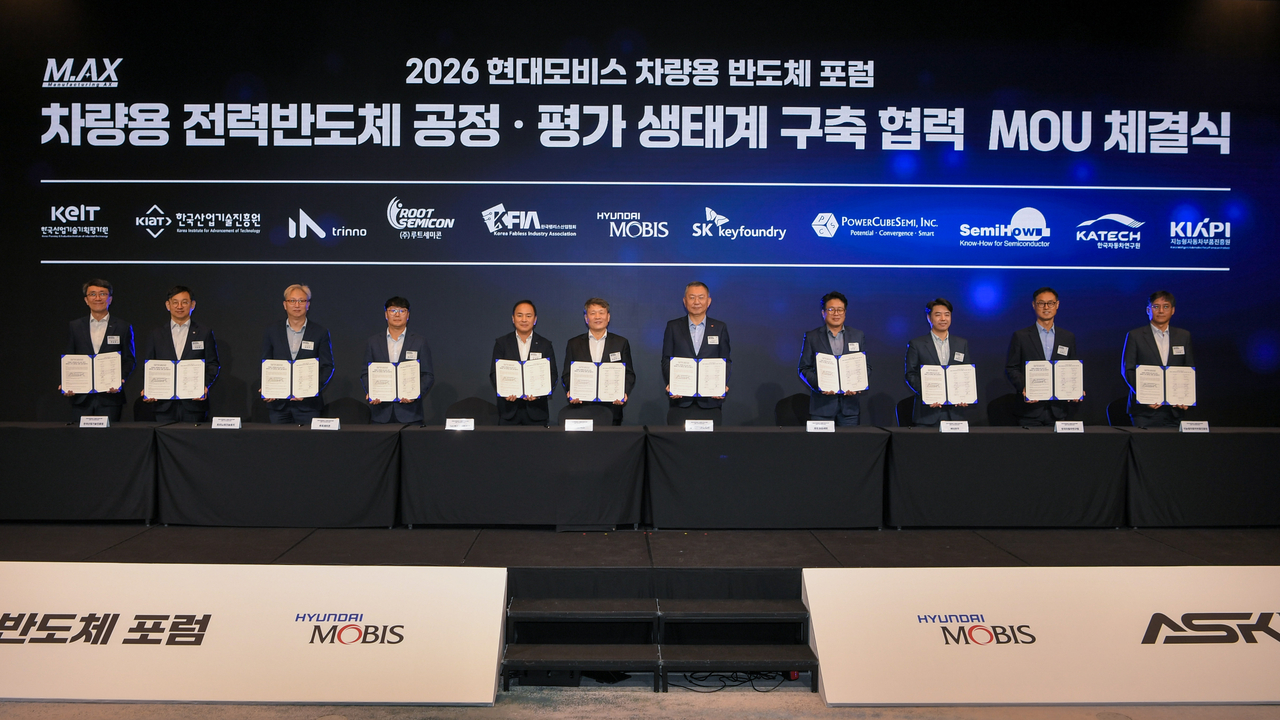
A separate MOU on localizing automotive power semiconductors was also signed at the forum. Hyundai Mobis, SK Keyfoundry, four small fabless companies — PowerCube Semi, Root Semicon, Trino and Semihow — and supporting organizations agreed to jointly build a manufacturing and evaluation base for silicon carbide power semiconductors.
Power semiconductors are a critical component that converts and controls electricity in electric vehicles. Through the agreement, domestic companies will share semiconductor manufacturing and evaluation equipment as well as vehicle testing facilities, reducing development costs and accelerating commercialization.
"Problems can be solved when the government, companies and the industrial ecosystem join forces," Kim said. "I hope the One Team TF, launching today, will bring together the innovative capabilities of our companies and serve as a turning point for the automotive semiconductor industry to reach the next level."
kwater@heraldcorp.com