Hyundai Motor and Kia push to localize automotive semiconductors and diversify supply chains as Chinese automakers develop their own autonomous driving chips, threatening cost competitiveness
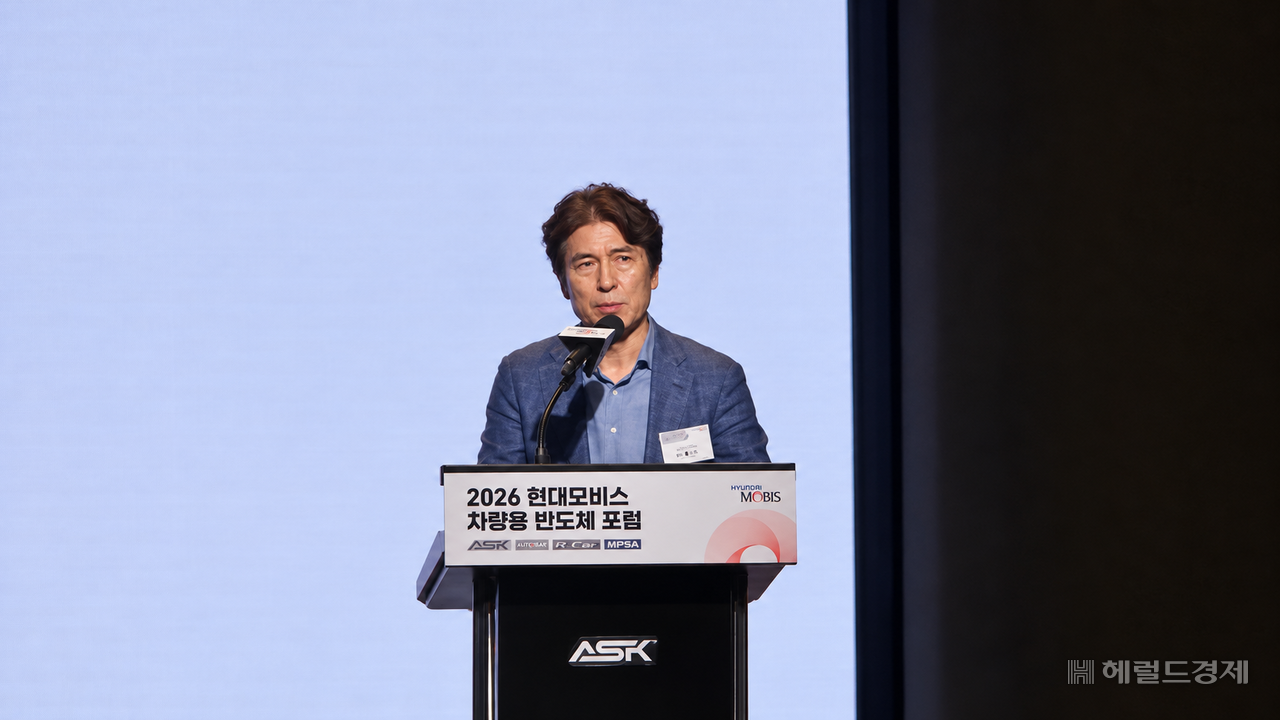
Hyundai Motor is moving to reduce its dependence on foreign suppliers for automotive semiconductors, stepping up efforts to localize production and diversify its supply chain. The push comes as Chinese automakers rapidly close the gap by developing their own autonomous driving chips, prompting Hyundai to deepen cooperation with domestic firms to secure both supply stability and cost competitiveness.
Kim Jong-seon, executive director of the semiconductor development division at Hyundai Motor's AVP headquarters, laid out the strategy Wednesday at the second Auto Semicon Korea forum hosted by Hyundai Mobis at the DoubleTree by Hilton Seoul Pangyo in Seongnam, Gyeonggi Province.
"China has now entered an era where it develops its own autonomous driving system-on-chips and installs them directly in vehicles," Kim said. "In terms of development speed and cost competitiveness, it is time for us to take another hard look at ourselves."
The global automotive semiconductor market is currently dominated by a handful of foreign companies. According to 2025 data from market research firm Omdia, the top five companies hold a 74 percent share of the automotive system-on-chip market. The top five players also account for 88 percent of the microcontroller unit market, which governs a wide range of vehicle functions.
The concentration is particularly stark in the automotive converter segment, where the top five companies hold a 96 percent share. Two US firms — Texas Instruments, with 43 percent, and Analog Devices, with 42 percent — together control 85 percent of the entire market. In the image sensor segment, Samsung Electronics, the only domestic player among the leaders, holds just a 5 percent share.
To change this structure, Hyundai Motor plans to standardize semiconductor specifications and diversify its supplier base. The company aims to make chips from multiple vendors interchangeable, reducing reliance on any single supplier while also cutting development costs and easing the burden of parts management.
Hyundai Motor will also expand joint development with domestic semiconductor companies. The automaker plans to share performance requirements and development timelines from the earliest stages of new vehicle programs and to carry out validation for real-world vehicle applications together with its partners. It also intends to participate as an end-user in government research and development projects to help lower the development burden on domestic firms.
Such collaboration is becoming increasingly important as the electrical and electronic architecture of vehicles undergoes a fundamental shift. Where individual semiconductors once controlled separate vehicle functions, the industry is moving toward a centralized architecture that consolidates those functions around a central controller. Hyundai Motor identified high-performance control chips, power management semiconductors and automotive communication chips as areas where domestic companies can break into the market.
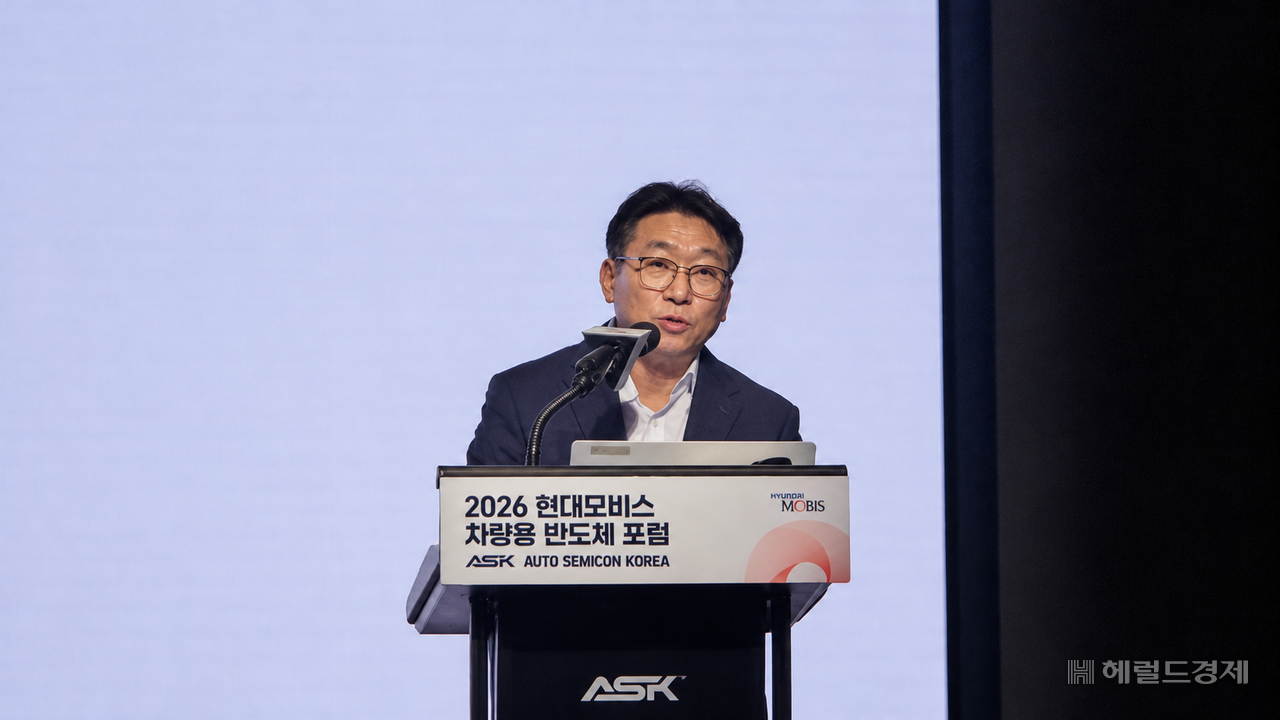
Hyundai Motor is also on alert over China's advances in power semiconductors, a critical component for electric vehicles. China is rapidly building a vertically integrated production ecosystem — from raw materials to finished chips — backed by government support.
"In the current automotive silicon carbide power semiconductor market, European companies such as Infineon and STMicroelectronics hold a strong position," said Ju Jeong-hong, executive director of Hyundai Motor's electrification design center. "But what demands even closer attention is China. Backed by government support, China is rapidly building a vertically integrated ecosystem spanning SiC wafers, semiconductor devices and modules."
Hyundai Motor assessed that while European suppliers lead on quality, Chinese companies have the edge on price and supply capacity. The company said domestic firms must secure not only technological capability but also cost competitiveness.
Localizing semiconductor production is also a key factor in bringing down electric vehicle costs. Power semiconductors regulate the electricity that drives EVs, giving them an outsized impact on both vehicle performance and price.
"Power semiconductors account for roughly 40 to 60 percent of power module costs, making them a very significant share of the total," Ju said. "They are directly tied not only to efficiency but also to vehicle price competitiveness."
Hyundai Motor and Kia are accordingly expanding their use of next-generation silicon carbide semiconductors, which offer superior power efficiency over conventional silicon chips and help improve EV driving range. After first applying SiC semiconductors to the Ioniq 5 and EV6 in 2021, the companies are now extending their use beyond 800-volt systems to 400-volt architectures as well.
kwater@heraldcorp.com