'Scrapping citizen-backed projects too hasty' vs. 'Pompidou would wreck city finances'
'Show political will on Saengok' vs. 'Seeking alternative site now is irresponsible'
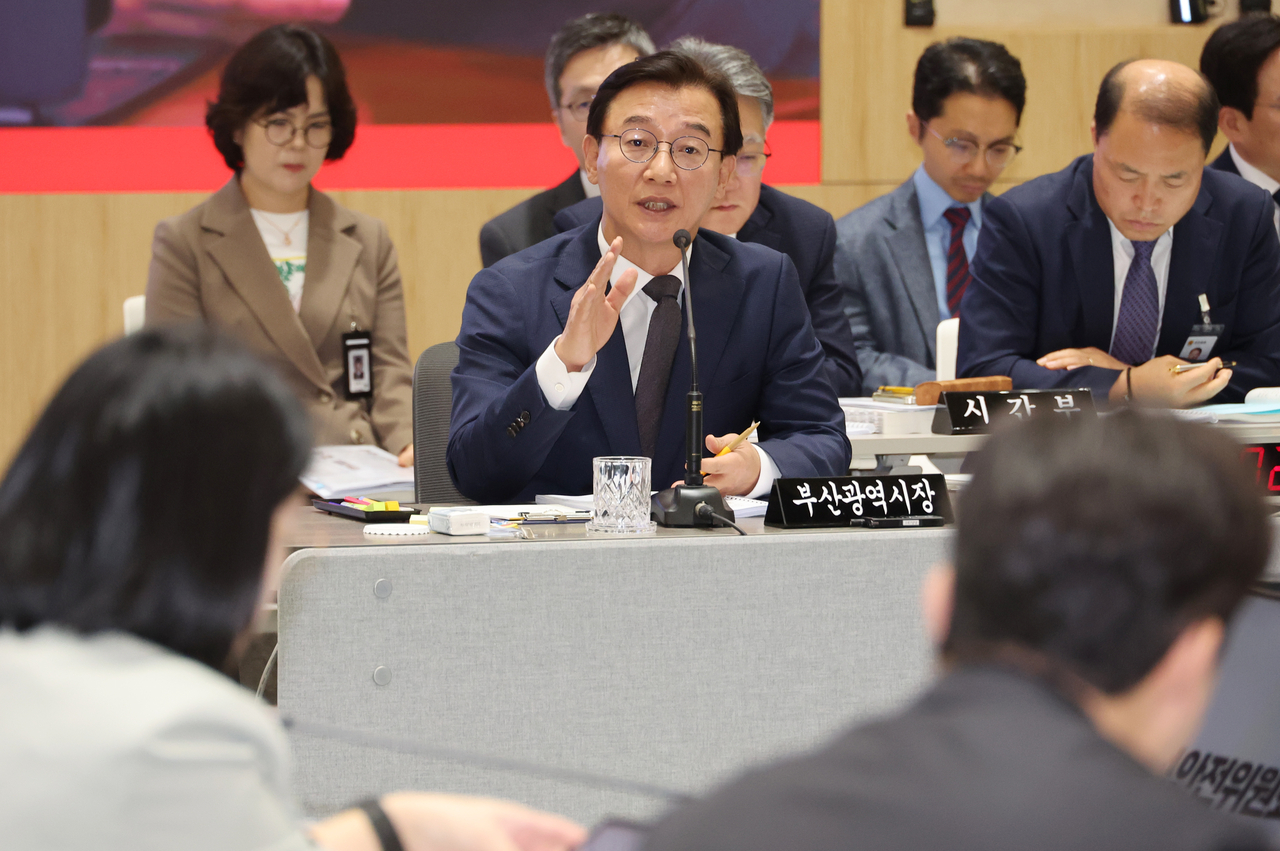
Sharp exchanges erupted Wednesday at the National Assembly's audit of Busan city government over Mayor Jeon Jae-soo's decisions to scrap a planned Pompidou Center satellite branch and a La Scala Opera House performance, as well as over the construction of a waste incinerator in Gangseo-gu's Saengok area.
At the audit held in the main auditorium of Busan City Hall, People Power Party lawmaker Park Sang-ung, who represents the South Gyeongsang Province constituency of Miryang, Uiryeong, Haman and Changnyeong, questioned whether canceling the Pompidou branch and La Scala performance was too hasty given that citizen polling had shown approval rates of 64 percent and 75 percent, respectively.
Park added that while projects launched by a predecessor could be halted if problems arose, Busan needed to take cultural content seriously in its bid to grow into an international city, and that dismissing such initiatives as wasteful spending would be counterproductive.
Mayor Jeon rebuffed the argument, saying the approval figures from the polls were conditional on factors such as fiscal sustainability and minimizing damage to the natural environment.
Democratic Party of Korea lawmaker Chae Hyeon-il of Yeongdeungpo-gu in Seoul defended the mayor's position from the opposite direction, noting that the Pompidou branch project would require 110 billion won ($82.8 million) in city funds and an additional 12.5 billion won each year in overseas royalties and operating costs. He argued that a newly inaugurated mayor had a duty to review such projects and prevent fiscal waste.
Jeon said the Pompidou project would devastate Busan's finances, estimating that actual construction costs would exceed 150 billion won. He added that the Pompidou side retained full authority over all exhibition decisions, leaving the city with no power to pursue the exhibitions its residents wanted.
The Saengok incinerator — a flashpoint that pitted Jeon against People Power Party lawmaker Kim Do-eup of Busan's Gangseo-gu — also drew conflicting calls, with some lawmakers pressing for a review of alternative sites and others warning against further delays.
Fellow PPP lawmaker Kwon Young-jin of Daegu's Dalseo-gu pushed back on the city's characterization of the 91 billion won already spent on relocating Saengok village residents as a sunk cost, arguing that if the relocation had been planned independently of the incinerator, the spending could not be called sunk. He warned that the cost of ongoing conflict could far exceed any savings, and urged the city to keep an open mind about whether building at Saengok was truly the best option or whether a new site might be feasible.
PPP lawmaker Kang Myeong-gu of Gumi, who participated in the audit as inspection team leader, said residents of Gangseo-gu had every reason to feel aggrieved given the concentration of waste facilities in the district, and called on Mayor Jeon to pour all his political capital into making the Saengok incinerator dispute a model case of grand compromise.
Democratic Party lawmaker Kim Young-bae of Seoul's Seongbuk-gu raised the question of former Mayor Park Heong-joon's responsibility, saying the Saengok incinerator had been advancing through proper legal procedures and required additional budget, yet the previous mayor had stalled it without any official order or signed document. Kim suggested the conduct may amount to abuse of authority, though he said a full investigation would be needed to confirm it.
Mayor Jeon said there was no room for compromise on the Saengok incinerator, arguing that the project had been under way for a decade and that searching for an alternative site at this stage would amount to abandoning the city's responsibility to its residents.
kaf2002@heraldcorp.com