3-year program runs through 2028
Students to train on EVs, hybrids instead of aging combustion engines
On-site education at Hyundai Motor, Kia service centers; online mentoring also offered
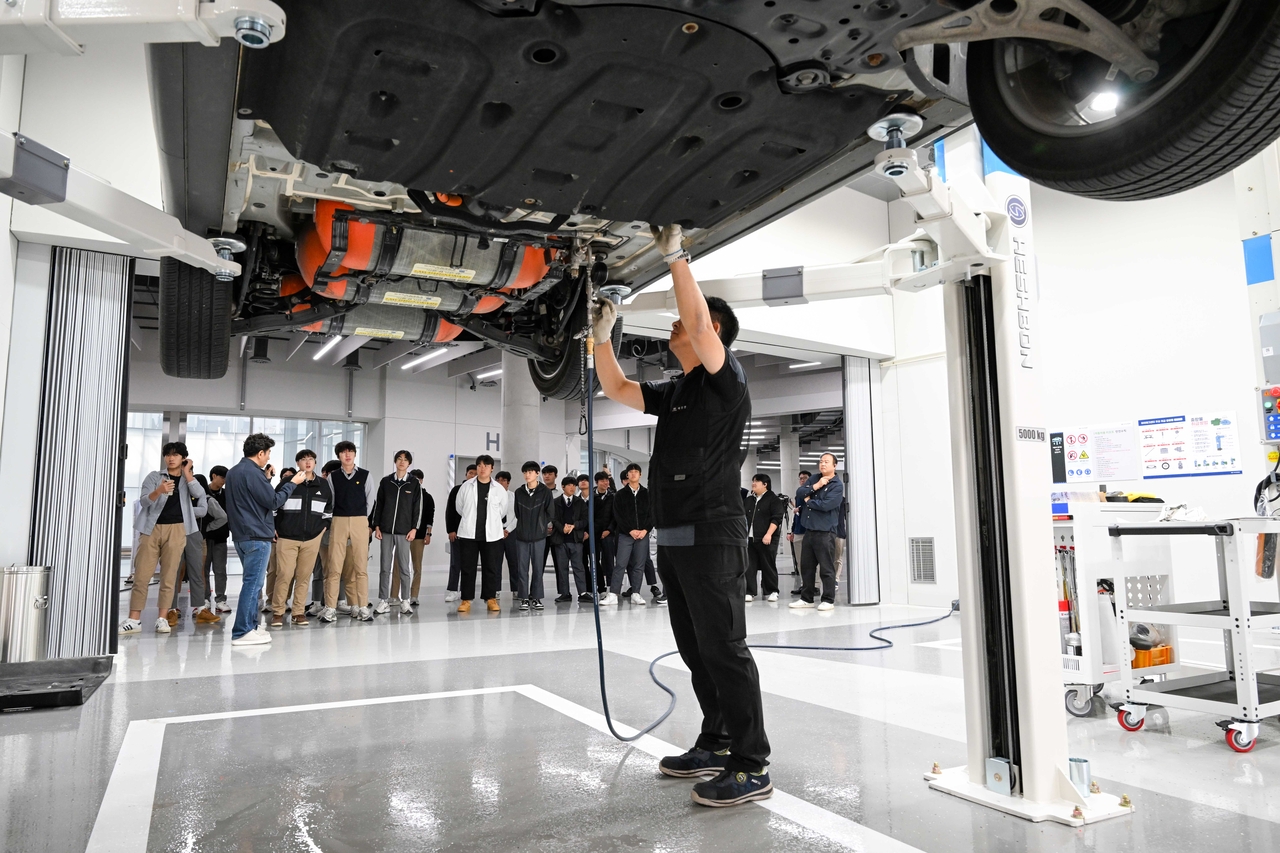
Hyundai Motor Group will provide electric vehicle and hybrid technology training to about 6,000 students at automotive vocational high schools across South Korea. The initiative aims to modernize hands-on learning environments that still rely heavily on aging combustion-engine vehicles and give students direct exposure to the latest maintenance skills used in the industry.
The group launched the program — called the HMG Future Mobility Tech Campus — on Thursday. It plans to support 50 automotive vocational high schools and approximately 6,000 students nationwide over three years, from this year through 2028.
The program grew out of concerns that schools' practical training environments and educational opportunities have not kept pace with the speed of the electrification transition.
According to Hyundai Motor Group, most automotive vocational high schools currently conduct hands-on training by disassembling and reassembling combustion-engine vehicles that are, on average, about 15 years old. Despite the growing prevalence of electric and hybrid vehicles, students have had little access to the latest vehicle technologies in the classroom.
Educational conditions also vary by region. Outside Greater Seoul, specialized training opportunities in advanced vehicle maintenance are comparatively scarce, making it harder to develop the skilled workforce the future mobility sector needs.
To address these gaps, Hyundai Motor Group will combine equipment donations, on-site experiences and online mentoring.
The group will donate electric and hybrid vehicles for practical training, along with the tools and equipment needed for vehicle maintenance. The goal is to improve the learning environment so students can develop maintenance skills using actual electrified vehicles.
Students will also have opportunities to learn about the latest technologies outside the classroom. Teachers and students will be invited to Hyundai Motor's Hi-Tech Centers — the company's specialized maintenance facilities — and to Kia's DCS centers, where industry experts will lead training sessions and facility tours.
This year, invited training sessions will be held at Hyundai Motor's Hi-Tech Centers in Suwon and Goyang from Wednesday through Thursday. Next month, related programs are scheduled to run at Kia's DCS centers in Siheung, Wonju and Incheon.
Video mentoring sessions connecting current engineers with students online will also be offered. Through these sessions, students can get answers to questions about future mobility technology, deepen their understanding of real-world maintenance and development work, and explore career paths.
The program will expand its geographic reach in stages. Starting this year in Gyeonggi Province, Incheon and Gangwon Province, it will extend to Seoul and the Jeolla and Jeju regions next year. By 2028, the program will cover the Chungcheong, Daejeon and Gyeongsang regions as well, reaching all 50 schools nationwide.
Hyundai Motor Group said the program is designed to narrow the gap between future mobility technology education and actual industry practice, and to help vocational high school students build the practical skills needed in the age of electrification.
"The competitiveness of the future mobility industry starts with nurturing talented people," a Hyundai Motor Group official said. "Through this program, we will actively put Hyundai Motor Group's technology and infrastructure to work so that automotive vocational high school students can directly experience the latest technologies and industry environments and grow from that experience."
kwater@heraldcorp.com