"In the stock market, reacting to conditions matters more than anticipating them. The harder the market gets and the higher the investment difficulty rises, the more advantageous active ETFs become — because they can respond quickly."
DS Asset Management, whose first ETF, the DS Kosdaq Active, ranked No. 1 in one-month returns among Kosdaq-focused ETFs as of Wednesday, has launched its second product — the DS AI Semiconductor Active ETF — while maintaining its bullish stance on semiconductors. Asked how investors navigating a volatile domestic market should position themselves, the fund manager's answer came down to two themes: semiconductors, still, and stock-picking within the semiconductor sector.
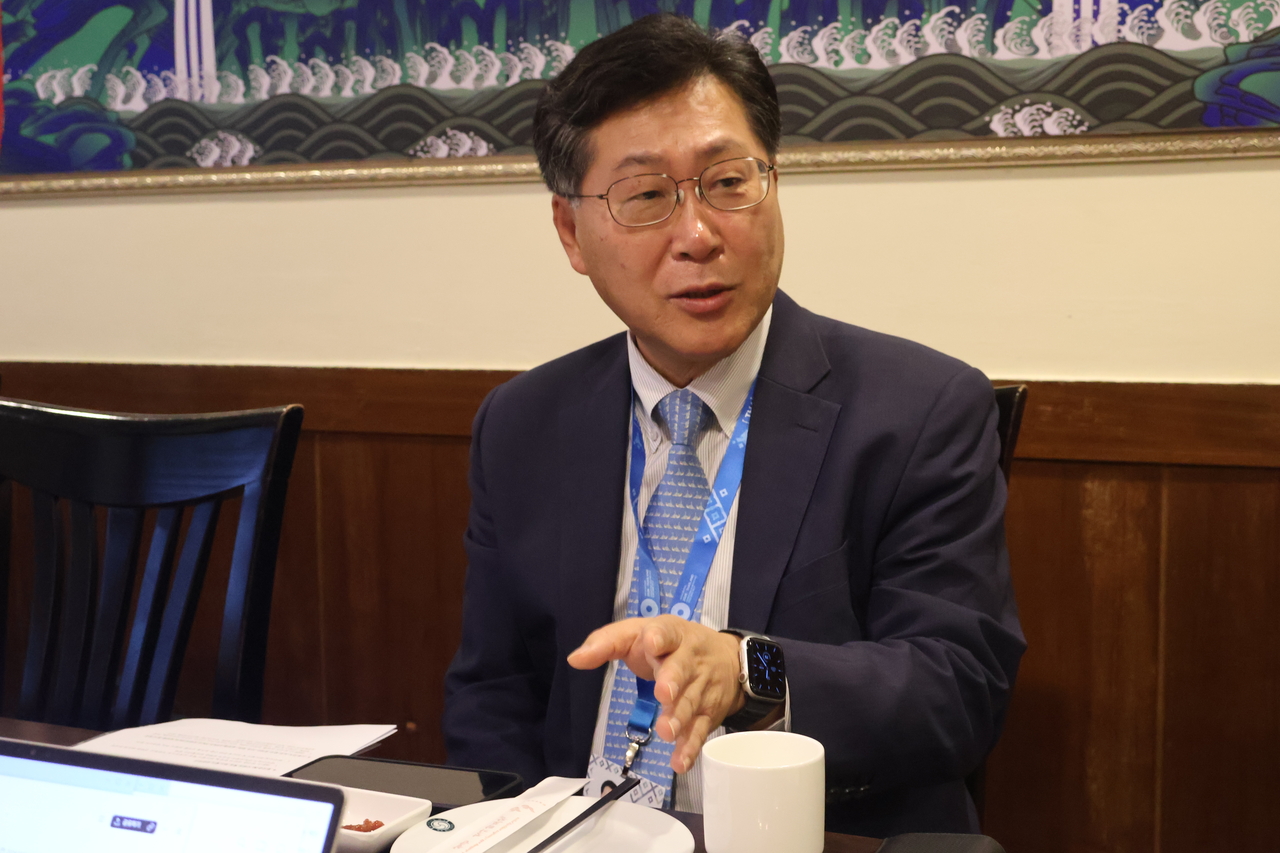
"I haven't abandoned the bullish case for semiconductors," Jung Sung-in, director of the ETF team at DS Asset Management, said in an interview at the company's Yeouido headquarters in Seoul on Wednesday. "I have a strong view on the semiconductor cycle."
Jung explained that even during the correction that unfolded from July, the strategy of identifying new bottlenecks within the semiconductor sector — which offers strong earnings visibility — and adjusting portfolio weightings accordingly drove the outperformance of the DS Kosdaq Active fund.
"When the Kosdaq rally broadened into nuclear power, robotics and power stocks, we trimmed our semiconductor materials, parts and equipment weighting to around 80 percent," Jung said. "But in the recent correction, we cut high-volatility names while increasing our exposure to front-end process equipment stocks in preparation for a rebound. We considered rotating into secondary batteries, pharmaceuticals, biotech and cosmetics, but our conclusion was that semiconductors — with their high earnings visibility — remain the most advantageous play in a recovery."
The second product, the DS AI Semiconductor Active ETF, listed Oct. 12 on the conviction that the semiconductor rally has further to run. Unlike the first fund, which hunts for leading sectors and stocks within the Kosdaq market, the second fund focuses on the AI semiconductor industry specifically and invests across markets without restriction. Samsung Electronics and SK hynix together account for about 40 percent of the portfolio. The fund makes the case that investing in semiconductors — and in the two dominant semiconductor names — remains valid even as large-cap semiconductor stocks have faced continued pressure this month.
Jung argues that active ETFs offer investors a way to reduce the guesswork at a time when it is increasingly difficult to judge where the AI investment cycle stands. "Nobody knows whether we are at the beginning of the AI cycle, the middle, or near the end — or whether it's time to get out now," he said. "When the investment difficulty gets this high, the biggest advantage an active ETF can offer is the ability to respond to the market."
On the recent sharp declines in Samsung Electronics and SK hynix, Jung said a rebound opportunity would emerge once high interest rates ease and supply-demand conditions recover. "What has created this situation for Samsung Electronics and SK hynix is not earnings — it's supply and demand," he said. "If interest rates come down and both companies maintain their profitability while growth remains supported, there will be an incentive for foreign investors to return."
Jung predicted that improvement in foreign investor flows would come toward year-end, after the US midterm elections. "As year-end approaches, institutional investors start thinking about next year's portfolios and want to carry favorable valuations into the new year," he said. "If buying momentum picks up from November, there is a chance that global flows will return. And if the Iran conflict enters a lull after the midterms, interest rates and oil prices should stabilize, allowing investors to take a bolder stance on AI-related sectors."

kacew@heraldcorp.com