Monetary Policy Board convenes rate-setting meeting
Pause to assess impact of July, August hikes; won's decline also a factor
Inflation, growth and financial stability indicators still point to tightening
Shin Hyun-song cites Middle East tensions, rising domestic and external uncertainty
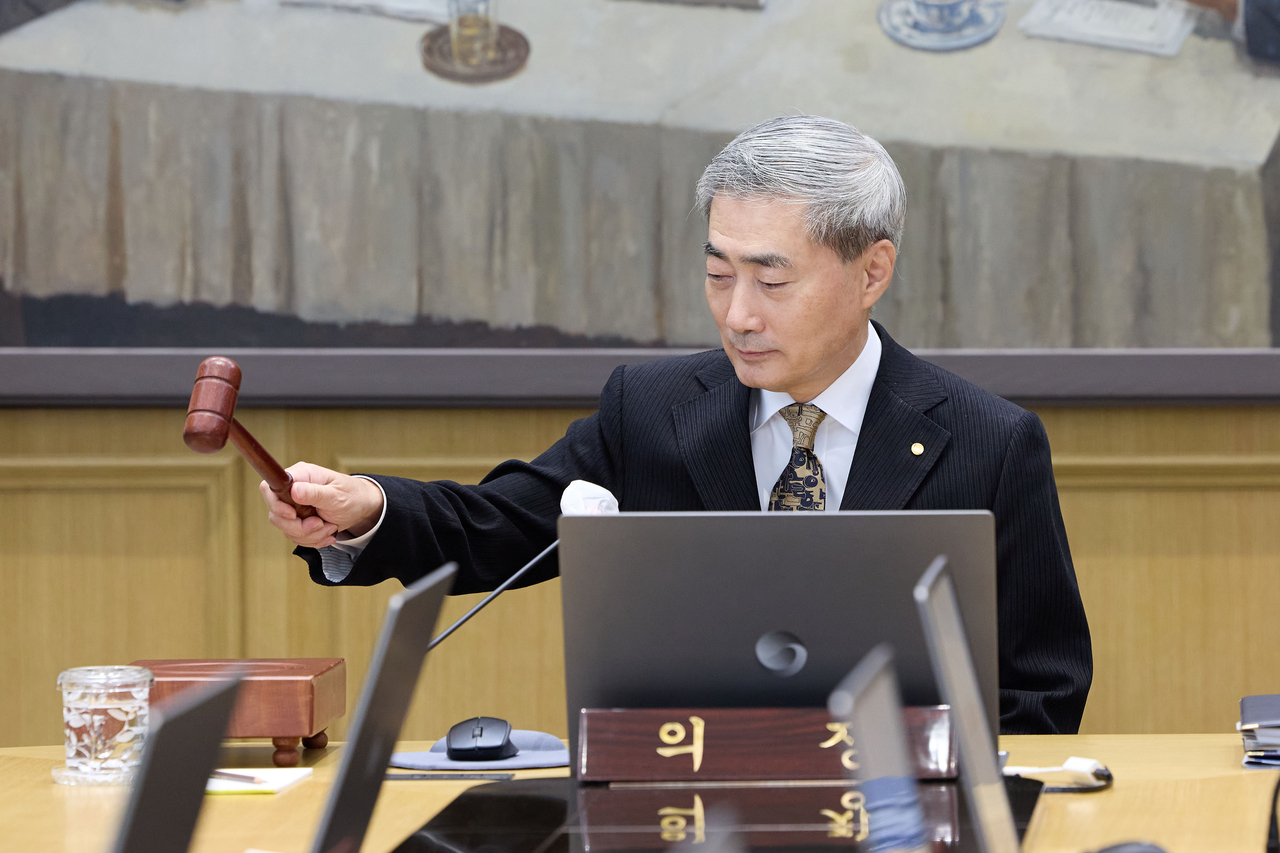
The Bank of Korea's Monetary Policy Board held its benchmark interest rate steady at 3 percent annually.
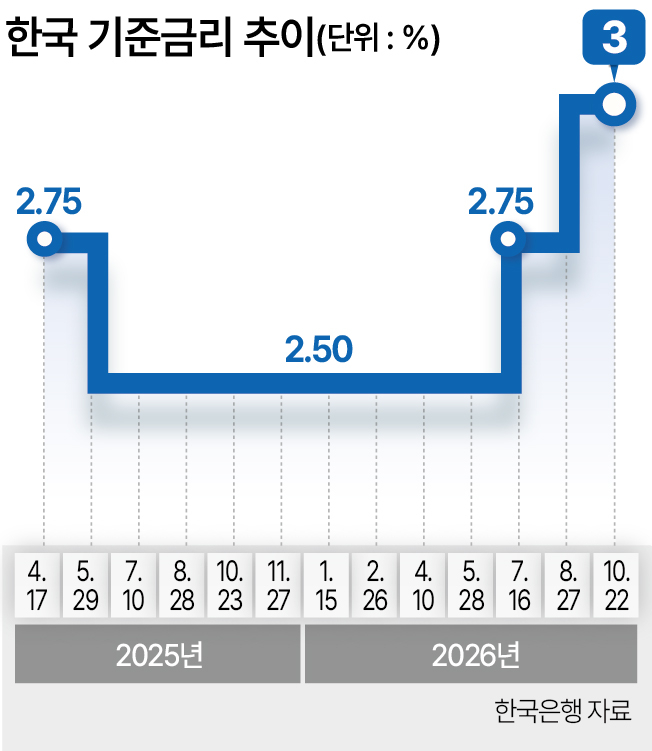
The board convened a policy direction meeting Thursday morning and voted to keep the benchmark interest rate at its current level of 3 percent annually. The decision is widely seen as a deliberate pause to assess the impact of two consecutive 0.25 percentage point increases — from 2.5 to 2.75 percent in July and from 2.75 to 3 percent in August. It marks the first hold since May, the third policy meeting without a change, and was reached unanimously by all seven board members, including Governor Shin Hyun-song.
In the policy statement released Thursday, Shin said the domestic economy "continues to grow at a high pace, led by exports and investment, while consumer prices maintain a steep upward trend of around 3 percent, and financial stability risks also persist." He added, however, that "given the heightened uncertainty surrounding the situation in the Middle East and the monetary and fiscal policies of major economies, it is necessary to hold the benchmark interest rate at its current level and monitor how domestic and external risk factors develop, as well as the transmission effects of the two rate increases."
The pause is largely a calibration move aimed at gauging the effects of the back-to-back hikes in July and August. Shin had signaled at a press briefing after the August meeting that the board would watch how the policy tightening fed through the economy. The won-dollar exchange rate's fall to its lowest level in two years also supported the case for holding.
Inflation and economic growth, however, still point toward further tightening. Consumer price inflation eased into the 2 percent range in September, partly due to a base effect from last year's telecommunications fee discounts, but is expected to climb back to around 3 percent in October. Strong export momentum — driven largely by semiconductors — has also prompted successive upward revisions to this year's economic growth forecast, reducing the urgency of additional hikes.
Financial stability risks also remain on the board's radar. Real estate markets — particularly in the Greater Seoul area — continue to show signs of instability, and household credit has surpassed 2,000 trillion won ($1.51 trillion), keeping financial imbalance concerns elevated.
US monetary policy adds another variable. The Federal Reserve is scheduled to hold a Federal Open Market Committee meeting Tuesday through Wednesday (local time) to set its own benchmark interest rate. Markets broadly expect the Fed to hold rates at the current range of 3.75 to 4.00 percent. The yield on the 10-year US Treasury note has recently been fluctuating around 5 percent annually.
Market attention has now shifted to the November Monetary Policy Board meeting — the last rate-setting session of the year. Major domestic and international institutions expect the board to raise rates one more time at next month's meeting.
The Bank of Korea also reaffirmed Thursday its commitment to maintaining a tightening stance going forward. The central bank projected that the domestic economy would sustain strong growth on the back of robust exports, solid investment and a broadening recovery in consumption. It also forecast that inflation would remain above target for a considerable period, driven by the pass-through of accumulated cost pressures and growing demand-side pressures.
The board flagged continued vigilance over financial imbalance risks stemming from the Greater Seoul housing market and household debt. It noted that while household loans had turned to a net decline due to repayments on non-mortgage loans, housing-related lending continued to grow. It also assessed that the pace of home price increases in the Greater Seoul area had picked up again.
Regarding the outlook, Shin said the Bank of Korea "will conduct monetary policy while monitoring growth trends and ensuring that inflation stabilizes at the target level over the medium term, while also remaining attentive to financial stability." He added that the board "will determine the timing and pace of any additional rate increases while closely monitoring inflation, economic conditions and the financial stability situation."
kimstar@heraldcorp.com
forest@heraldcorp.com