Youngpoong filed the lawsuit in November 2024 amid a management control dispute
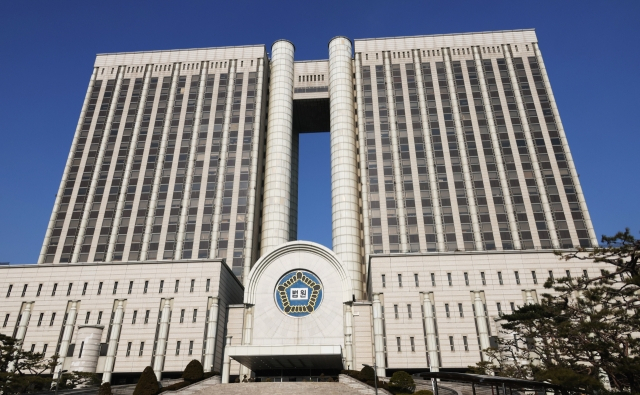
Youngpoong has lost a first-instance shareholder derivative lawsuit it filed against Korea Zinc Chairman Choi Yun-beom and other directors, alleging that the company's tender offer for its own shares to defend management control caused financial harm to Korea Zinc.
The 30th Civil Division of the Seoul Central District Court ruled Thursday against Youngpoong in the derivative suit, which sought approximately 837 billion won ($631 million) from 10 Korea Zinc directors including Choi. Youngpoong had filed the suit in November 2024. A shareholder derivative suit allows a shareholder to sue a company's directors directly when the directors' decisions or actions have caused harm to the company but the company itself has declined to take legal action against them. Although the shareholder is formally the plaintiff, any damages awarded go to the company rather than to the individual shareholder.
The court rejected Youngpoong's claims, finding that Korea Zinc's board had not breached its duty of care or duty of loyalty. It also dismissed Youngpoong's argument that the buyback violated laws and the company's articles of incorporation governing the ceiling on treasury share acquisitions.
"The tender offer for treasury shares was decided after reviewing external legal advice and on the premise of a price condition involving a certain premium and a financing plan, and it cannot be said that the judgment was manifestly unreasonable — therefore it cannot be assessed as a breach of the duty of care or duty of loyalty," the court said.
The court further held that the Commercial Act's provision limiting the acquisition price of treasury shares "merely restricts the total accounting ceiling of the amount that may be acquired, and therefore whether a violation occurred cannot be argued on the basis of which item served as the funding source." It added that "a special-purpose discretionary reserve does not fall under the items enumerated in the provision and thus cannot be said to constitute a statutory violation."
The dispute between the Youngpoong-MBK alliance and the Choi camp over control of Korea Zinc has been ongoing since September 2024. The alliance launched a tender offer for Korea Zinc shares that month, prompting Choi's side to convene a board meeting and mount a competing tender offer, purchasing shares at 890,000 won apiece.
Youngpoong argued that the treasury share tender offer amounted to nothing more than an effort to entrench incumbent management, lacked rational basis, and violated the duty of care and duty of loyalty. It also contended that using a special-purpose discretionary reserve — accumulated through a shareholders' resolution — to acquire treasury shares violated the Commercial Act's restrictions on acquisition price limits. Youngpoong initially filed the derivative suit in November 2024 seeking 673.2 billion won, based on the difference between the tender offer price and the market price, and later raised its claim to approximately 837 billion won.
In October 2024, Choi's camp announced plans to issue 3,732,650 new common shares — nearly 20 percent of all outstanding shares — at 670,000 won per share through a public offering following a treasury share cancellation. The move was intended to overcome a shareholding disadvantage through a rights offering. The total amount to be raised was 2.5 trillion won ($1.89 billion), of which 2.3 trillion won was earmarked to repay debt.
The market criticized the plan as an attempt by Choi's side to gain a shareholding advantage in the management dispute by having the company borrow money to pay off shareholder debt. Choi's camp ultimately withdrew the rights offering and apologized, saying it "failed to sufficiently consider the feelings of existing shareholders in advance amid an urgent and desperate situation."
The Financial Supervisory Service referred the attempted rights offering by Choi's camp to prosecutors — now the prosecution office — last January via fast track for expedited investigation. The FSS had been examining allegations that Choi's side had planned the rights offering before the treasury share tender offer concluded and had failed to make proper disclosures. The case was assigned to the Seoul Southern District Prosecutors' Office, now known as the Seoul Southern District Prosecution Office.
bell@heraldcorp.com