2-month-old diagnosed with ventricular septal defect, undergoes emergency surgery
Heart failure symptoms resolve, medication discontinued
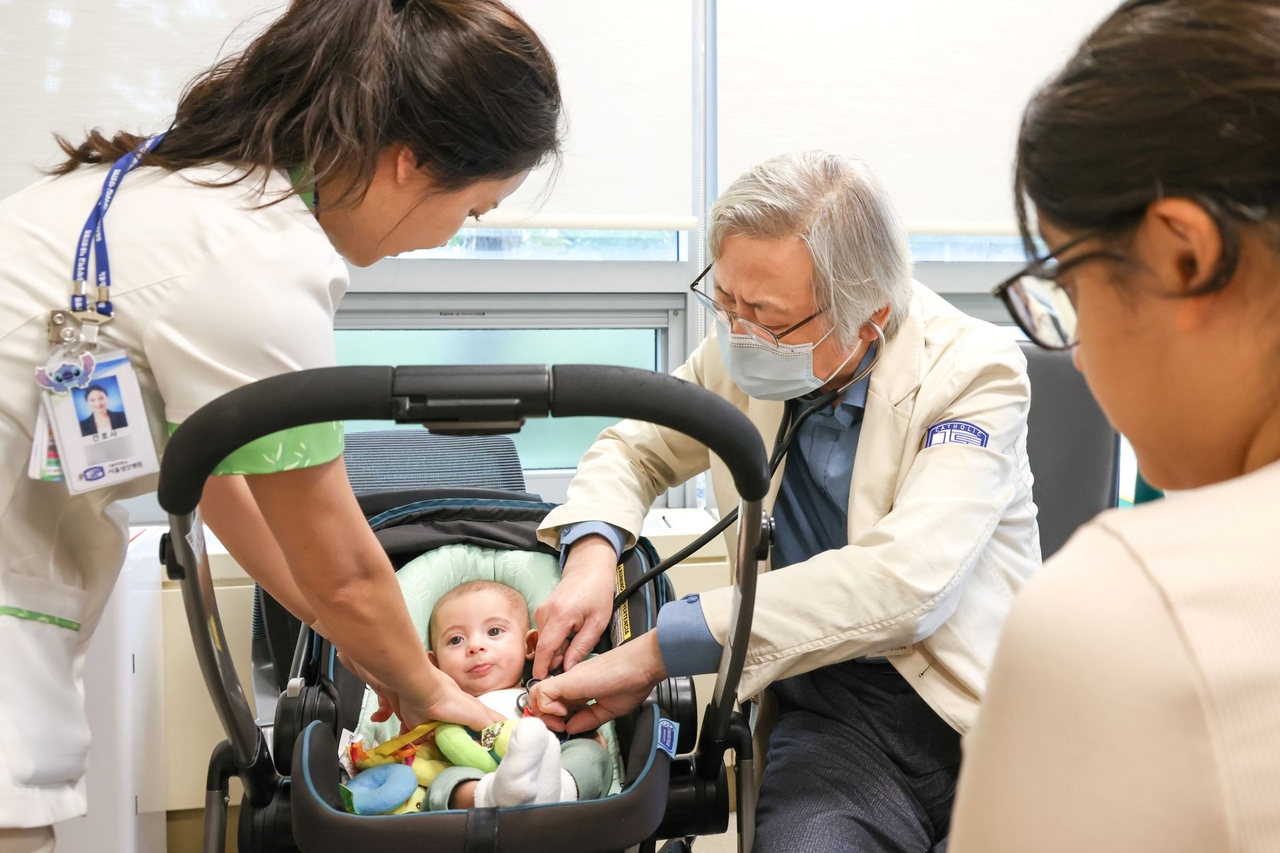
A baby from a US Forces Korea family who underwent emergency heart surgery at around two months of age has made a full recovery. The infant's heart failure symptoms have disappeared and medication has been discontinued, with the child showing stable progress.
Catholic University of Korea Seoul St. Mary's Hospital announced Friday that Flores, the baby who received heart surgery, attended a first post-discharge outpatient visit on Oct. 13.
Flores was born at a military hospital in Pyeongtaek, where the child's father is stationed as a USFK service member. There were no apparent problems at birth, but at around two months of age the infant suddenly developed heart failure symptoms — including breathing difficulties and a rapid pulse — and was transferred to the hospital's pediatric emergency medical center.
Detailed examinations revealed a ventricular septal defect, a congenital heart condition in which a hole forms in the wall separating the left and right ventricles. The condition had affected not only the baby's breathing but also growth: despite being more than two months old, Flores had gained only about 300 grams since birth.
The medical team determined that prompt surgery was necessary. Professor Lee Cheol of the department of cardiovascular and thoracic surgery performed the operation, and Flores was discharged after a week of inpatient treatment.
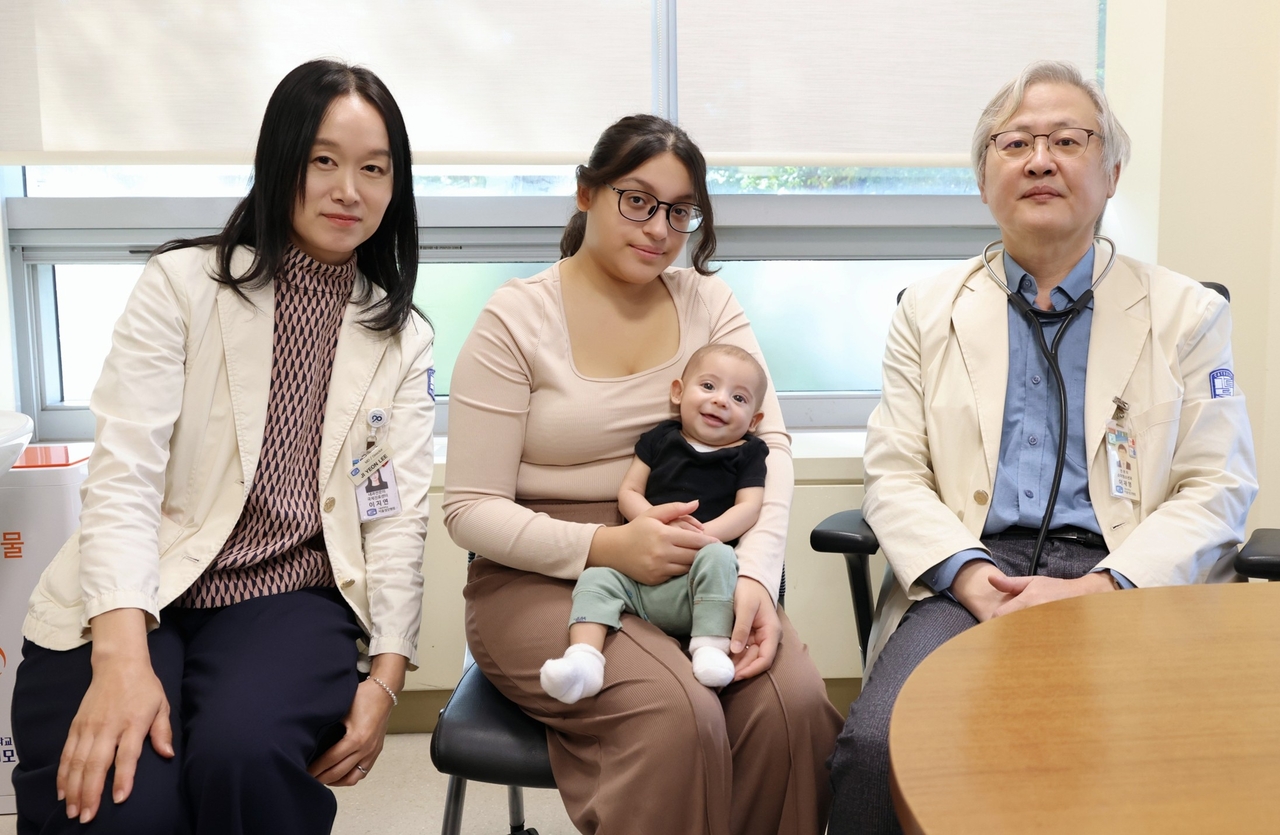
The baby's mother said she had initially thought the infant was struggling to breathe because of difficulty digesting food, and was shocked and saddened when she was suddenly told heart surgery was needed. "It was my first time at a Korean university hospital, but the medical staff explained everything about the surgery and treatment thoroughly, which put me at ease," she said.
The first outpatient visit after surgery confirmed a significant improvement in the baby's condition. "When the baby first came to the hospital, I was very worried because the child seemed so weak and listless — but today the eyes are bright and there is so much more energy," said Lee Jae-young, a professor in the department of pediatrics at Seoul St. Mary's Hospital. "The baby is feeding well, the heart failure symptoms are gone, and no further medication is needed."
Pediatric heart failure is a condition in which the heart cannot supply the body with sufficient blood and oxygen due to reduced cardiac function. Congenital heart defects and cardiomyopathy are among the leading causes. Parents should seek specialist care if an infant struggles to breathe while feeding, has difficulty eating, or fails to gain weight normally.
The hospital said a patient-transfer hotline it operates with USFK medical facilities played a key role in the treatment process. Rapid coordination with the Pyeongtaek base hospital made it possible to transfer the patient and proceed to emergency surgery.
"This case is one where the pediatric emergency medical center's swift cooperation allowed us to quickly receive the patient and proceed all the way to heart surgery," said Lee Ji-yeon, director of the International Healthcare Center at Seoul St. Mary's Hospital. "We will continue to strengthen close communication and cooperation with USFK hospitals going forward."
Meanwhile, Seoul St. Mary's Hospital has been operating its dedicated pediatric emergency medical center in full since May. Specialist pediatric emergency physicians are on duty around the clock in a separate treatment space with a patient flow independent from adult patients. The center also has dedicated pediatric emergency inpatient rooms, negative-pressure isolation beds and intensive care beds to support critically ill pediatric patients.
woo@heraldcorp.com