Director Song Il-gon on 'Still Brilliant'
Chilling suspense in place of graphic violence
A story of solace woven from girls' dreams
'I wanted it to be a narrative of solidarity and healing'
"Only the wind blows over the old village beyond the crescent-moon mountain; longing settles like frost on the path where the plum blossoms have fallen." (From the original soundtrack "Brilliantly")
It is the bitter winter of 1942, a time when no one could know how the next ordinary day might end. Jeong-im (played by Choi Ju-eun) climbs to a mountain peak and sings, stepping carefully from note to note in a clear, gentle voice. Beside her is Sun-ok (played by Park Seo-kyung), who treasures her friend's talent as if it were her own. A faint warmth of spring spreads across the cheeks of the two seventeen-year-old girls. They roll the quiet lyrics around in their mouths, and a pure melody layers itself over the words, one sheet at a time. Someday they will go to Seoul — one to become a singer, the other a troupe director who puts her friend on stage. Even in a brutal era, the tremor of hope refuses to be extinguished.
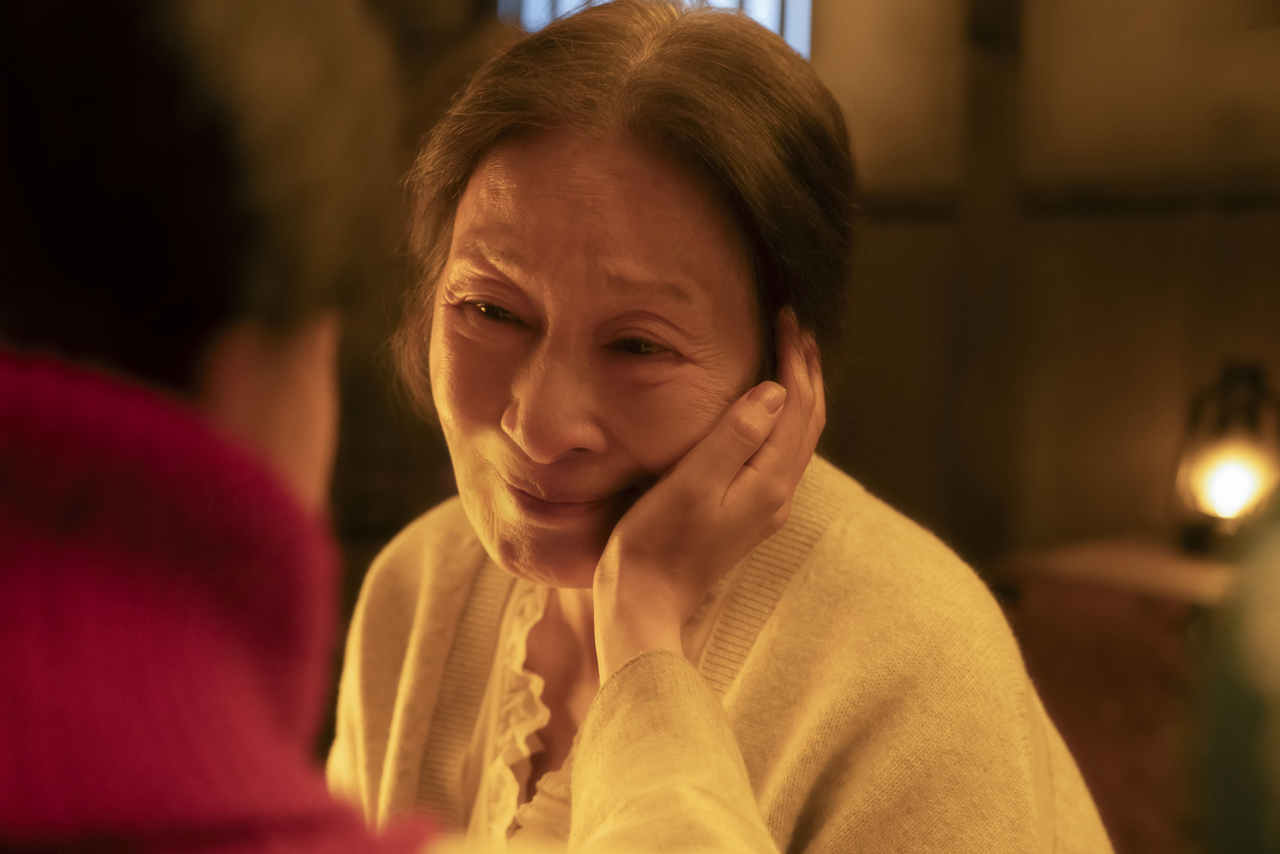
The camera lingers on those faces. Deep wrinkles settle over once-bright skin as the film moves among three different points in time. Somewhere at the far end of that journey, the girl's face finds its way to Sun-ok in old age, played by Kim Hye-ja. That the two faces do not feel mismatched despite the gap of decades is because the longing that has run through one person's entire life bridges the distance between them.
"Still Brilliant," which opened Wednesday, deals with the victims of Japan's wartime sexual slavery, yet not a single scene is set inside a comfort station. Instead, the film's gaze is fixed on the time before the tragedy. The everyday lives and dreams of girls who were then untouched and clear-eyed breathe warmth into a history the audience already knows. What the tragedy stole was not only lives and freedom — it was the infinite possibility of an ordinary, brilliant universe.
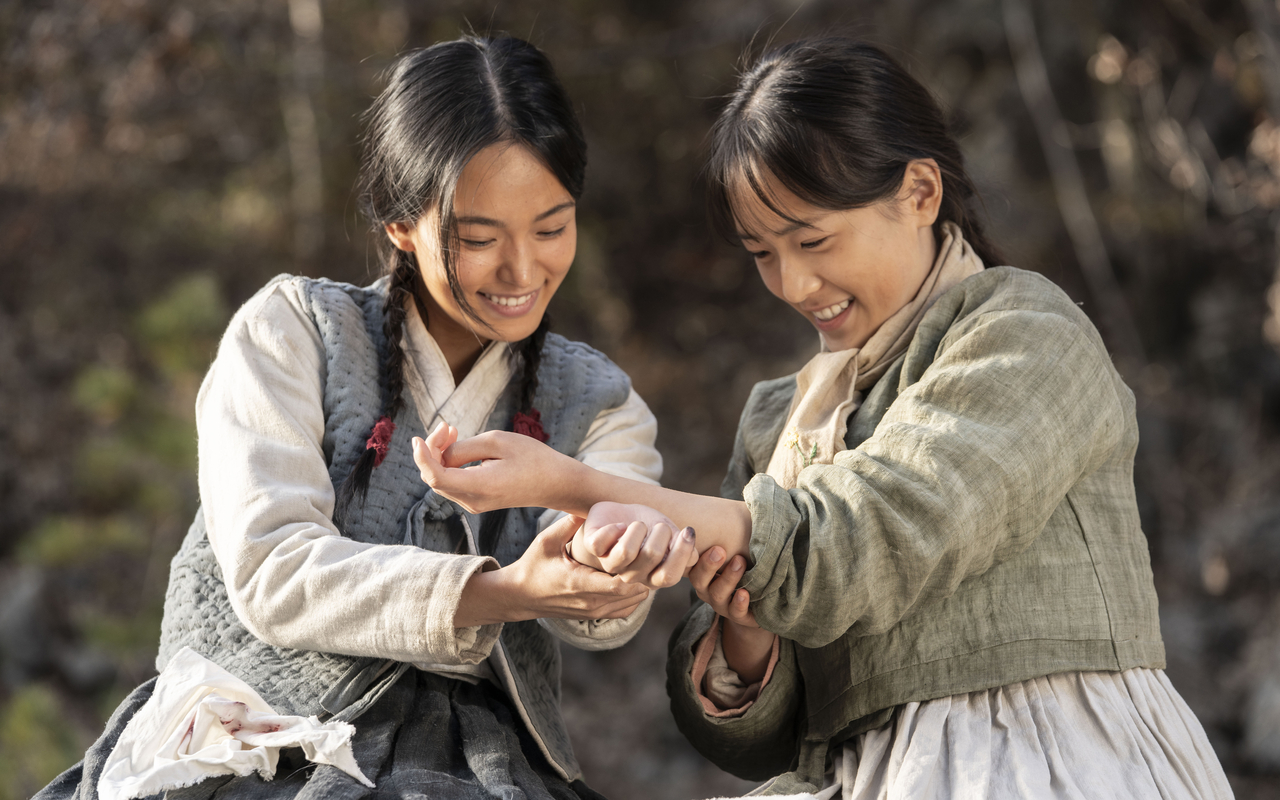
"I thought the subject matter would make it hard for audiences to walk in," Song said. "If people feel they have to suffer through it because it's a painful story, they won't want to watch. There were already works that dealt with this painful material, so I felt I shouldn't simply reenact that story."
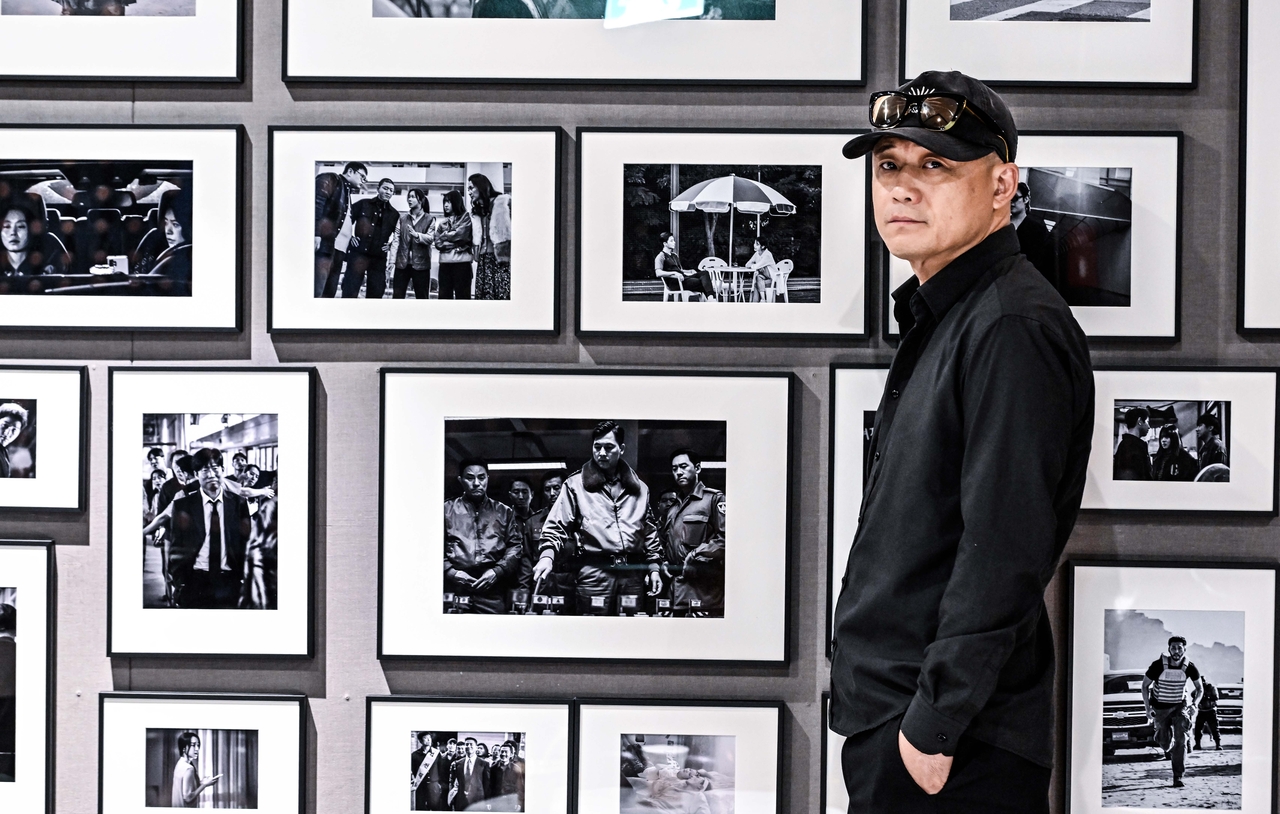
The film marks the return of director Song Il-gon — who won the jury prize in the short film competition at the Cannes International Film Festival in 1999 with his short "Picnic" — after a long absence from the screen. It is also the screen comeback of Kim Hye-ja, celebrating her 65th anniversary in the industry, nine years after "The Road" (2017). Song met with reporters at Megabox COEX in Seoul on Thursday, the day after the film opened. "I hoped that by following the brilliant lives of the two girls, audiences would naturally come face to face with the pain," he said.
No reenactment, no forced message
The seed of the film was a play called "Old Apple" by writer Lee Hye-suk. It is the first time Song, who has written every screenplay he has ever directed, has picked up a camera for someone else's story. When he first opened the script, the weight of the subject hit him immediately — but what ultimately moved him was the "upright and good-hearted spirit" he found inside it.
"I believe historical events should be explored through literature, film, music — through many different perspectives and forms," Song said. "Only then can those events help us reflect on who we are today."
Because the subject of "comfort women" is a history of suffering he has long studied and lived with, Song set one firm principle for himself: he would not repeat the pain. His solution was to shift the camera's gaze to what came before and after the events themselves.
The lives of girls who knew only happiness crack open one dawn when a figure approaches like a distant dot — Sun-ok's cousin Jeom-rye, who had been taken to a comfort station. Jeom-rye returns to the village in a daze, and her face alone is enough to suggest the horrors that happened off screen, foreshadowing the darkness closing in on the girls.
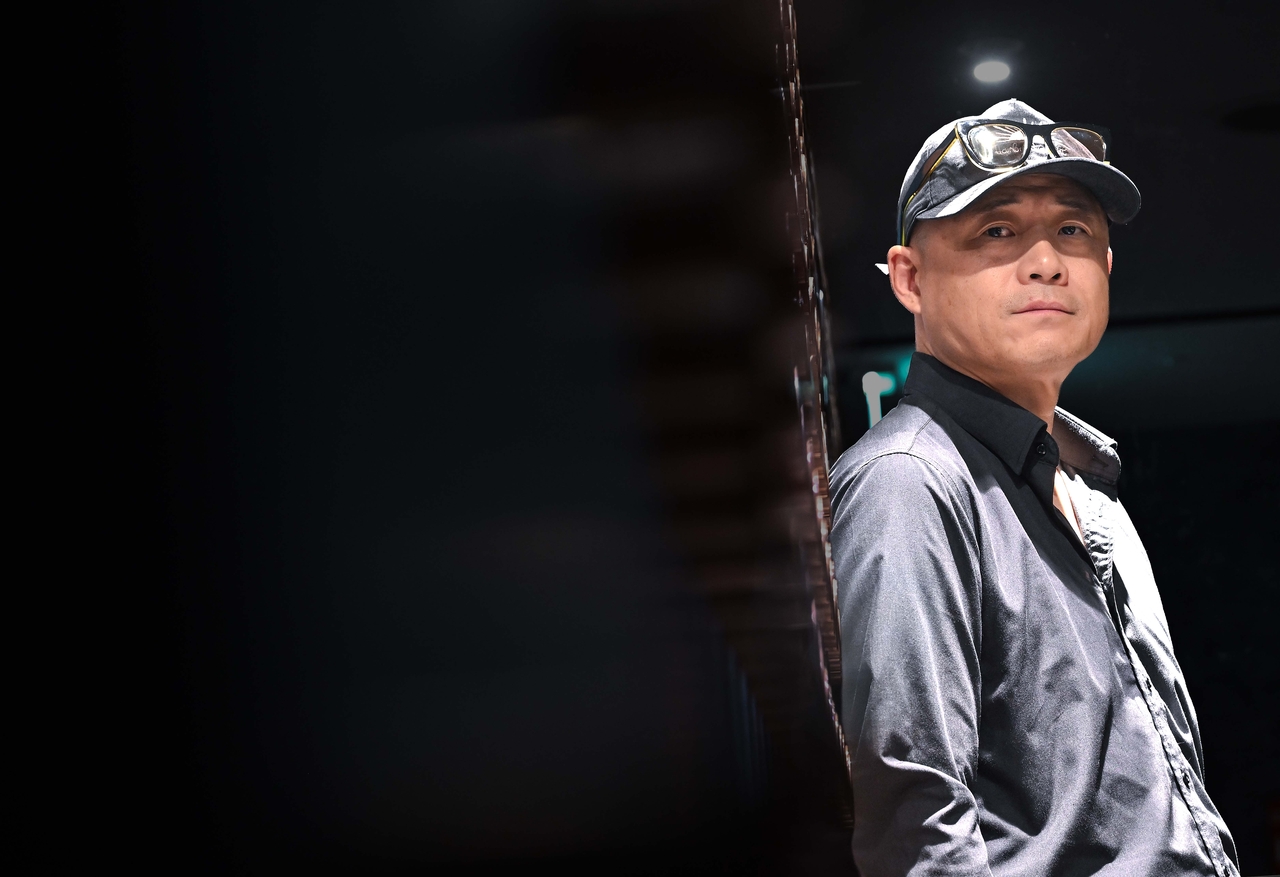
"The documentary footage is too horrific and raw," Song said. "What seemed more important to me was imagining the inner pain of a woman who had lived through that and come back — I wanted it to reach the audience not as the pain of the event itself, but as the pain of the heart."
Jeom-rye's arrival marks the film's first turning point. The everyday world of girls who had been dreaming of tomorrow collapses. Their terror is conveyed to the audience through sound. The moment Japanese soldiers enter the dressing screen behind which the girls are hiding, the music holds its breath and the screen fills with tense, barely audible movements. Jeong-im and Sun-ok, separated from the soldiers by a single door, dare not even breathe. As a falling sickle is barely caught by a girl's hand, the audience's breath stops with it.
"I arranged the film so it could be enjoyed more as a genre piece," Song said. "I had no desire to objectify the film or stand at a distance and force a message on the audience." By stripping away any lecturing tone and layering in taut suspense, the direction ensures that viewers do not sit as spectators of violence but crouch alongside the girls.
"I wanted audiences to be scared when the children are scared, and happy when they're happy," he said. "I hoped people would watch with a feeling of rooting for them — 'I hope they don't get taken, I hope they're safe.' Wondering how frightened they must have been, how terrified."
Faces over landscapes, people over era
Even after fear has passed through, the girls still sing. What Song worked hardest on in this film was verisimilitude — the power to make audiences believe what they are seeing is real. The same applied when depicting the girls' dreams: he wanted them to feel not like vague fantasies but like tangible wishes within reach. "Even in times of such suffering, children do not want to lose their dreams," Song said. "I wanted that to be heartbreaking."
That is also why Song included a musical sequence. In a scene called "If We Go to Seoul," the three young friends known on set as "Sunjeondu" — Sun-ok, Jeong-im and Du-yeong — dress up and sing together on an imaginary stage that conjures the Seoul they have been dreaming of.
"Everyone wants to go out into a wider world and be happy," Song said. "The children of that era were no different from us today. If they had been born now, into a good family in a good country, they could have become Blackpink. That's why I think this scene is not a fantasy at all — it's deeply realistic. You can see the distance between a dream and the reality that refused to allow it."
The film weaves together 1942, 1991 and 2010, thread by thread. There is a reason 1991 sits in the middle: it was the year the late Kim Hak-sun became the first survivor of Japan's wartime sexual slavery to testify publicly about what had happened to her. "I spent the most time thinking about how to fit the present, the past and the more distant past together," Song said, "and about where to place that time and those memories when all the truths of the story are finally revealed at the ending."
What connects the three time periods is faces. Lashes trembling faintly, lips quivering almost imperceptibly, dark eyes each holding their own mixture of excitement and fear, joy and sorrow — the camera focuses on the actors' faces with unusual intensity. It is also why Song describes the film as a portrait.
"When you look at a portrait for a long time, you begin to see that person's emotions and memories," he said. "The dressing screen where the girls hide is very narrow. I couldn't make a shabby winter hiding place look beautiful. I wanted to show their emotions through faces rather than landscapes."
The director's most cherished scene was born the same way. Sun-ok has just learned she is to be married off, and the two girls sit facing each other; in a space where only the sound of wind passes between them, the feeling of having to leave a friend behind settles into both faces. Song called the girls "children we must remember."

At the center of all those faces is actor Kim Hye-ja. After finishing her last drama series, Kim had said she wanted to "live quietly, like a wildflower" — but the director's persistent persuasion that this was a story the younger generation needed to see changed her mind.
"The film is fundamentally about a story spanning more than 60 years of two girls' lives, so casting was absolutely critical," Song said. "Kim Hye-ja has an overwhelming presence — an image encoded in the DNA of the Korean people. She embodies compassion for humanity, warm love, and every image of being a mother, an older sister, a friend to all of us."
"There is a close-up near the ending where she delivers the line: 'Each day drags on unbearably, yet ten or twenty years pass in a flash,'" Song said. "I felt a shiver through the entire shoot. It was a face only a truly great actor could show."
Over 118 minutes, the film never raises its voice to proclaim tragedy. It simply lets the audience gaze quietly at the faces of girls who once sang. "We live in a dopamine age — slashing, stabbing, killing, always chasing something more stimulating," Song said. "That is precisely why we need an anti-dopamine film."
Song runs through the film's beginning and end, and memory passes from mouth to mouth like the words of a song. That feeling is embedded in the title itself. "'Still' is a word that connects the past and the present," Song said. "If we do not remember, existence disappears. They exist only because we remember them."
"I kept thinking that only by remembering how precious those children's brilliant days were can we also remember the painful history," he said. "Their story was no different from ours. By remembering that era, we can avoid tragedy again — and even when tragedy stands before us, if we stand together in solidarity and empathy, perhaps those wounds can be healed."
shee@heraldcorp.com