Automation upgrade complete at Incheon cargo terminal
Cargo handling capacity to rise more than 25%
Hourly throughput up from 18 to 30 units
Third-quarter cargo sales up 34%
New York terminal modernization set for next year
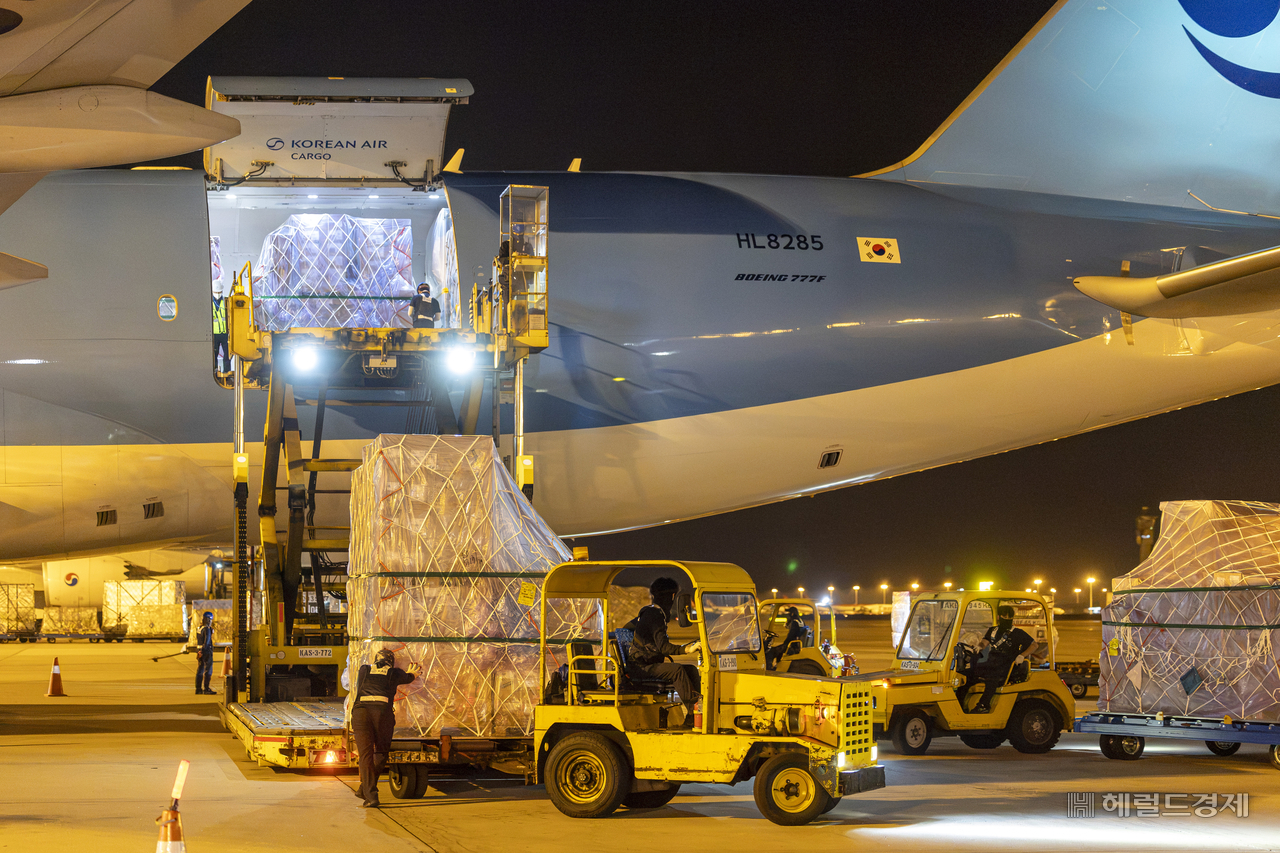
Korean Air is transforming its Incheon International Airport cargo terminal into a "smart terminal" as it accelerates its push into the AI logistics market. The airline plans to leverage automation to boost cargo handling capacity by more than 25 percent, targeting high-value freight such as semiconductors and server racks.
Korean Air completed a roughly 15-month modernization of the Incheon cargo terminal that ran from June last year through September, industry sources said Friday. The overhaul replaced aging equipment that had been in service since the airport opened in 2001 and significantly expanded automation across cargo transport and loading operations.
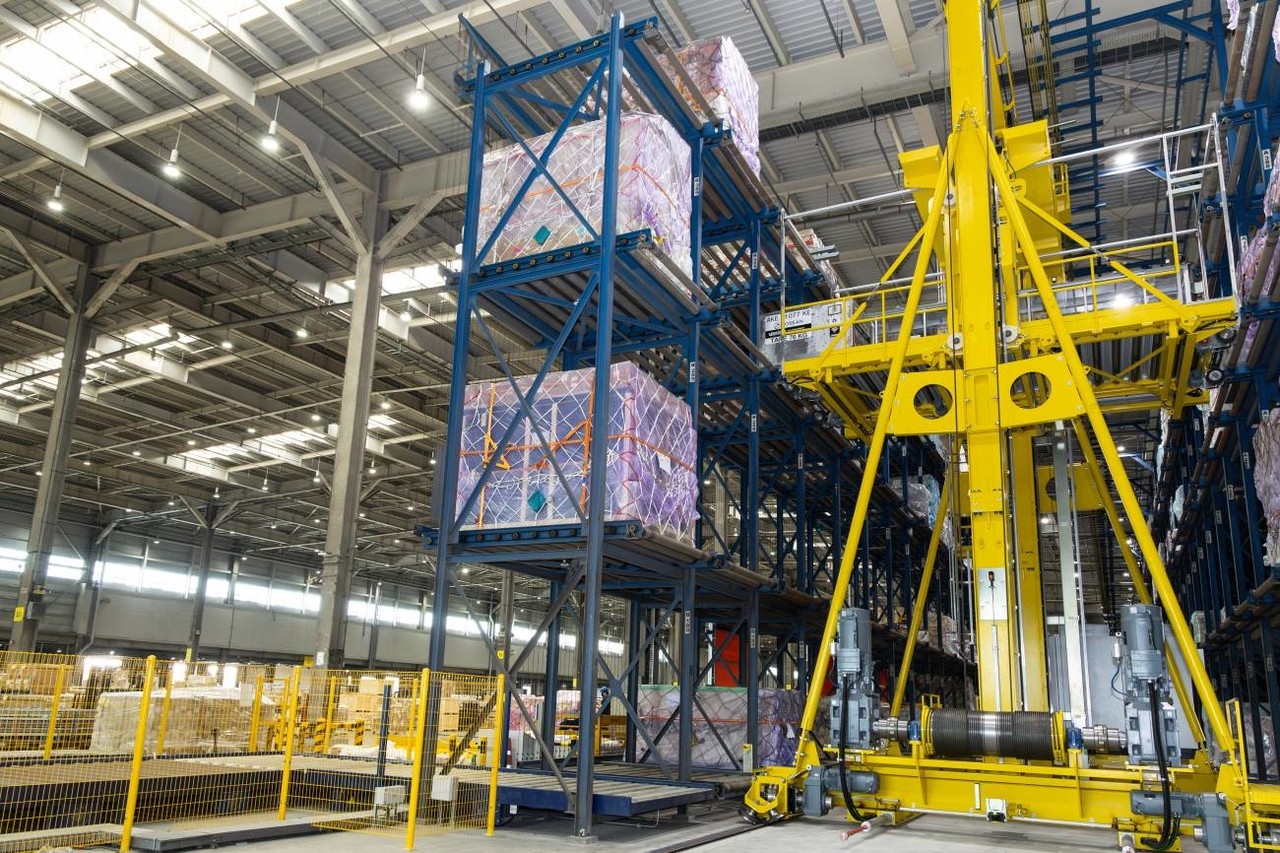
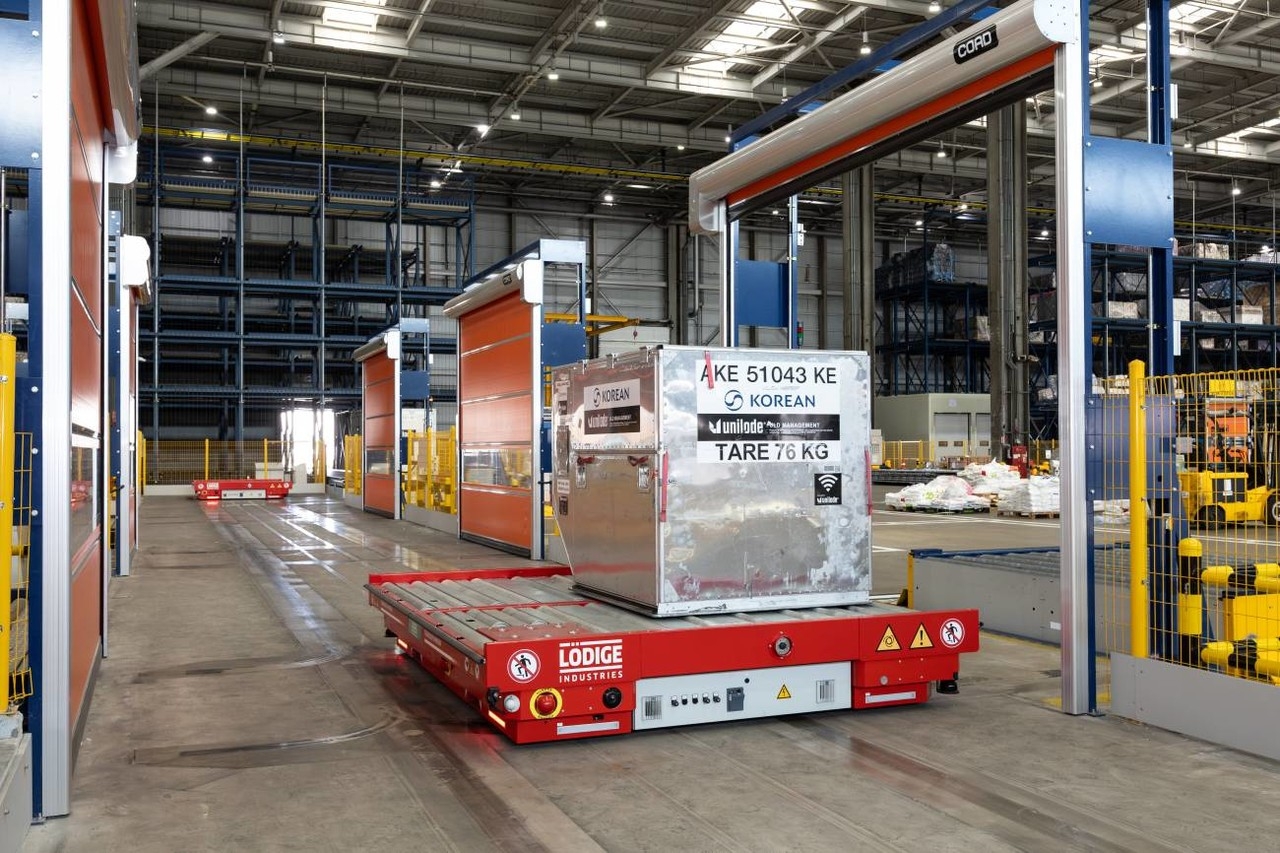
The most significant change involves how cargo is moved through the facility. Korean Air introduced automated guided vehicles and replaced the equipment transfer vehicles used to lift and move cargo containers. The number of bypass conveyor lines was also doubled from one to two, reducing bottlenecks in the cargo handling process.
As a result, hourly throughput for cargo containers rose about 67 percent, from 18 units to 30. Korean Air expects overall terminal cargo handling capacity to increase by more than 25 percent compared with before the upgrade.
The modernization also focused on workplace safety and working conditions. Automating heavy cargo transport equipment reduced the number of processes requiring workers to handle freight directly, while the facility upgrades improved on-site operational accuracy. The airline is also expanding dedicated facilities for processing high-margin special cargo.
The modernization comes as Korean Air's cargo business is on a strong growth trajectory. The airline's third-quarter cargo sales reached 1.43 trillion won ($1.08 billion), up 34.3 percent from the same period a year earlier. Cumulative cargo sales for the first three quarters of this year came to 4.06 trillion won, a 28.0 percent increase from the same period last year.
Notably, freight rates rose far faster than cargo volumes. While Korean Air's third-quarter cargo volume grew 5.3 percent year on year, freight rates climbed 27.5 percent. The cargo load factor also edged up 0.9 percentage points to 72.1 percent. Analysts attributed the results to a combination of factors: sustained demand for high-value freight including semiconductors and AI-related goods, along with fare adjustments tied to rising fuel costs.
At its third-quarter earnings conference call, Korean Air identified AI and semiconductors as a stable demand base for its cargo business. The airline said it also boosted sales by capturing timely demand for cargo such as solar energy equipment and fresh eggs, which fluctuate with market conditions.
The revenue structure of the cargo business is also shifting. Korean Air's share of long-term cargo contracts has risen from around 10 percent to roughly 30 percent. Under long-term cargo contracts, aircraft cargo space is sold over one to three years at a fixed base rate with variable surcharges applied on top. The arrangement reduces exposure to short-term freight rate swings and provides a more stable revenue base.
Underpinning this cargo growth is the global surge in AI infrastructure investment. Logistics giant DHL projects the data center logistics market will grow at an average annual rate of 9 percent, from $23 billion last year to $35 billion by 2030. Demand is rising for the transport of not only servers and semiconductors needed to build data centers, but also power and cooling equipment and maintenance parts.
Moon A-young, a senior researcher at Nice Credit Rating, said demand for air transport is growing, led by high-value IT goods such as semiconductors, server racks and batteries, driven by expanding AI infrastructure investment. Even as cargo supply has increased with the recovery of passenger flight operations, she added, "robust cargo demand and supply constraints stemming from the Middle East are combining to keep air freight rates at elevated levels."
Korean Air plans to step up its pursuit of high-value freight needed for data center construction, including server racks and semiconductors. To prepare for the year-end consumer peak season around Black Friday and Christmas, the airline plans to flexibly deploy charter and extra cargo flights on routes with high freight demand.
Beyond Incheon, Korean Air is also modernizing its overseas logistics hubs. The airline is currently upgrading facilities at its cargo terminal at John F. Kennedy International Airport in New York, with completion targeted for next year. The plan is to strengthen competitiveness in the global air cargo market by raising the handling capacity of its two major cargo hubs linking Incheon and New York.
"This renovation is an essential measure to proactively respond to the rapidly changing global logistics environment by upgrading our facilities and integrating smart technology," a Korean Air official said.

kwater@heraldcorp.com