A tray of 30 eggs averages 6,905 won — down for four consecutive months
Farm-gate prices drop as supply improves and inventories build
Highly pathogenic avian influenza detected in wild birds, raising industry alarm
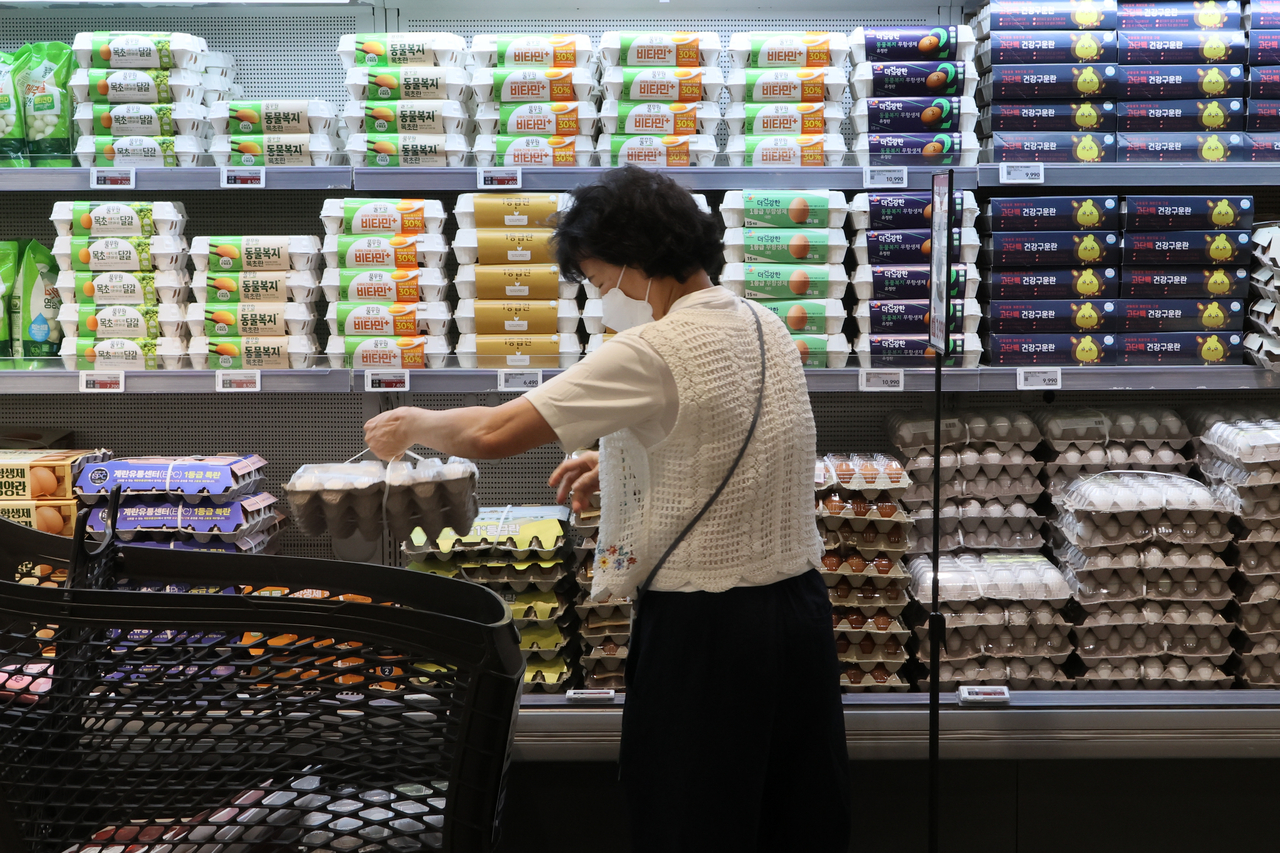
Egg prices have fallen for four consecutive months as farm inventories build and production recovers. However, the detection of highly pathogenic avian influenza (AI) for the first time this winter season has put the industry back on edge.
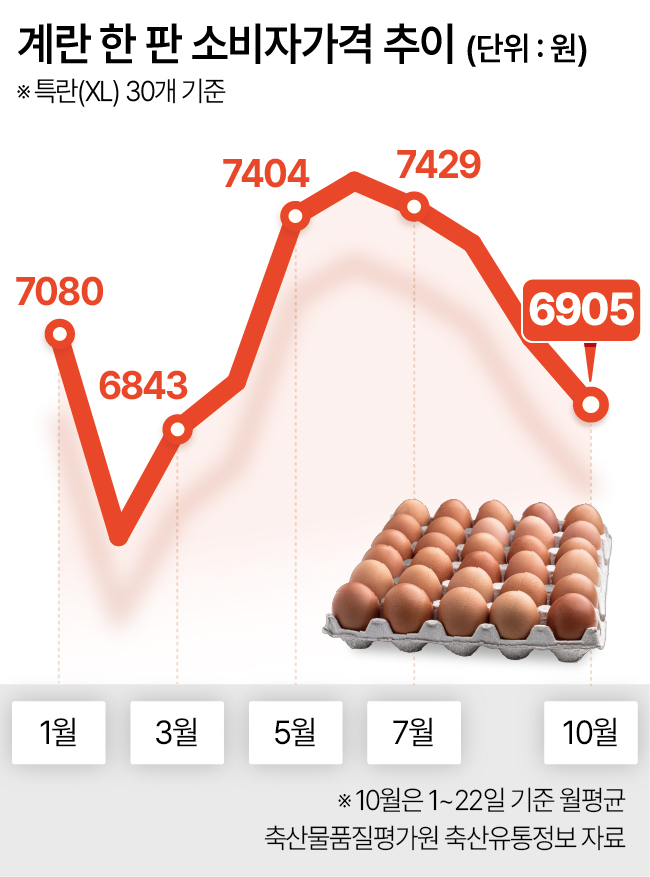
According to livestock retail data from the Korea Institute for Animal Products Quality Evaluation, the average consumer price of a tray of 30 XL eggs this month stood at 6,905 won, down 2.5 percent from 7,084 won the previous month and 1.9 percent lower than a year ago.
Egg prices peaked at 7,496 won in June before declining through July (7,429 won), August (7,332 won) and September (7,084 won), extending the losing streak to four months. The current level is the lowest since March, when a tray cost 6,843 won.
The decline in consumer prices has been driven by falling farm-gate and wholesale prices as supply conditions improved. The average farm-gate price of a tray of XL eggs this month came in at 5,645 won, down 10.3 percent from the previous month, while the wholesale price fell 10.7 percent to 5,984 won — both dropping by more than the consumer price.
Inventories at farms are also building. Data from the Korea Rural Economic Institute's Agricultural Outlook Center show that the share of sampled farms holding at least two days' worth of XL egg stock — measured against normal daily shipment volumes — jumped from 8.3 percent in late September to 39.5 percent in mid-October, nearly a fivefold increase. The share of farms holding only half a day's worth of stock fell from 50.0 percent to 17.7 percent over the same period. Days of inventory refers to how many days' worth of normal shipments a farm's current egg stock represents.
Farmers' sense of supply and demand has also shifted. The supply-demand intensity index compiled by the institute from sampled farms dropped from +0.5 for XL eggs in late September to -0.8 in mid-October, with a negative reading indicating a perceived oversupply. Large and medium eggs each posted a supply-demand intensity of -0.9 in mid-October.
Output is expected to keep rising for now. The Korea Rural Economic Institute projected that the number of laying hens aged six months or older in October would reach about 59.02 million, up 0.7 percent from the same month last year, while average daily egg production would rise 0.6 percent to about 50.31 million eggs. As a result, the institute forecast that the average farm-gate price per 10 XL eggs in late October would fall an additional 50 to 70 won from mid-October levels.
The key wildcard is highly pathogenic avian influenza. The government said Tuesday that an H5-type AI virus was detected in wild bird droppings collected at Suncheonman Bay in Suncheon, South Jeolla Province. It is the first confirmed case of highly pathogenic AI in domestic wild birds this winter season. Citing a heightened risk of domestic spread, the government raised the national crisis alert level from "Caution" to "Serious."
The detection came as migratory winter birds have been arriving in South Korea since September and reports of highly pathogenic AI in wild birds overseas have been increasing. According to the Ministry of Agriculture, Food and Rural Affairs, the number of highly pathogenic AI cases detected in wild birds abroad from January through August this year reached 2,957 — more than double the 1,432 cases recorded in the same period last year.
The elevated egg prices seen throughout this year were themselves a consequence of the highly pathogenic avian influenza outbreak last winter. According to the ministry, approximately 11.34 million laying hens were culled during the 2025–2026 winter season, accounting for 13.7 percent of the total laying hen population. The resulting drop in egg production sent prices soaring.
The same risk looms this year. If highly pathogenic avian influenza spreads to laying hen farms, culling and other containment measures could push egg prices back up. The Ministry of Agriculture, Food and Rural Affairs said "the risk of highly pathogenic AI breaking out on farms has grown now that it has been confirmed in wild birds," and urged poultry farmers and livestock industry workers to implement strict biosecurity measures.

korean@heraldcorp.com