Press conference held Friday ahead of National Assembly audit of Ministry of Employment and Labor affiliates; starting salaries 6.57 million won lower than National Health Insurance Service; strike vote set for Tuesday and Wednesday for first time in a decade
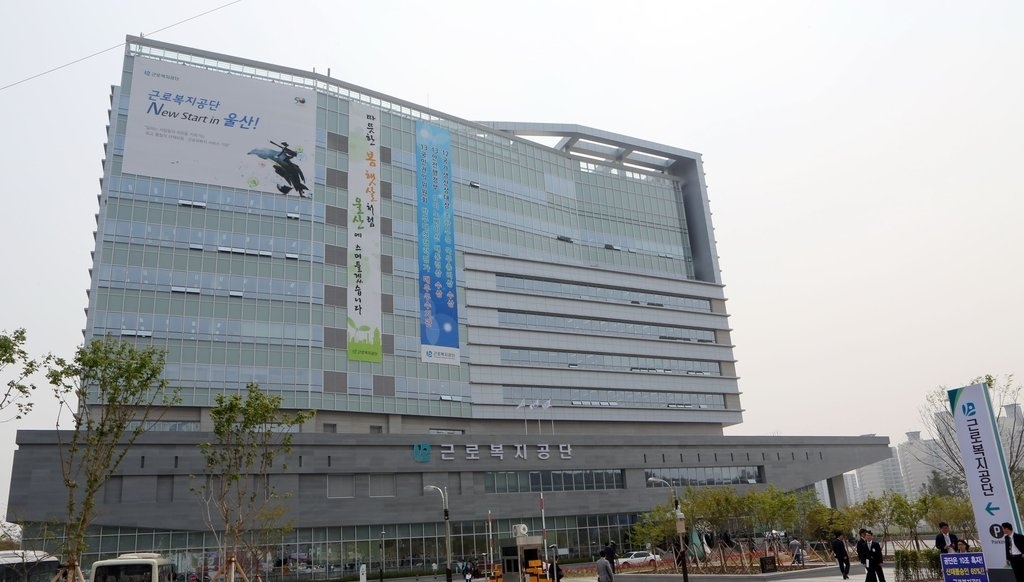
The union of the Korea Workers' Compensation and Welfare Service held a press conference at the National Assembly on Friday, calling on the government and lawmakers to close the wage gap between social insurance agencies and secure the staffing and budget needed to carry out national policy mandates.
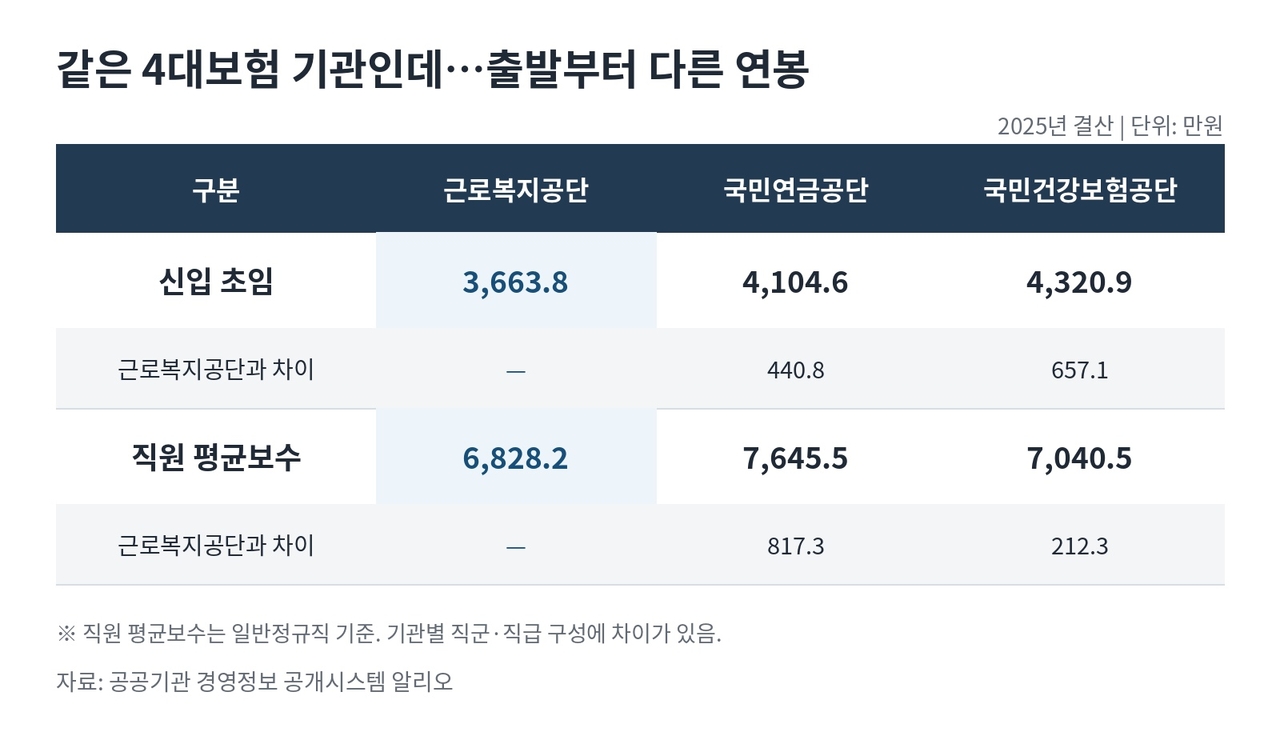
Last year, starting salaries at the Korea Workers' Compensation and Welfare Service trailed those at the National Health Insurance Service by 6.57 million won ($4,960) and those at the National Pension Service by 4.41 million won. Wage negotiations at the agency have collapsed, and a strike authorization vote is now scheduled for the first time in a decade.
According to the union, members gathered Friday morning on the steps in front of the main building of the National Assembly to demand better working conditions. The National Assembly's Climate, Energy, Environment and Labor Committee conducted a national audit of Ministry of Employment and Labor affiliates, including the Korea Workers' Compensation and Welfare Service, the same day.
Union President Shin Hyeon-woo urged reform of the uniform total labor cost system, saying agencies that already pay lower wages cannot narrow the gap when the same rate of increase is applied across the board regardless of each agency's pay level. The union also called for changes to the personnel cost fund to improve compensation and for the establishment of a public institution remuneration committee.
Public disclosure data from Alio, the government's public institution management information system, show that the starting salary at the Korea Workers' Compensation and Welfare Service stood at 36.64 million won in fiscal year 2025. The figure was 43.21 million won at the National Health Insurance Service and 41.05 million won at the National Pension Service.
That puts the Korea Workers' Compensation and Welfare Service's starting pay 6.57 million won below the National Health Insurance Service's and 4.41 million won below the National Pension Service's — gaps of 15.2 percent and 10.7 percent, respectively. The Alio starting salary figure is calculated on the basis of a college-educated, office-track employee with no military service exemption and no prior work experience at the lowest entry-level grade.
The gap also appeared in average pay for full-time regular employees. Last year, the per-employee average compensation at the Korea Workers' Compensation and Welfare Service was 68.28 million won — 8.17 million won less than the National Pension Service's 76.45 million won and 2.12 million won less than the National Health Insurance Service's 70.41 million won.
Average tenure at the Korea Workers' Compensation and Welfare Service was 14 years and 10 months, longer than the National Pension Service's 14 years and 8 months and the National Health Insurance Service's 13 years and 3 months. However, differences in job category and grade composition and performance bonuses are reflected in each agency's average pay figures, making it difficult to interpret the gap as a direct comparison of wages for identical roles and grades.
On the ground, staff say low pay and heavy workloads are driving employees to leave. Ha Jong-mun, head of the union's Busan chapter, said workers joke internally that the agency has become "a vocational training center and staffing agency for the National Pension Service and National Health Insurance Service."
The union also raised concerns that staffing and budget support have not kept pace with the expanding workload brought on by government policy initiatives. Shin said he had requested 564 additional positions ahead of next year's planned overhaul of the employment insurance income-based contribution system, but only 100 net new posts were approved and the entire project budget needed to implement the reform was cut. For "Pureun Ssiat," the small and medium-sized enterprise retirement pension fund program, only 5 of the 185 additional positions requested were approved as net new hires, he said.
"Expanding policy without the people and budget to carry it out will ultimately increase the burden on workers and degrade the quality of public services that citizens deserve," Shin said. "The government and the National Assembly must take responsibility for securing the staffing and budget required to implement policy."
The union expressed mixed feelings about Park Seung-heup, the agency's newly appointed chairman and a former labor activist. Ha said that to build a Korea Workers' Compensation and Welfare Service that stands in solidarity with society, the poor working conditions and low wages of the agency's own employees must be addressed first. "That is the only way to build the momentum needed to drive the work forward," he said.
Meanwhile, this year's wage negotiations at the Korea Workers' Compensation and Welfare Service broke down after 18 working-level sessions and three full rounds of talks, and mediation by the National Labor Relations Commission was also suspended. The agency's seven unions are now set to hold a strike authorization vote Tuesday and Wednesday — the first such vote at the Korea Workers' Compensation and Welfare Service in a decade.
fact0514@heraldcorp.com