Al Square's '2026 Seoul Housing Jeonse and Monthly Rent Market Report'
About 6 in 10 new Seoul apartment leases in Q2 were monthly rent contracts
Gangbuk-gu up 26.7%, Nowon-gu up 24.6%, both outpacing city average
Monthly rent for 60–85 sq. meter apartments rose 13.5% year-on-year
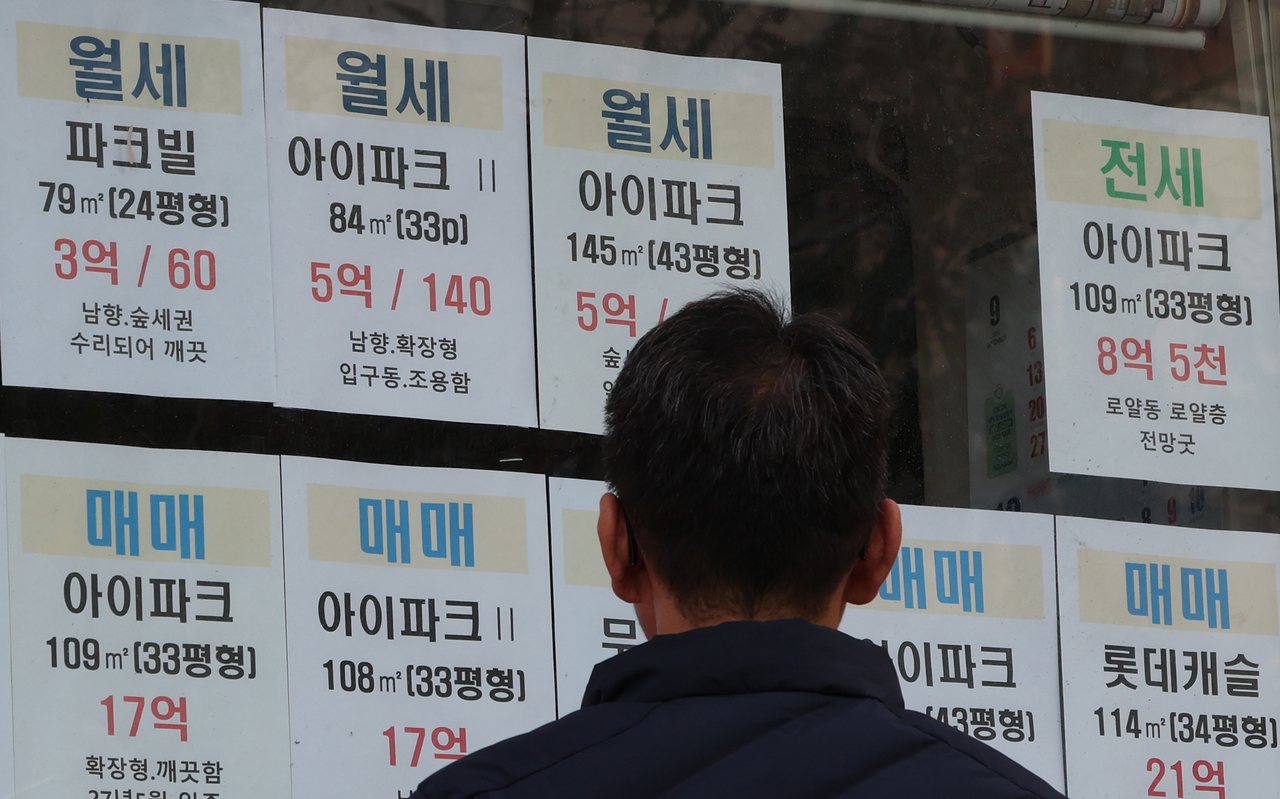
About six in 10 new apartment lease contracts signed in Seoul in the second quarter of this year were monthly rent arrangements. The shift toward monthly rent also deepened in row houses, multi-family units and officetels. Rent increases were not confined to high-end apartments — they also appeared in relatively affordable areas and in smaller non-apartment housing.
According to the "2026 Seoul Housing Jeonse and Monthly Rent Market Report: Monthly Rent-Centered Restructuring and Rising Housing Cost Burden," published Friday by Al Square, a commercial real estate services firm, new monthly rent transactions for Seoul apartments reached about 17,700 cases in the second quarter, surpassing roughly 12,700 jeonse transactions. The monthly rent share reached 58 percent. Both jeonse and monthly rent transactions declined from the fourth quarter of last year, but the steeper drop in jeonse deals widened the monthly rent share.
Row houses and multi-family units recorded a monthly rent share of 66 percent, while officetels reached 81 percent. The share for row houses and multi-family units has climbed nearly 30 percentage points from 37 percent in the third quarter of 2021.
Rents also rose. The average converted monthly rent for apartments with dedicated areas of 60 to 85 square meters reached 3.17 million won ($2,390) in the second quarter of this year, up 13.5 percent from the same period a year earlier. The converted monthly rent figure adds the deposit converted into a monthly equivalent — using the Korea Real Estate Board's jeonse-to-monthly-rent conversion rate — to the actual monthly rent paid.
The rent burden is substantial even measured against young workers' starting salaries. A 15-year longitudinal study by the National Youth Policy Institute, which tracked 2,351 students who were first-year middle schoolers in 2010, found that the average first monthly salary among the 1,139 respondents was 2.54 million won. Young people who did not attend university worked an average of 1.66 more hours per week than four-year university graduates but earned an average of 177,000 won less per month, highlighting a wage gap tied to educational background.
Also notable is the sharp rise in outer districts concentrated with mid-to-low-priced complexes and in smaller non-apartment units. Within the same floor-area bracket, Seocho-gu and Gangnam-gu recorded the highest rent levels at 4.79 million won and 4.51 million won, respectively. In terms of rate of increase, however, Gangbuk-gu led at 26.7 percent, followed by Gangdong-gu at 26.4 percent and Nowon-gu at 24.6 percent — all well above the Seoul average. Converted monthly rents in Gangbuk-gu and Nowon-gu stood at 2.18 million won and 1.97 million won, respectively, below the city average, but their pace of increase was faster.
Per-area costs for small non-apartment units also rose. In the second quarter of this year, the average converted monthly rent per 3.3 square meters for row houses and multi-family units was about 150,000 won for units under 16 square meters — up about 25 percent from the second quarter of 2020 — and about 110,000 won for units between 16 and 33 square meters, up about 33 percent. The per-area rent for units under 16 square meters was roughly 2 to 2.6 times that of units 33 square meters and above.
Officetels showed a similar pattern: units under 16 square meters commanded 160,000 won per 3.3 square meters, exceeding the 100,000 to 110,000 won range for units 33 square meters and above. Smaller units, even if their total rent is lower, are not necessarily cheaper on a per-area basis.
New supply remains limited even as household downsizing continues to support rental demand. The number of one- and two-person households in Seoul grew from about 2.05 million in 2015 to about 2.81 million in 2025. Meanwhile, the annual average number of apartment units completed between 2021 and 2025 fell to about 39,000, down from roughly 57,000 in the 2000s, and non-apartment housing permits have dropped to between 1,000 and 2,000 units per quarter since 2023. Youth safe housing — a government-backed affordable rental program — saw expanded participation from asset managers and real estate investment trusts, with 7,259 units offered based on recruitment announcements in the first three quarters of this year.
"Supply constraints could increase dependence on the existing housing stock to meet rental demand," said Choi Gyu-jeong, a research analyst at Al Square. "If high financing costs persist, landlords' interest burdens will be passed on through higher deposits or monthly rents, and tenants' difficulty in securing jeonse financing will also push up demand for monthly rent arrangements — meaning the shift from jeonse to monthly rent is likely to continue."
hss@heraldcorp.com