5 years, 8 months from first announcement to zone designation
Government to allow one-time transfer of in-kind compensation rights
Compensation pricing and resident tensions still unresolved
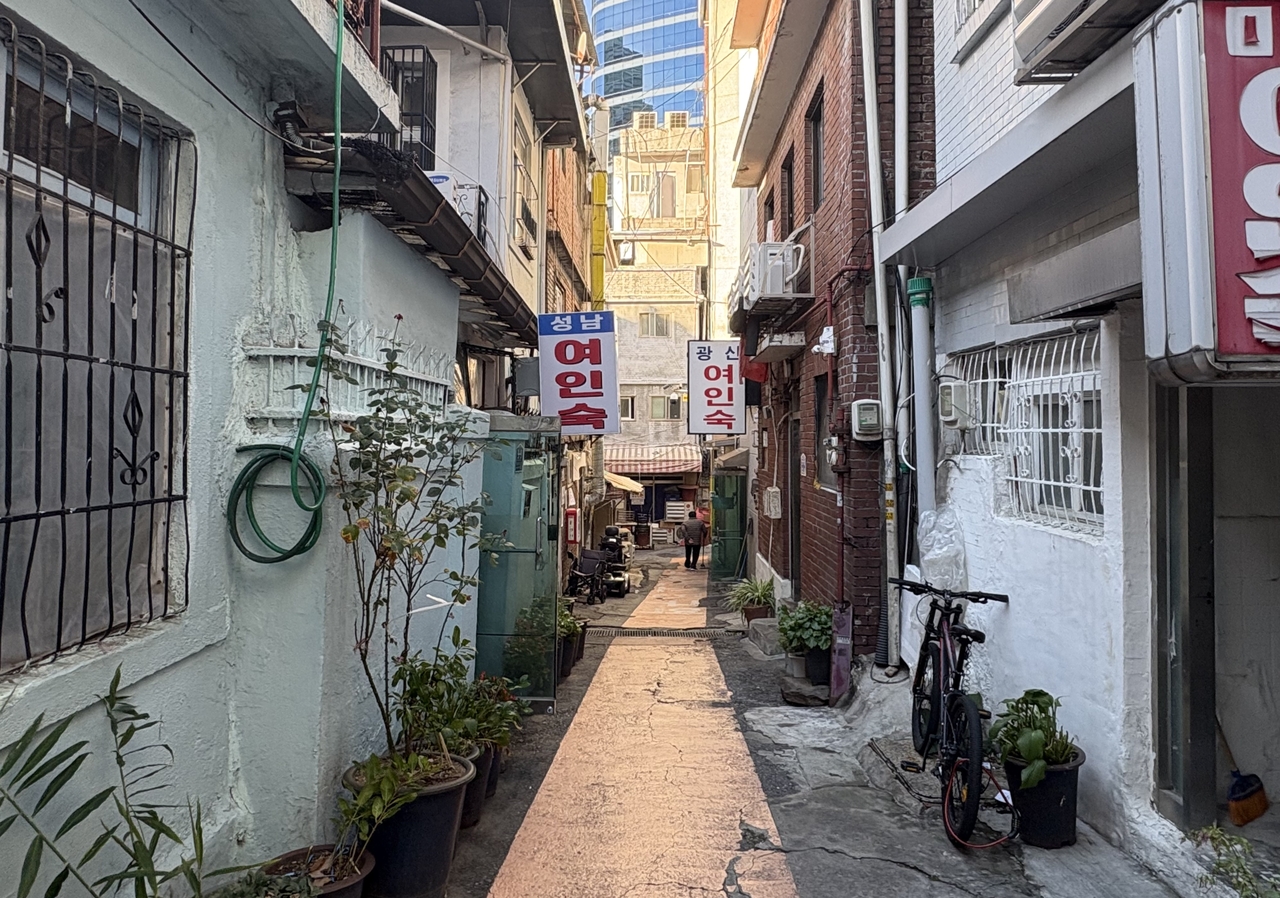
"There were plenty of owners who came asking me to sell their properties. But I couldn't. I knew the buyer could end up subject to cash settlement, and if I brokered the deal and got sued, what then? So I just didn't."
The Dongja-dong single-room lodging district in Yongsan-gu, Seoul — where real estate transactions had been virtually nonexistent since a public development announcement in 2021 — was officially designated a public housing zone Wednesday, nearly five years and eight months after the project was first unveiled. The government's plan to allow a one-time transfer of in-kind compensation rights has raised hopes that the long-paralyzed market may finally begin to move.
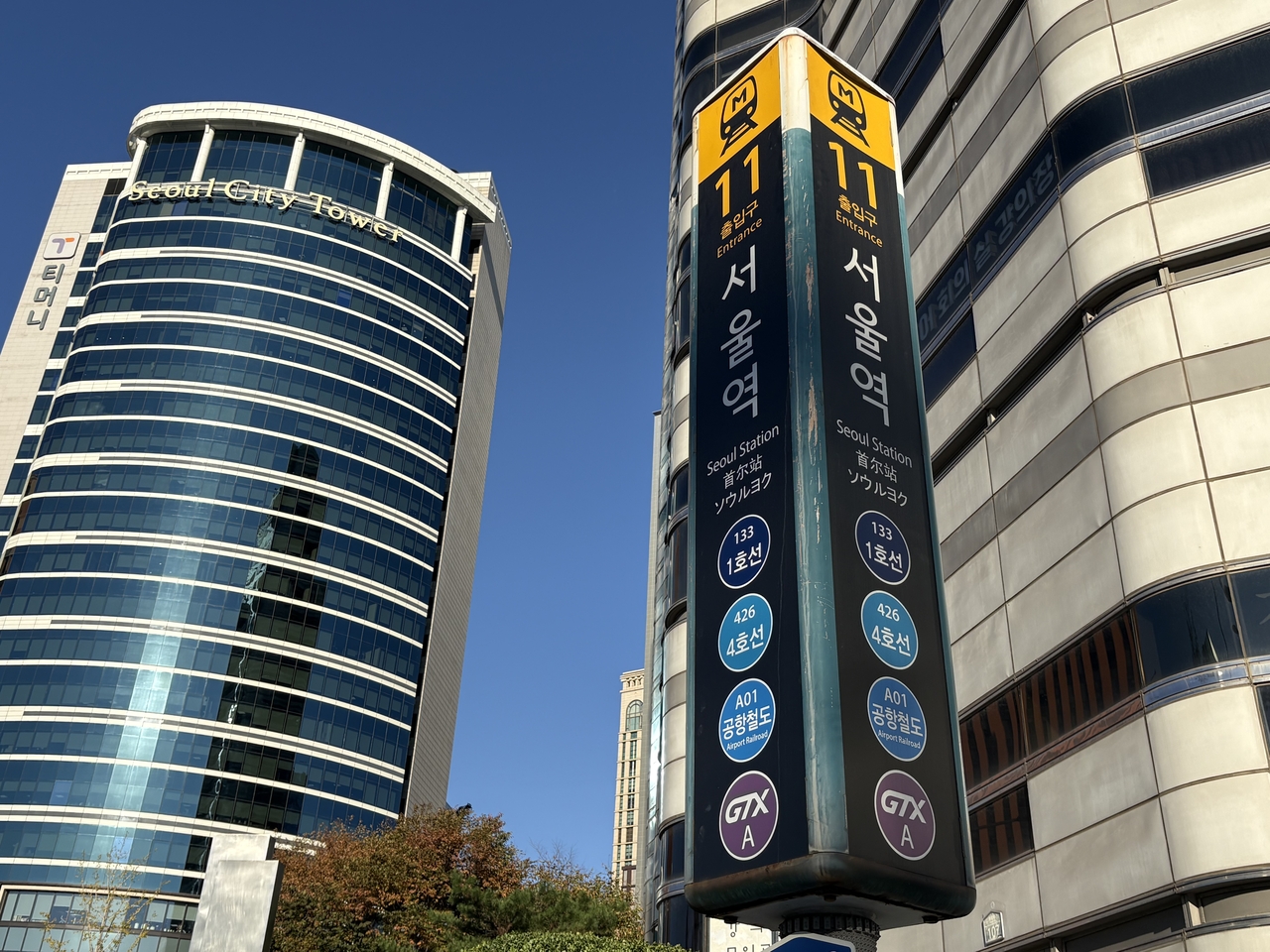
Visiting the Dongja-dong area on Wednesday, the day of the designation, the market's long standstill was immediately apparent. The neighborhood sits less than a five-minute walk from Exit 11 of Seoul Station, yet property transactions had been frozen for five years — a consequence of the public development project's prolonged drift despite the area's prime location.
The head of a real estate agency in Dongja-dong said no deals had been made from the 2021 announcement through until recently. "Owners who needed cash couldn't sell because no one knew when the zone designation would come," he said. He added that while regulations had improved considerably since then, the lack of concrete announcements still made it hard for owners to decide whether to sell or hold on.
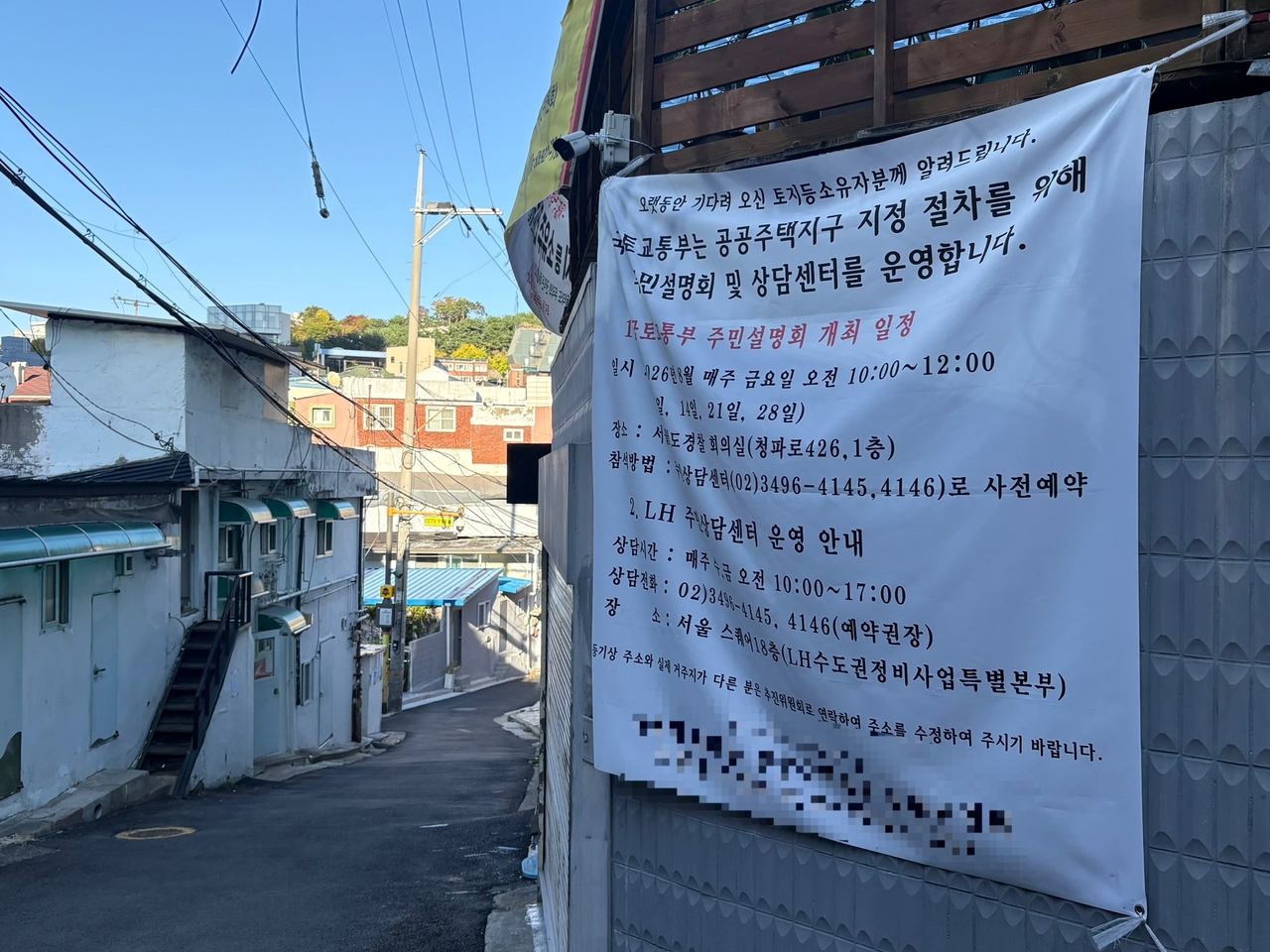
The Dongja-dong public housing project calls for 2,150 units to be built on a 47,573.9-square-meter site near Seoul Station. Korea Land and Housing Corporation (LH) will develop the project, with plans for 1,000 public rental units and 1,150 units for pre-sale. Existing residents of the single-room lodging district will be given priority access to the public rental units, and temporary housing will be provided during construction. The government is targeting a ground-breaking in 2029 and move-in by 2032.
The project was first announced in February 2021. It had originally been scheduled to break ground in 2023 with residents moving in by 2026, but was delayed after landowners and building owners pushed back against the government's compulsory land acquisition approach. At the time, owners argued that a unilateral cash settlement that failed to reflect the site's locational value would amount to an infringement of their property rights.
Real estate transactions effectively ground to a halt in the process. There were even cases of disputes arising from deals brokered just before the announcement. The head of a real estate agency in Huam-dong recalled brokering the sale of a villa the day before the announcement, only to face an immediate fallout. "The next day, all hell broke loose," he said. "The buyer demanded the deposit back, and the seller said, 'I didn't know either — why should I return it?' and refused."
Alongside the zone designation, the government said it would pursue regulatory improvements to protect owners' property rights. The measures include allowing in-kind compensation rights to be transferred once if certain conditions are met, and expanding tax benefits when pre-sale rights are transferred.
While some of the restrictions that had blocked transactions have been eased, whether deals will actually resume will depend on the specific conditions and timing of implementation. The head of the Huam-dong agency said inquiries had yet to come in. "Buyers will need to be able to calculate how much they stand to gain before a per-square-meter price can even take shape," he said.
Meanwhile, while expectations for the project have grown, significant obstacles remain before it can gain real momentum. Concerns over compensation pricing were particularly persistent. The head of a third real estate agency in the area, who has long supported the public development plan, said owners' core demand was a fair appraisal. "Just before the announcement, properties were being traded at rock-bottom prices because of the area's image as a single-room lodging district," he said. "The locational value of being right in front of Seoul Station has to be recognized."
Tensions among residents over the project have also not fully dissipated. The same agency head said the rift had deepened after people who had long backed private development suddenly declared support for the public route. "Just yesterday, a resident called me and said, 'I can't trust people who keep changing their story,'" he said.
Skepticism about the government's 2032 move-in target was also evident. One resident who favors private development pointed to the Yeongdeungpo single-room lodging district as a cautionary example. "It's been a long time since that area got its zone designation and they still haven't broken ground," the resident said. "This neighborhood has even more residents — it won't be easy." The resident also questioned whether LH, burdened by heavy debt, could properly push through the difficult Dongja-dong project.
Experts said the public-sector backing would help accelerate the project but cautioned that delays remained possible. Seo Gwang-chae, a real estate professor at Hanyang Cyber University, explained that public projects are in principle appraised by excluding development gains attributable to the project itself, unlike private developments. "Even when owners opt for in-kind compensation, there is a risk that the appraised value will be lower and additional contributions will increase," he said. He added that if the process moves into expropriation rulings and administrative litigation, it could take considerably longer than planned.
shy@heraldcorp.com
hss@heraldcorp.com