Menu-style regulatory exemptions, demand-responsive regulatory deferrals and regulatory sandbox support planned; safety standards for robots and humanoid robots to be established; paperwork burden on startups to be sharply reduced
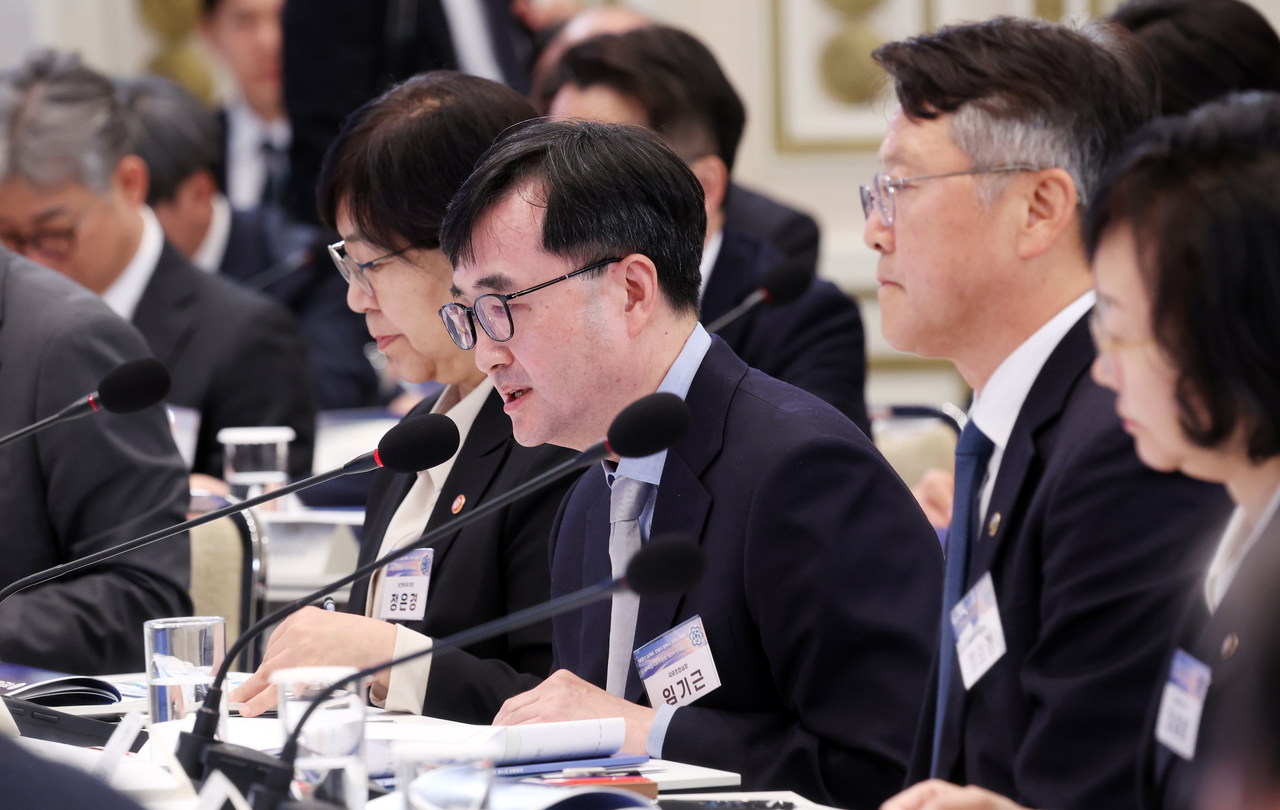
Im Ki-geun, minister of the Office for Government Policy Coordination, said Friday the government aims to designate one "super-regional special zone" in each region across the country in the first half of next year.
Im made the announcement at the second plenary session of the Regulatory Rationalization Committee, chaired by President Lee Jae-myung at Cheong Wa Dae. "We will not sit idle waiting for legislation to be enacted," he said. "We are proactively advancing all procedures in parallel right now."
He added that the government would resolve on-site difficulties immediately, even before the relevant legislation is passed. "We will create a communication channel with a unified private-sector team to continuously gather field opinions, and swiftly act on tasks that ministries accept," he said.
Issues involving disagreements between ministries, or tasks that ministries decline to accept, would be handled with urgency through the Regulatory Rationalization Committee, he said.
Super-regional special zones are key hubs designed to nurture the "5 poles, 3 specials" growth engines and attract large-scale corporate investment, offering the highest level of regulatory exemptions and comprehensive pan-government policy support.
The zones will help companies swiftly advance their desired projects through menu-style regulatory exemptions covering more than 320 items, demand-responsive regulatory deferrals — including eased regulatory effects — and an upgraded regulatory sandbox with shortened deliberation periods.
Local governments and companies will draw up and submit special zone plans, which will then go through committee deliberation and resolution before receiving prime ministerial approval and formal designation by the minister of the Ministry of Trade, Industry and Energy.
Im also briefed the committee on key regulatory rationalization tasks in the robotics sector related to mega-projects.
"Mobile industrial robots have been deployed on manufacturing floors, but the safety fences installed to protect workers are designed for fixed industrial robots," he said. "The government will clarify the conditions under which fence installation can be waived, and will proactively prepare safety guidelines applicable to humanoid robots."
He added that the government would lay the groundwork for commercializing robots across different sectors. "When robot-related facilities are introduced in apartment buildings, the floor area used will be excluded from floor area ratio calculations," he said, adding that tailored standards would also be established for robots that inspect railway facilities and other infrastructure.
"We will ensure that robots can be part of every corner of our industrial sites and every aspect of our daily lives," Im said, adding that the government would also pursue robot data standardization and accelerated robot demonstration projects.
Meanwhile, the government plans to sharply reduce the administrative paperwork burden on startups applying for permits, licenses or policy support.
Of 5,021 administrative documents currently required, 2,756 — or 54.9 percent — will be abolished, exempted or simplified, including documents already shareable through the existing shared administrative information system.
oskymoon@heraldcorp.com