Appeals court overturns guilty verdict, acquits Seoul mayor
Recording of Myung Tae-kyun used to assess credibility of his testimony
Special prosecutor calls admission of evidence improper, plans to appeal
Supreme Court ruling expected as early as late January next year
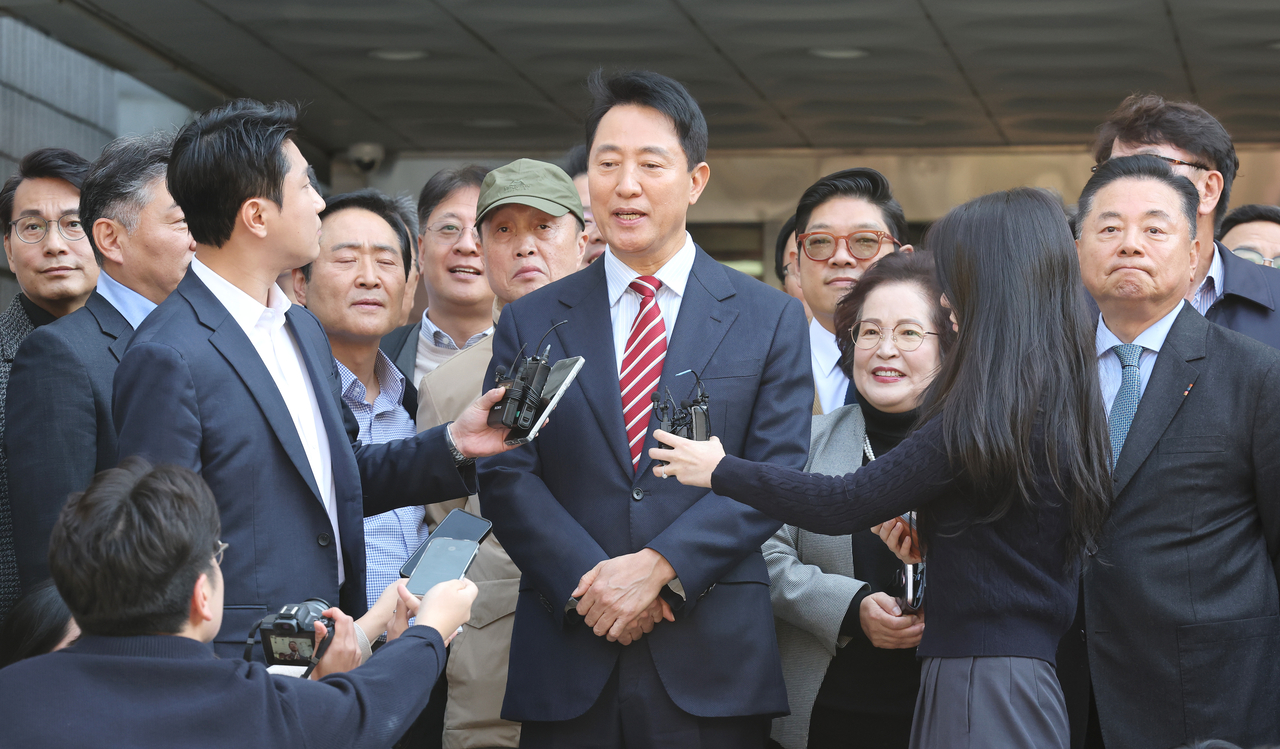
A recording of political operative Myung Tae-kyun that served as a key basis for Seoul Mayor Oh Se-hoon's acquittal in the appeals court is expected to become a central issue when the case reaches the Supreme Court. The special prosecutor's team led by Min Joong-ki has signaled it will appeal, challenging both how the recording was submitted and whether it should have been admitted as evidence.
Seoul High Court's Criminal Division 7, presided over by Judge Gu Hoe-geun, acquitted Oh on Friday, citing in part a phone call recording between Myung and Kim Han-jeong that was newly submitted during the appeals proceedings.
The recording was submitted by Kim, a supporter of Oh who was indicted on charges of paying Myung's polling costs on Oh's behalf. It captures a phone conversation between Myung and Kim on March 6, 2021.
The court found it difficult to accept Myung's testimony that Oh had personally called him in January 2021 to commission a poll and told him Kim would cover the costs.
Myung had testified in court that on Jan. 22, 2021, while passing through the Jangbok Tunnel in Changwon, he received four calls from Oh, during which Oh allegedly wept and asked him to conduct a poll that could help him defeat candidate Na Kyung-won.
The appeals court said that account was inconsistent with statements Myung made in the March 6, 2021 phone call captured in the recording.
In the recording, Myung tells Kim: "Anyway, Oh Se-hoon doesn't know. He doesn't know, so don't worry. I'll handle it myself."
Oh's legal team has maintained, based on that statement, that Kim commissioned the poll on his own initiative without any request from Oh.
The court also cited the recording when assessing whether Oh had asked for the polling costs to be covered on his behalf, noting that Kim appeared to have obtained Myung's contact information not from Oh but from Kang Cheol-won, a former senior political affairs official at the Seoul Metropolitan Government.
Ultimately, the appeals court rejected Myung's testimony on the core elements of the charges — that Oh had commissioned the poll and arranged for Kim to pay for it — and the recording influenced that determination.
The special prosecutor's team, however, contends that the recording should never have been admitted as evidence. It argues that Kim had possessed the audio file since the first trial but withheld it, then selectively submitted only portions favorable to himself during the appeals proceedings.
Special prosecutor deputy Park No-su said immediately after the ruling: "Kim Han-jeong had the file all along but said he did not submit it because there were too many files — then brought it up in the appeals court as if it had just been discovered. This is evidence submitted by deceiving the court and should not have been admitted."
The central issue at the Supreme Court is expected to be whether the appeals court was right to admit the recording as evidence. With the special prosecutor challenging the circumstances under which it was submitted, a legal battle is anticipated over whether there were procedural or legal problems in using the recording to assess the credibility of Myung's testimony.
The special prosecutor's team plans to lay out in its appeal brief the specific reasons why the recording should not have been admitted as evidence.
Under the special prosecutor act's "6-3-3 rule," cases brought by a special prosecutor must be resolved within six months at the first trial, three months at the appeals stage and three months at the Supreme Court. The Supreme Court ruling in Oh's case is accordingly expected as early as late January next year.
However, that timeline is not a mandatory deadline, and the actual date of the ruling may vary depending on how the proceedings unfold.
boo@heraldcorp.com